Follow Us on Google
The Nigerian Association of Chambers of Commerce, Industry, Mines and Agriculture (NACCIMA) has sought stronger public private partnerships (PPPs), dormant capital like the pension funds to address the country’s $2.3 trillion infrastructure financing gap.
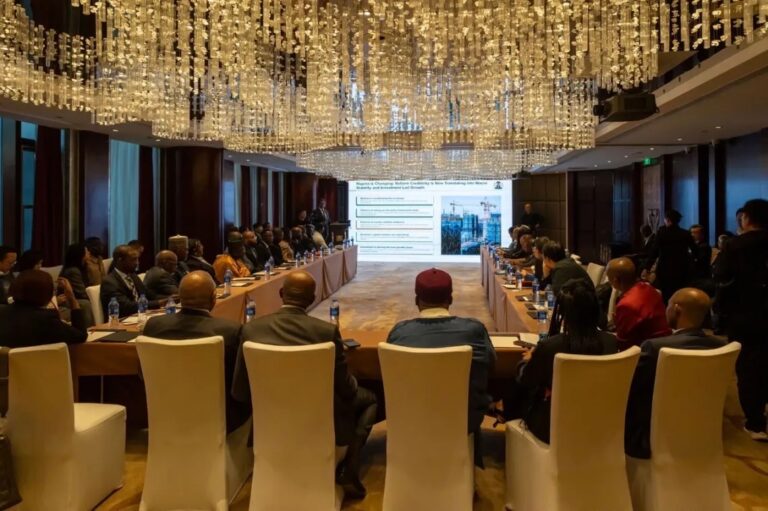
NACCIMA National President, Jani Ibrahim, stated this yesterday at the launch of the maiden edition of the Nigeria Infrastructure Conference (INFRACON 2026), in Abuja.
He said: “What we are saying is that the private sector should lead because government cannot do it alone. We are looking a dormant capital sitting idle, pension funds and insurance funds are not doing anything.
“We need to see how these capitals can be released for economic development and NACCIMA is leading that charge and we are very committed.”
Ibrahim said INFRACON was conceived following extensive consultations with businesses across Nigeria, which consistently identified poor infrastructure as one of the greatest impediments to competitiveness, industrialisation and economic growth. He said that manufacturers continue to bear the high cost of self generated electricity, exporters struggle with congested ports and logistics bottlenecks, technology firms require reliable broadband infrastructure and world class data centres, while micro, small and medium enterprises (MSMEs) contend with high transportation costs and inadequate digital infrastructure.
According to him, no nation has achieved industrialisation without sustained investment in infrastructure, arguing that Nigeria cannot become globally competitive while businesses continue to provide infrastructure that should ordinarily be supplied through public investment.
He noted that the Reviewed National Integrated Infrastructure Master Plan (NIIMP 2020–2043) estimates that Nigeria will require over $2.3 trillion in infrastructure investment across transport, energy, housing, water resources, agriculture and ICT over the next two decades.
Other News
“Infrastructure is not merely about roads, bridges and airports. Infrastructure is productivity, competitiveness, investment, jobs, exports and economic growth,” Ibrahim said.
He claimed that government revenues alone were insufficient to finance the country’s infrastructure needs, making it imperative to attract domestic and international private capital, including pension funds, insurance funds, sovereign wealth funds, infrastructure funds, private equity and multilateral finance.
He said the organisation would work with the institutions to ensure investment ready projects emerging from INFRACON receive credible financing and implementation support.
He said: “INFRACON is not a talk shop. Success will not be measured by the number of speeches delivered but by the number of projects financed, the amount of private capital mobilised, the jobs created, improvements in logistics, megawatts added to the national grid and improvements in Nigeria’s competitiveness.”
Also, the Minister of Industry, Trade and Investment Jumoke Oduwole said Nigeria must move beyond financing isolated infrastructure projects and instead develop investment ready economic corridors capable of attracting long term private capital and achieving financial closure.
Oduwole noted that with Nigeria’s infrastructure financing requirement projected at about $2.3 trillion by 2043, the country must shift from financing individual projects to preparing bankable economic corridors that can attract institutional investors and development finance.
She added that the ministry would continue to provide policy clarity, regulatory certainty and investment promotion to encourage private capital into strategic sectors.