Follow Us on Google


• ADC candidate calls relief desperate attempt to contain public anger • TUC rejects NLC deal, demands N300,000 salary for lowest-paid worker • Retirees allege betrayal, demand inclusion, payment of outstanding palliatives
From Ndubuisi Orji and Adanna Nnamani, Abuja
The Federal Government’s N70,000 monthly transport allowance for public servants has sparked a widening controversy, with former vice president and African Democratic Congress (ADC) presidential candidate, Atiku Abubakar, describing the intervention as a desperate attempt to contain public anger over economic hardship, while the Trade Union Congress of Nigeria (TUC) outrightly rejected the agreement signed by the Nigeria Labour Congress (NLC) even as pensioners protested their exclusion.
The backlash, which came barely 24 hours after the Federal Government and NLC signed the six-month allowance agreement, has exposed disagreements over the adequacy, coverage and sustainability of the intervention, with TUC demanding a permanent salary increase that could raise the pay of the lowest-paid worker to N300,000, while the Nigeria Union of Pensioners (NUP) accused government and organised labour of abandoning retirees.
Atiku, in a statement by the Director of Strategic Communication of his Presidential Campaign Council, Phrank Shaibu, said the allowance amounted to an admission by the Tinubu administration that its economic policies had made life unbearable for millions of Nigerians.
He argued that the cost-of-living crisis extended far beyond transportation and could not be addressed through a temporary payment restricted to public servants when private sector workers, traders, artisans, transport operators and millions of Nigerians outside formal employment were equally affected.
“The Tinubu administration is scrambling from one announcement to another, showing its failure to grasp the crisis. The cost of living crisis reaches beyond transport: energy, food, rent and other essentials affect every part of daily life.
“Barbers pay more to power their clippers; restaurant owners face higher cooking costs; shopkeepers struggle to keep prices down; school bus operators pay more for fuel; and families still must buy food. Every business and household is affected. Does hardship end at the bus stop?”
Atiku questioned the fairness of restricting the intervention to serving public servants, saying the beneficiaries represented only a fraction of Nigerians struggling with rising prices.
“If public service workers receive N70,000 monthly for transport from November, what happens to private sector workers, traders, small businesses, transport operators and millions without formal jobs? The public workforce is only a fraction of Nigeria’s population. A temporary allowance for some cannot solve a national crisis.
“The agreement also leaves the effective date for a new minimum wage unresolved. The government must publish payment dates, explain eligibility and say when wage negotiations will produce a decision.”
Atiku further questioned the value of the allowance against prevailing fuel costs, arguing that it would provide only limited relief to households and businesses facing multiple financial pressures.
“Any genuine relief is welcome, but a six-month allowance cannot undo this hardship. At about N1,400 per litre, N70,000 buys roughly 50 litres of petrol. What meaningful difference can 50 litres make over an entire month?” he asked.
In a more scathing criticism of the administration’s economic policies, the ADC presidential candidate accused the government of creating the hardship through its decisions and subsequently resorting to temporary interventions to manage public dissatisfaction.
“What Nigerians are witnessing is a government that set the house ablaze with its reckless policies, then pretends to fight the inferno by throwing ice cubes at the flames. A temporary N70,000 allowance cannot extinguish a cost-of-living crisis this government ignited.”
Atiku also criticised the administration’s previous relief initiatives, including its compressed natural gas programme and the recently announced 90-day cost-of-living action plan, alleging that they had failed to deliver meaningful reductions in household expenses.
“This is the pattern: the fuel discount failed, the 90-day cost-of-living plan failed before it began, and now comes another temporary payment. The government promised CNG would lower transport costs, but that promise has failed. For Nigerians still paying more to commute, the CNG programme is another scam of promises, while families face the same unaffordable prices.
“These rushed announcements smack of political bribery and corruption. Tinubu has shown no genuine intention of clearing the monumental mess caused by his hasty subsidy removal. He offers temporary payments instead of confronting the consequences,” he alleged.
The former vice president said he had proposed a transparently managed production subsidy for fuel refined in Nigeria as an alternative measure to reduce costs and provide relief.
“Tinubu must not punish 250 million Nigerians for the corruption and leakages of a few thousand. His arrogance prevents him from reconsidering a cocky decision, while families and businesses pay the price.
“N70,000 may help with transport, but it cannot explain why work, food and running a business have become unaffordable. Nigerians need lasting relief, decent wages and an economy that rewards honest work. When will life become affordable again?” he asked.
The Federal Government approved the N70,000 monthly transport allowance for six months, beginning in November, following a conciliation meeting with the NLC at the Federal Ministry of Labour and Employment on Tuesday, October 27.
The resolutions were signed by Minister of Labour and Employment, Dr Muhammad Maigari Dingyadi; NLC President, Joe Ajaero; Director-General of the Budget Office of the Federation, Tanimu Yakubu, and other government and labour representatives.
However, TUC, in a statement issued on Wednesday by its President, Festus Osifo, and Secretary-General, N.A. Toro, dismissed the arrangement as another temporary intervention that would neither adequately address workers’ hardship nor provide lasting financial security.
The congress argued that the Federal Government did not need to wait for fresh minimum wage negotiations before approving a substantial increase in salaries, pointing out that no law prevented employers from paying above the statutory minimum.
“Government does not require minimum wage to be negotiated before increasing workers’ pay as there is no maximum wage law in the country.
“Temporary wage awards are not sustainable and far-reaching. How do we go back to the same wage award that never benefited all workers? How can workers be expected to trust fresh promises when previous obligations remain outstanding?” the congress asked.
TUC maintained that government could raise the salary of the lowest-paid worker to N300,000 and introduce corresponding adjustments for other categories of workers, rather than repeatedly approving short-term allowances that would expire without addressing the underlying problem of inadequate earnings.
It recalled that the wage award agreed upon by the Federal Government and organised labour on October 2, 2023, was intended to provide temporary relief pending the conclusion of minimum wage negotiations in 2024.
According to the congress, some workers were still owed one or two months of the previous award, while others received nothing, with more than 80 per cent of states and the informal sector allegedly failing to implement any form of wage award.
“From the foregoing we further reiterate our demand for a pay raise for all government workers as salary is the only consistent and far-reaching pay that workers could rely upon.
“Government must move beyond policy announcements and demonstrate tangible improvements in the living conditions of Nigerians,” it said.
The congress also demanded prompt payment of salaries and pensions, protection of jobs, action against exploitative labour practices and measures to reduce the cost of essential goods and services.
It called for renewed efforts to revive the productive sector and create decent employment opportunities, insisting that government interventions must be adequately funded and accompanied by clear implementation timelines.
While TUC challenged the adequacy of the allowance, pensioners raised a separate objection, accusing government and organised labour of excluding retirees from an intervention meant to cushion the effects of economic hardship.
Other News
National President of NUP, Godwin Abumisi, who spoke through the union’s Deputy National President, Abdullahi Usman, at a press briefing on Wednesday, described the exclusion as unjust and insensitive to the plight of Nigerians who had devoted their productive years to public service.
The union argued that pensioners faced the same rising transportation costs, food prices and healthcare expenses as serving workers, often with fewer financial resources and greater medical needs.
“The Nigeria Union of Pensioners (NUP) strongly condemns the exclusion of pensioners from the newly approved N70,000 monthly transport allowance for serving public servants, describing the decision as unjust and a further demonstration of the challenges confronting retired Nigerian workers,” it said.
NUP questioned why serving workers were considered deserving of relief while their retired counterparts, many of whom depended entirely on inadequate pensions, were left out.
“Pensioners also depend on public transportation to access hospitals, attend medical appointments, purchase food and other essential items, and participate in everyday economic activities. Many have no source of income beyond their pensions, which are often inadequate to meet their basic needs amid persistent increases in the cost of living.
“The Union therefore questions the rationale for excluding retirees from the transport allowance when they face similar, and in many cases more difficult, economic circumstances than their counterparts still in service,” it said.
In a direct criticism of organised labour, NUP accused those who negotiated the allowance of failing to protect the interests of retired workers, describing their omission as a betrayal of colleagues who had already completed their years of service.
The union said the development reflected the “insensitivity of civil servants to the plight of their former colleagues, now retired, who they will eventually join in the retirement ship.”
It warned serving workers and labour leaders against treating pensioners’ welfare as a separate concern, arguing that every public servant would eventually retire and face similar challenges.
“NUP stresses that the welfare of serving workers and pensioners should not be treated as competing interests. Rather, both groups deserve fair consideration in government policies designed to ease the economic burden on Nigerians,” it said.
Beyond the N70,000 allowance, the pensioners revived controversy over the Federal Government’s October 2, 2023 agreement with NLC and TUC, under which N25,000 monthly palliatives were promised to 15 million vulnerable households, including eligible pensioners, for three months.
The union said the commitment, amounting to N75,000 per eligible beneficiary, remained unfulfilled for pensioners more than three years after the agreement.
“More than three years later, the Union demands a clear explanation of the status of the commitment and why vulnerable pensioners covered by the agreement have not received the promised support,” it said.
NUP called on the Federal Ministry of Humanitarian Affairs and Poverty Reduction, headed by Dr Bernard Doro, to explain the status of the programme, identify obstacles to implementation and provide a definite timetable for settling outstanding payments.
It also appealed directly to President Bola Tinubu to intervene by extending the N70,000 allowance to eligible pensioners or approving an equivalent support package to address their transportation expenses.
The union demanded meaningful consultation with pensioners’ representatives in future negotiations affecting workers’ welfare, warning that it would pursue all lawful means to protect its members if government failed to address their concerns.
Meanwhile, TUC also renewed its demand for the immediate implementation of the outstanding Consolidated Health Salary Structure (CONHESS) adjustment agreed with the Joint Health Sector Unions (JOHESU).
The congress said health workers suspended their industrial action in good faith following a conciliation process involving the Federal Government and organised labour, but the agreed adjustment had remained unimplemented seven months after the settlement.
“This continued failure to honour an explicit commitment violates the principle of good faith, undermines confidence in collective bargaining and is absolutely unacceptable to the TUC.
“The Federal Government must immediately implement the agreed CONHESS adjustment, honour the JOHESU agreement, publish a clear implementation timetable, provide the necessary budgetary provisions and resolve all outstanding matters in consultation with the relevant unions,” it said.
TUC pledged continued support for affected health workers and warned that it would pursue lawful measures to compel implementation.
“The TUC demands tangible action, not further assurances. Workers are not asking for favours; they are demanding social and economic justice that protects their dignity and livelihoods.
“Workers’ welfare is not a privilege. Agreements must be honoured. Workers’ rights must be respected. Government must comply,” the congress declared.
The union said it was awaiting the outcome of a scheduled meeting with the Federal Government before deciding its next course of action.
Under Tuesday’s agreement with NLC, the Federal Government also undertook to begin paying arrears of peculiar allowances approved with effect from May 1, 2026, in November, with the outstanding amount to be settled in three equal monthly instalments.
The government further agreed to clear 19 months’ arrears of allowances owed to health workers within three months, beginning in December 2026.
On the national minimum wage, both parties agreed that a negotiation committee would be constituted and commence work immediately, although differences remained over the effective date for implementation.
The parties also referred workers’ demand for tax relief to the National Economic Council (NEC), while the National Salaries, Incomes and Wages Commission (NSIWC) was directed to conclude verification of hazard allowance claims submitted by the Federal Ministry of Agriculture and Food Security within two weeks.
On the outstanding CONHESS adjustment, the commission promised to update the cost implications within three weeks for consideration by the Presidential Committee on Salaries.
The Federal Government and NLC agreed to reconvene in one month to review implementation of the resolutions, while state and local governments were encouraged to participate in the intervention process.
The growing controversy comes barely a week after NEC endorsed a 90-day economic action plan aimed at reducing living costs, improving food affordability and easing transportation expenses.
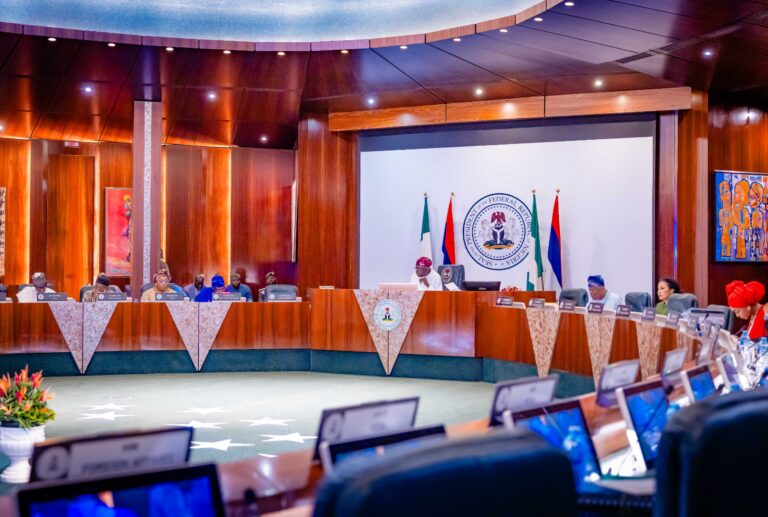
The council, at its 161st meeting on October 22, chaired by Vice President Kashim Shettima, approved measures covering food prices, coordinated taxation, priority projects, investment bottlenecks and household support.
It also backed a joint federal-state financing arrangement to expand the use of compressed natural gas and electric vehicles, with relevant authorities directed to work with transport unions and operators to ensure that savings from cheaper energy translated into reduced passenger fares.
Shettima urged governors and government institutions to ensure that economic reforms produced tangible improvements in affordable transportation, healthcare, employment and household financial security.
With Atiku questioning the economic rationale behind the allowance, TUC demanding permanent salary increases and pensioners protesting their exclusion, the Federal Government faces mounting pressure to explain how its latest relief measure will address the wider cost-of-living crisis and avoid the implementation failures that have dogged previous agreements.