Follow Us on Google

From Scholastica Hir, Makurdi
Alkalanci, a Hausa fact-checking platform, in partnership with the British High Commission, has commenced a two-day training for religious leaders in Benue State to strengthen their capacity to identify and counter misinformation, disinformation and foreign information manipulation.
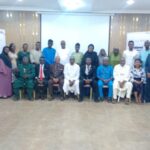
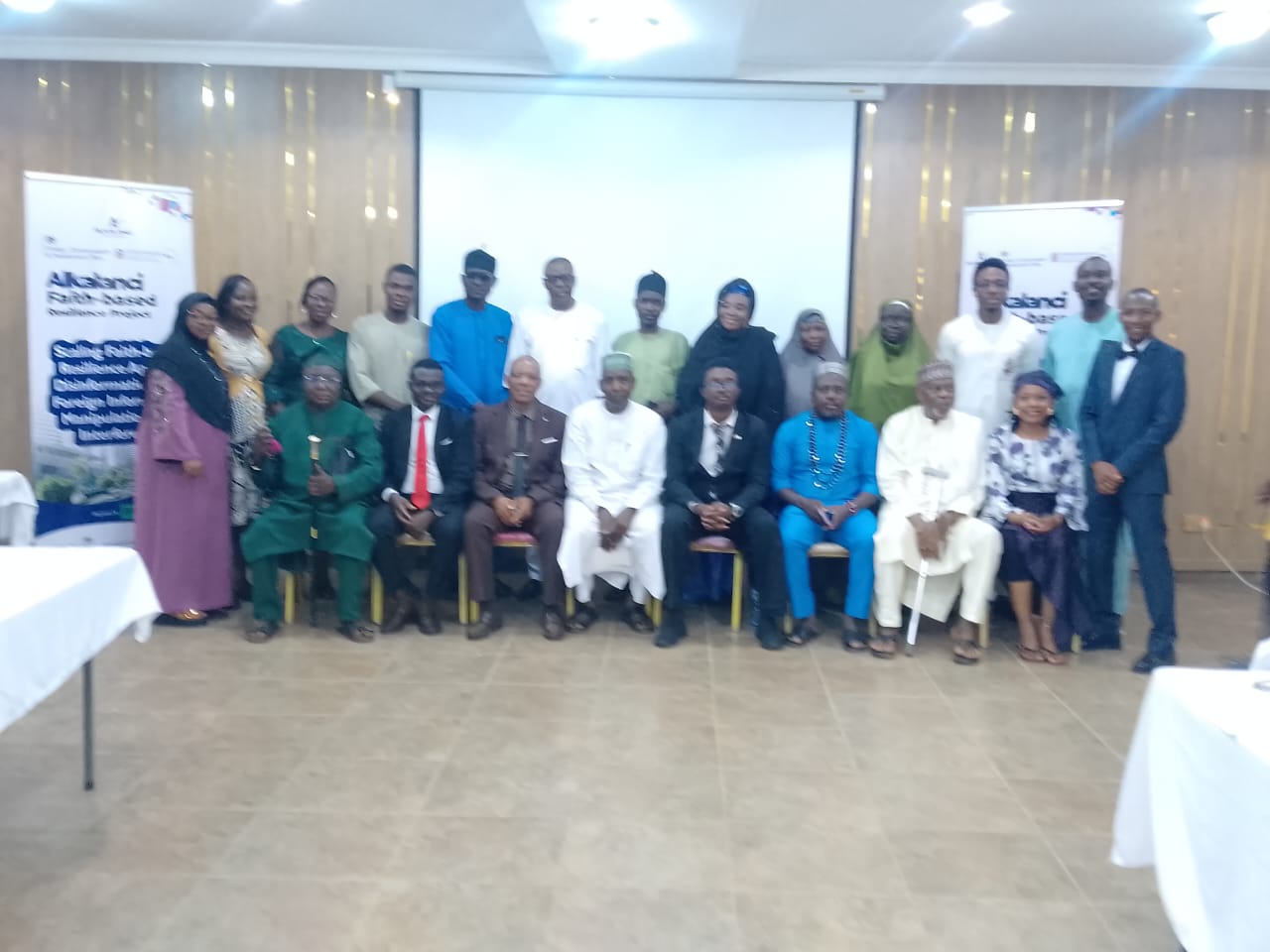
The workshop, which began on Wednesday, 18 November 2026, in Makurdi, brought together 20 Christian and Muslim religious leaders under the theme “Scaling Faith-Based Resilience Against Disinformation and FIMI”.
The programme, funded by the Foreign, Commonwealth and Development Office (FCDO) through the Integrated Security Fund (ISF) West Africa, is aimed at equipping participants with fact-checking and information verification skills to prevent the spread of false narratives capable of triggering tension and conflicts in Benue communities.
Welcoming participants to the event, Alkalanci’s Programme Manager, Victoria Bamas, said the initiative adopted a train-the-trainer approach to enable participating religious leaders to transfer the knowledge acquired to their congregations and wider communities.
She explained that the training would help participants understand misinformation, disinformation and Foreign Information Manipulation and Interference (FIMI), as well as develop basic skills to verify information before sharing it.
Bama identified financial incentives from online content monetisation, advertising and audience engagement as some of the factors encouraging the spread of false information, noting that some individuals were increasingly motivated by the benefits of generating online traffic.
She said the initiative was designed to build community resilience by empowering people to recognise and reject false information rather than merely relying on those spreading it to change their behaviour.
She said: “The idea is to equip people and inoculate them so that when information gets to them they are able to identify it and not act on it. At the end of the day, we want to achieve a community inoculation and mitigation and we are working with FCDO and the British Government to achieve this.”
The Cyber and Hybrid Threats Project Lead at the British High Commission, Abuja, Oriola Odutoye, said the programme was part of the United Kingdom’s expanding security and defence cooperation with Nigeria, particularly in tackling emerging hybrid threats.
Odutoye said both countries were strengthening collaboration in cybersecurity and related areas, including foreign information manipulation and interference.
He disclosed that similar engagements had been conducted in Plateau, Kano and Adamawa states, while Benue was among the states covered by the initiative, with Gombe and Bauchi states also scheduled to benefit from the programme.
Other News
According to him, the broader objective was to give religious leaders across Northern Nigeria a common understanding of foreign information manipulation, its potential impact on communities and their role in addressing the threats.
Speaking to newsmen at the event, the Vice Chairman of the Christian Association of Nigeria (CAN), Benue State, Rev. Jonathan Ugbede, described misinformation and disinformation as big challenges bedevilling society, saying that most times they had created crises not only in Benue but across the nation.
While noting that misinformation and disinformation are capable of creating fear, tension and disharmony in society, Ugbede counselled that religious leaders should verify information before disseminating it, stressing that their sources must be credible, authentic and verifiable.
The CAN Vice Chairman said unverified claims, often attributed to unidentified sources, were frequently circulated and could create unnecessary panic, adding that religious leaders must exercise caution because of the influence they wield over their followers, who see their words as law.
Also, the Benue State representative of Jama’atu Nasril Islam (JNI), Malam Baba Ahmed, commended the initiative, describing it as timely and relevant to Benue State, which had experienced significant security and displacement challenges.
Ahmed called for greater tolerance and understanding among religious communities, stressing that peaceful coexistence and interfaith cooperation were essential to the unity and development of the state.
Ahmed, a participant, who was represented by the JNI State Chairman, Alhaji Garba Baba, reaffirmed the organisation’s commitment to promoting religious tolerance.
Also speaking, a traditional ruler from Apa Local Government Area (LGA), HRH Chief Solomon Audu, observed that community leaders sometimes received information and later discovered it was false after carrying out proper investigation.
He urged traditional and community leaders to collaborate in ensuring that information brought before them was verified before decisions were taken or actions initiated.
Earlier, the Editor of Alkalanci, Alhassan Bala, presented an overview of the organisation’s first project in Benue State and its activities.
The workshop also featured a presentation on the role of religious and community leaders in the digital age by Dr Peter Akunko of the Department of Philosophy, Moses Orshio Adasu University, Makurdi (MOAUM), alongside sessions on understanding misinformation, disinformation and Foreign Information Manipulation and Interference.