Follow Us on Google
By Chinelo Obogo, [email protected]
For the umpteenth time, domestic airlines have cried out over multiple charges and taxes that have literally kept them on ventilators, as they struggle to sustain safe operations.
They are collectively calling on the federal government to look their way before they are eventually taxed to death.
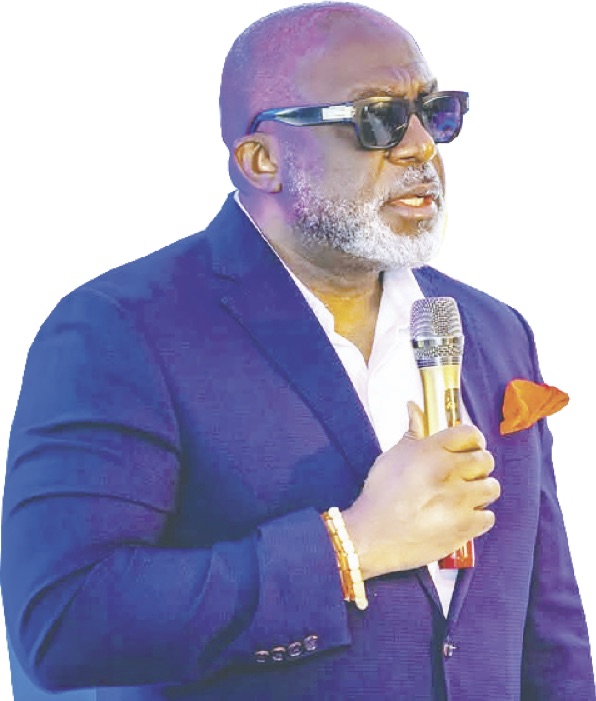
The amplifier of local airlines’ voices is the Spokesperson of the Airline Operators of Nigeria (AON), Prof. Obiora Okonkwo, who doubles as the Chairman of United Nigeria Airline.
In an interview he granted this week after the airline successfully launched direct flights between Nigeria and Accra, Ghana, Okonkwo insisted that domestic operators need robust support from the government if they are to compete with their international rivals.
He said anything short of that means they will continually hold the short end of the stick and be servants on routes where they ought to be masters.
Okonkwo lamented that the situation is worsened by airlines having to pay for every government service, from inspections to certification renewals.
He added that the most pressing challenge remains the lack of access to affordable financing. According to him, the AON is demanding single-digit loans and a special forex window as a breather.
He added that domestic carriers are also urging the government to recognise aviation as a vital economic pillar and catalyst, not just a business for the owners.
He speaks more about his airline and aviation industry in general.
The Permanent Secretary for the Ministry of Aviation recently said that the government has given tax-free status on importation of aircraft and spare parts. Is this outright tax-free or removal of the 4 per cent FOB?
It’s not tax-free; it’s duty-free. There are still some taxes. We continue to argue that the 1 per cent FOB tax should be totally eliminated because you pay that 1 per cent tax on the duty value of the aircraft. And when there is no duty, you cannot put something on nothing. Don’t forget that all these things we are asking for are not special rules for Nigerian operators. I don’t know of any country that taxes or puts duty on aircraft. There’s none. So, even if there’s nothing special for us, let them do what other progressive countries are doing. That’s the point. Even if they don’t want to do better than them, let them at least do the same.
Ghana is taking 40-60 per cent of passengers on regional flights. It’s charging $60-$100. Even if you can’t reduce it completely, put it at $60. What it means is that $40 is already to the benefit of the passengers. But their easy explanation is that “you are not paying; the passengers are paying.” But when you are pricing yourself, it’s affecting your market value.
We also think that even the 5 per cent passenger charge is becoming extremely too much for us to bear. And they always say, “You don’t pay; passengers pay.” The bottom line remains that all these things are in violation of world aviation rules because by international law, the proceeds or the revenues generated in aviation should only be commensurate with your own expenses. It is to cover your expenses of delivering that service, but not to generate revenue for the country.
So, you might be interested to know that apart from all this money that is being collected, we pay for every single service. We pay adequate resources to cover every single service that is offered by the airspace management. If they are going for inspection, we pay. We pay for transfers, pay for everything. If they issue any renewal or any certification, we pay. We pay for everything.
The NCAA is one of the government agencies that get revenue (the TSA, which is collected from us that could have been part of our own revenue to strengthen our capacity but it goes into government funding of non-aviation-related activities. It is not done anywhere in the world. It is not allowed. The most you should do is to plow it back into aviation services, because this recognises the fact that aviation is an essential aerospace sector that offers services beyond revenue.
As the spokesperson of AON, I’m telling you that we are being taxed to death. It’s too much; we cannot even breathe anymore. It’s suffocating us. We are only urging them to apply what exists in other progressive countries and that information is out there. Those people who are implementing these policies are allowing this maybe because they do not understand, or maybe from the aspects that are presented, it makes sense to them. But they need to continue to hear the side of the operators because when operators talk a lot and it looks as if we’re only protecting our business, some people do not understand that we are providing great value beyond income to the nation.
What concessions have airlines been able to get from the federal government and what more do you expect?
We are asking for single-digit loans, bearing in mind that aviation worldwide is the same. The competition in aviation can be very and we in Nigeria are competing in the same market with other large legacy carriers like British Airways, American Airlines, Lufthansa, Qatar Airways. When you go to their countries, they have loans at 3 per cent, not even from a special window, but from the regular market for loans and these loans have very long-term periods. They could easily run for 10 years, 20 years. Compare that with our market, where we have to borrow in naira and convert the proceeds at the existing commercial rate that’s already over 30 per cent, and then face all the other charges that are related to that. It’s a spillover effect and a vicious cycle. The major inventory or product we have in aviation is just our ticket. So you can imagine that compared with another trader, business person, or manufacturer who has a product, for it to reach the market, the sales value of their product must factor in everything that collectively makes up the cost. The components must be able to cover your costs before you add a profit margin to it.
If somebody in another country is accessing loans at 5 per cent, and I’m accessing them at 35 per cent, my cost of doing business should already be 30 per cent more than it should be in that country. However, if you don’t pass that directly to customers, you will deprive yourself of all the profit margins and gains. But when you fail to do that, you find yourself at a level where you cannot make enough margin to grow, to expand, to strengthen your business, and then to offer better service. When that situation takes root and persists, you face an existential threat. That could also be one of the reasons why the mortality rate of airlines in Nigeria is very high.
Business must be sustainable and viable to attract investors. Airlines are capital-intensive. They can only progress and scale up with huge finances, and those huge finances are mostly available through banks or other financial institutions. For them to do business with you, your proposal must be very attractive and show that you have a good business plan.
When you present a business plan where you are forced to pay taxes and charges on everything consuming nearly 100 per cent of your revenue, they will not find it suitable. You would be a big credit risk for them to approve such a loan. So when we demand single-digit loans and other concessions, we are asking the government to treat aviation as an essential service. It should not be seen as a business of one individual or the other, because where aviation is strong and available, it’s a catalyst and an enabler to other economic growth. If you do not make it available for people to fly from Abuja to Lagos comfortably, it will affect their businesses. Flying to other parts of Nigeria affects business, it’s an essential transport system. When it affects the businesses that individuals are doing, it affects the state and national economy.
What the government has done
Other News
In terms of what this government has done, we had duties on aircraft and spare parts importation. So, removing that duty is something we are celebrating. But sometimes, they introduce other things. There was a 4 per cent levy also introduced. We engaged with the government, and they were able to suspend that. So, that 4 per cent suspension is what we are talking about. We continue to give them credit and thanks for their understanding. I believe that if they listen and understand more about other areas that need addressing, they will take action. That is the government’s responsibility.
Policy challenges
Sometimes what happens is that people in policy positions do not interface directly with the operators or stakeholders in those sectors. Policies are made by civil servants who may be well-intentioned, but when looked at from their own perspective alone, their proposals seem right.
For instance, with the tax issues we are facing today: if you bring in a tax consultant and tell him or her to put in place the best tax system for government revenue, you will not blame this person if they go into their office, study what exists in other parts of the world and then start copying those things, thinking, “This is what the government of Nigeria should do to increase tax revenue like it does in other parts of the world.” Don’t blame the person. But something is lacking there. That person has not understood deeply how implementing those policies affect other sectors in the local context.
Taxation must enable growth, not stifle it
I do not think that any country can achieve all its economic growth from taxation. You cannot tax yourself into prosperity. You cannot tax your country or city into greatness. I can tell you that I strongly believe taxation is necessary. But it has to be the kind of taxation that enables other things to grow.
There are still certain things that have been included in this new tax reform for the aviation industry. It’s a killer. It will erode all the good intentions the government has for this industry. If anybody challenges me, I would ask them: why do so many countries today remain tax-free? There are many countries in this world that are tax-free, and they do not have weak economies. Even countries like Saudi Arabia don’t have income tax, and they are one of the richest countries in the world. You can go on and on. There are so many tax-free countries that are thriving and whose citizens are happier than those of us living in heavily taxed nations.
We are not advocating for a tax-free Nigeria. But taxation has to be deliberate and intentional. It should be to safeguard, protect, and stimulate other aspects of business, not stop them from growing. Because when that doesn’t happen, the negative multiplier effect is catastrophic.
The National Assembly, even those in the Ministry, don’t seem to share the same philosophy with airline operators and maybe with the aviation industry. How can you carry the National Assembly along, and even the Ministry, to have the same objective, that we are doing this for our country to get better, to create more jobs, to improve the GDP and financial accruals for the country, and to reduce capital flight?
Yes, some policymakers approach issues of aviation in the same way, even outside the Fly Nigeria Act. They see it as benefiting one person. But on the Fly Nigeria Act, credit goes to the current National Assembly and the Senate Committee on Aviation. It is their own drive and initiative, and we have not done much from our own side even to pressure them. They consider it generally necessary and critical, and the minister has made enough presentations to convince them that it’s required for national growth.
So, for those who are speaking against the bill, the bill is not about preventing anyone who wants to travel from flying. The bill is about this: whenever you are buying a ticket as an official of the Nigerian government with government funds, fly Nigerian airlines, unless a Nigerian airline is not going to that destination. Use your personal resources to buy any ticket to wherever you want. That’s what the act is all about. It’s not banning any citizen from flying on a foreign airline. This is not new. It exists in other parts of the world. There is no French official flying with taxpayers’ money that will fly on a foreign airline apart from airlines from their country including America. If it is official travel, in fact, I have seen some officials from that country that will even take a longer route, take longer connections. The rule there is that no matter the urgency, if there are three airlines and only one is from that country, they must fly that airline.
For example, if they are coming for a conference, they could have brought you here today to attend the conference tomorrow. But if the national airline cannot come today for you to attend the conference tomorrow, they don’t send the conference delegate to catch another flight. They adjust the conference to when the airline can bring them. They come a day before. So they plan their trips and schedules along the lines of what their national airline can provide.
Aviation is an economic catalyst
The first thing that happens in any place that is about to be developed is to create roads and access. The first people who came to Abuja couldn’t have done anything without creating access to the land, access to where they could bring materials, access to where they could get to the sites to develop them, and then eventually infrastructure like housing and all that. Aviation gives you access to a place faster and quicker, enabling business to thrive.
Even in Nigeria, this is recognised. That’s why, for a very long time, there was a subsidy on fuel to enable the movement of people at a reasonable cost. But because aviation has not fully developed in Nigeria and is not as accessible or easily available, it is being considered separately as just a means of transportation or logistics rather than an essential service, that’s what we are trying to make the Nigerian government, policymakers, and even the general public understand. Feeding the population is good, but aviation is just as essential. Some people might dismiss it as a privileged business or service, but every sector and segment of society must be provided for.
There’s no government economy that will grow if your focus is only on the lower-income segment. That is why, for any nation to grow, they have to put in place policies that are good enough to build the middle class and even the upper class. These are the people who generate income and higher revenue. The taxes that they pay help fund social welfare programs for the lower class. So you must prepare and provide for them sufficiently. One of the provisions you must make is to ensure they have access to means of moving in and out efficiently.
When the city of Abuja was developed, there was a question of who would come here. The enabling and catalytic role of aviation is a typical case study. Look at Dubai and Qatar. The success you see in the movement of people in and out of those places was linked to the intentional program they created around air travel.
If you look at the big legacy airlines in the Gulf region like Emirates, Qatar Airways, the number of wide-body aircraft they have in their fleet is more than what you have in many other parts of the world combined.
Why? Because they live very far away from the strong economies of the world and for people to feel comfortable coming to those areas, whether for business, leisure, seminars, or conferences, they need to be transported in a very comfortable way. So it was intentional. They understood their situation and their desire to bring people there. When Americans and people in Europe know they can fly comfortably on a direct flight to Dubai or Qatar, it becomes their first consideration when planning business or leisure trips to those regions.
Some countries that did not prioritise this, like Japan, initially did not see it as necessary. The connectivity between them and Europe or America has not been as strong. Do they have a better environment and weather? Even Singapore initially didn’t make it an intentional part of their plan. But those Gulf countries saw their geographical disadvantages and addressed them through aviation.
That is why when you look at Emirates, Emirates doesn’t just fly to make a profit. That is why they continue to be supported by the government of their country because it enables other economic activities to take place in Dubai. They have to move in tourists and business people who will come and spend money, stay in hotels, pay taxes, buy products, and the sellers make money and pay taxes as well.
So, this is what we are trying to get Nigeria to do: look at aviation with different eyes and focus on aviation. Because without that, every economic or developmental plan you have will remain on the ground. It is only aviation that can lift it up, spread it across, and make it viable. This is basically what it is all about.