Follow Us on Google
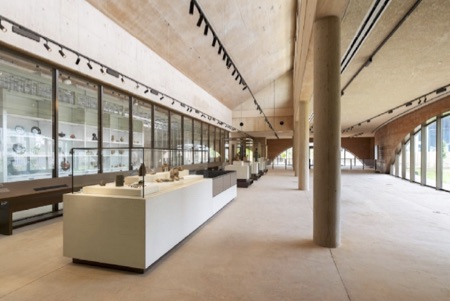
In an era where African culture continues to command global fascination – from blockbuster museum exhibitions to streaming documentaries – the question of who controls Africa’s heritage has become as important as the stories themselves. Cultural institutions across the continent are increasingly pushing back against old models of dependency, replacing them with partnerships rooted in equity, ownership, and long-term impact.
At the forefront of this shift is the Museum of West African Art (MOWAA) whose approach to international collaboration is quietly redefining how Africa engages the world. Rather than exporting talent, artefacts and knowledge overseas, MOWAA is insisting that power, skills and systems be built at home.
Historically, global partnerships have often positioned African institutions as beneficiaries rather than co-owners -receiving support, but losing control. MOWAA’s model deliberately challenges that imbalance. Its collaborations are designed not to extract expertise, but to embed it locally, ensuring that Nigerian professionals lead the work while international partners reinforce, not replace, local capacity.
Support from globally respected organisations such as Andrew W. Mellon Foundation, Ford Foundation and key diplomatic partners has enabled deep, long-term investment in conservation, archaeology, digitization and professional training. Crucially, these partnerships are structured around Nigerian leadership and institutional ownership, placing decision-making power firmly in local hands.
In practical terms, the difference is striking. Instead of shipping priceless collections abroad for conservation, international experts now work on-site in Nigeria, side by side with local teams. Rather than sending students overseas for technical training, instruction is delivered locally, strengthening domestic expertise. Research outputs are not controlled externally; they are generated, owned and disseminated by Nigerian scholars.
Other News
The impact goes beyond individual projects. Equipment remains in-country. Knowledge compounds over time. Skilled professionals are trained, retained and empowered. The benefits do not disappear when funding cycles end – they become part of the institution’s DNA.
Over time, this approach is helping to rebalance centuries-old flows of cultural authority. Africa is no longer merely a source of heritage to be studied and preserved elsewhere. Today, conservation, research and digitisation increasingly happen on African soil, under African leadership, with global collaboration serving as strategic support rather than institutional dominance.
For the entertainment and culture industry, the implications are profound. From exhibitions and films to academic publishing and digital archives, Africa is not just telling its own stories – it is building the systems that ensure those stories remain authentically African.
The result is a sustainable, future-facing model for cultural development: one where global partnerships accelerate growth without eroding sovereignty, and where African institutions emerge not as junior partners, but as confident custodians of their own cultural power.