Follow Us on Google
By Amechi Ogbonna
As food inflation continues to ravage household budgets, Nigerians are looking up to the Federal Government and its agencies to intervene in the best way possible to stem the ensuing hardship.
The call had become so vociforous that in the last two meetings, of the Monetary Policy Committee of the Central Bank of Nigeria (MPC), issues of isssues of inflation, rising exchange and interest rate were placed on the front burner by members of the comiiittee who noted with concern the continued aggressive movement in all the financial aggregates.
The Committee members had indeed expressed unrelenting resolve to restore price stability while providing the necessary support to strengthen the fragile recovery, leading to much of its decision to raise interest rate in the last two meetings as part of efforts to rein in inflation.
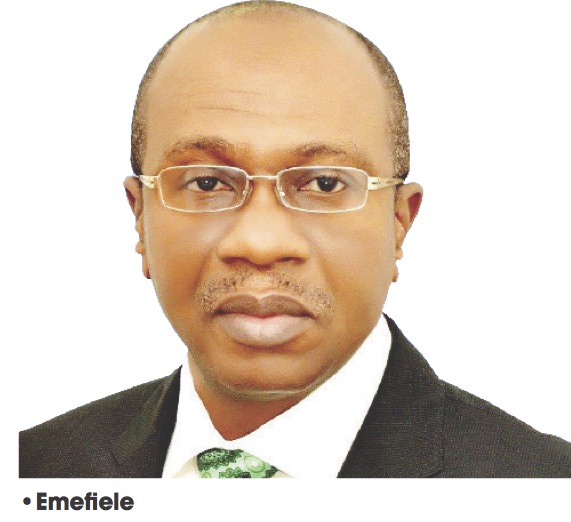
Governor of the CBN and Chairman of the MPC , Mr Godwin Emefiele who read the communique at the last meeting said that members were unanimous that given the aggressive increase in inflation, coupled with the resultant negative consequences, particularly on the purchasing power of the poor, as well as retarding growth, there is the need to continue to tighten. He however explained that the policy dilemma was hinged around the level of tightening needed to rein-in inflation, without dampening manufacturing output, which could result from the higher cost of borrowing.
The Committee also restated the need for the fiscal authorities to complement existing measures with new policy options, while urging the CBN to continue to use its development finance tools to support the agricultural and manufacturing sectors.
Reacting to some of policy options adopted by the monetary authorities to improve the performance of the economy, President, of the Lagos Chamber of Commerce and Industry (LCCI) Dr Michael Olawale-Cole, said the chamber has consistently advocated the removal of fuel subsidies and complete deregulation of the downstream petroleum sector to attract required investments.
He explained that most investors want to invest in an industry where they can recover their cost of production and also make profit. “While we expect some respite from the commencement of commercial private sector refining and modular refineries, we call on the regulators to ensure a conducive business environment that supports these investments coming on stream soon. The twin factors of fuel subsidy payments and crude oil theft have combined to deny Nigeria the gains of high crude oil price in the international market.” He stated.
Also speaking the Chief Executive Officer, Centre for the Promotion of Private Enterprises (CPPE), Muda Yusuf, noted that the fuel subsidy quagmire is one of the biggest burdens of fiscal management by government.
There are too many odds against the move to remove the subsidy, with the labour unions leading the vanguard.
“There were obvious concerns about the potential political cost to government and the ruling part. There are worries about the social cost given the excruciating poverty in the country. There is the challenge of trust deficit between the government and the governed.
But the economic cost of keeping the subsidy regime is huge as current estimates suggest it would cost over N6 trillion in 2023.
This would surely affect funding of critical infrastructures such as roads, railways, healthcare education and even security.” He said
With respect to petroleum products smuggling, the CPPE boss opined that beneficiaries of the fiscal leakages in the fuel subsidy ecosystem and their collaborators will continue to smile to the banks for the next one and half years until there is a policy reversal
He also warned that some states would struggle to pay salaries, especially states that are heavily dependent on federal allocation. Some state according to him, may have to layoff of part of their work force while many others will struggle to meet their financial obligations as subnationals.
Yusuf also pointed out that the nation’s macroeconomic risks would become elevated as fiscal deficit and borrowing will significantly surpass projections in the 2023 budget.
He also said that the CBN may have to continue to cover financing gaps through ways and means. This of course has serious inflationary implications. The macroeconomic outcomes would adversely impact on the exchange rate, leading to further depreciation of the currency.
Meanwhile, prospective investors in in the downstream oil sector would withhold their investments until the policy environment becomes conducive. Additionally, a major confidence crisis has been created around the Petroleum industry Act as a result of this capitulation.
With respect to the phenomenon of oil theft, the CPPE boss said the development symbolises a major failure of the state.
“The good news is that recent efforts at tackling the problem are yielding results.
The NNPC had reported that the country was loosing two billion dollars monthly to crude oil theft. This is outrageous. This situation had contributed to the weak fiscal space which governments at all levels have been grappling with. This has created very significant financing gaps, leading to rising fiscal deficit, unsustainable debt profile, soaring debt service burden and growing infrastructure deficit.”
For his part, Dr Frank Onyebu, Chairman, Manufacturers Association of Nigeria (MAN) lamented that Oil theft has been allowed to fester for a very long time.
“It started small but has grown in leaps and bounds over the years due to governments’ inaction. The magnitude of the theft in recent years has contributed largely to the crushing of our economy. The fact that we are unable to fund our budgets is a testament to the wanton and unbridled activities of criminal elements who have been profiting from our collective loss.”
Onyebu observed that Nigerian authorities , of course, have always known about the problem, but unfortunately for reasons best known them, refused to nip it in the bud. It is very obvious that corruption has played a major role in this unprecedented act of sabotage that threatens the very survival of the nation.
“It is good that some action has been started to expose the criminal activities of a few privileged Nigerians but more action is needed to not only to cripple the activities of these saboteurs but to also bring the perpetrators to book.
Commenting on menace of oil subsidy, Onyebu said it was clear again that corruption was playing a frontal role.
“First, it is unfathomable that, at this time and age, we are unable to refine our petroleum products. The humongous amounts spent by various governments over the years on refinery rehabilitation and turn around maintenance are enough to make us net exporters of petroleum products. Yet we still import the totality of our refined petroleum products.”
“The corruption-ridden subsidy payments are probably responsible for the attitude of government officials towards making our refineries work. Nobody has been able to provide data on refined products consumption with any degree of accuracy. We keep getting overblown, often conflicting, figures from government officials while smuggling of refined products across our borders continue unabated.
To tackle these problems, we need to fight corruption with all our might. Security agencies and other officials of government must wake up to their responsibilities. The government should leverage on technology to deal with oil theft. Our refineries should be made to work. Government could consider privatizing the existing refineries while encouraging the construction of new private refineries. Our security agencies should work on minimising smuggling of refined products. We would also need to deal with the issue of subsidy, which by all ramifications, is unsustainable. Subsidy would need to be removed but we need to first of all deal with the corruption associated with subsidy.
There are so many fiscal challenges that are strangulating the economy.
The challenges of infrastructural deficiencies, power supply issues, including incessant collapse of the national grid, multiple taxation, funding difficulties, unavailability of FX, to name but a few, often create very difficult investment for businessmen with resources to invest in the country. These need to be tackled urgently to avoid a total economic collapse.
Furthermore governments at all levels need to call an all stakeholders round table meeting to chart the way forward.
In addition the private sector needs to be fully involved in not only crafting policies but also their implementation even as the need for government to create an enabling environment for investments beckons.
But most importantly, we need to rid our nation of that hydra-headed monster called corruption
In his response, a development expert, Dr. Nathan Owhor, reckons that Nigeria’s big role in the global oil sector has been compromised by oil theft leading to its inability to meet its production quota.
He noted that the prosperity in any domestic economy and the states ranking in the global community will depend on its export capacity and global market share for goods and services.
Today the key drivers of the global economy are oil/gas and services which are essentially the product of R&D and innovations. But Nigeria is in great deficit of these capacities and therefore suffers from a 3-Dimensional-Tragedy; oil theft, poor R&D and absence of innovation/value addition in the sector.
These tragedies have made Nigeria’s participation in an integrated global economy unattractive and a huge dilemma. The opportunities cannot be accessed. Yet, she suffers from the unmitigated crisis in the global economic system. This is because hard bargaining and trade-offs, largely guided by narrow selfish economic interest are the hallmarks of international economic and trade relations amongst all societies.
The challenges of oil theft have clearly indicated the danger over reliance on oil poses to national development. The fact that the oil sector alone had continued to provide the bedrock for our national income receipts and payments is bereft of any sound economic judgement. The over dependence on the crude asset is no doubt a burble set to burst. The simple reason that societies are increasingly and progressively developing other sources of energy point unmistakably to the gradual end of crude as a factor in the world economy. Afterall, there was coal as a major source of heat energy for domestic and industrial use. Who said crude oil cannot suffer this misfortune in the years to come especially with the increasing investment in renewable energy and electric cars across Europe and America? The prosperity of the crude asset for most economies therefore is going to become a historical past though gradually.
Apart from oil theft, there are other intervening factors that could affect the prosperity of States who depend largely on the oil revenue. The COVID-19 global health challenge showed it had the capacity to slow down the global demand for oil. Again, global warming, a bye-product of globalization and its attendant flood water surge has ably demonstrated it could slow down the demand for energy. The 2012 and 2022 flood disasters in some parts of Nigeria are clear examples of natural disasters with capacity to define and limit energy consumption levels.
These flood disasters are worsened and aggravated by the oil vandals whose activities have destroyed the mangrove forest. The massive deforestation has moved the top soil and deposited same on the sea beds. These has created very shallow water ways thereby enabling massive flooding of low land areas by the overflow.
The immediate solution is to stop the vandals and their collaborators and dredge the waterways such that depths are achieved and maintained so that the overflowing waters are confined within the river banks.
While the government is dealing with the challenges in the oil sector, there is the urgent need to diversify the economy. The textile sector is capable of increasing government revenue and provide massive direct and indirect employments in the economy. The opportunities in its value chain alone are enormous. Unfortunately, this understanding appears to be in short supply presently. During the campaigns leading to the 2019 general elections, almost all the political parties spoke about creating employment in the domestic economy. There was in fact so much hype about making sure that the teeming unemployed youth populations were gainfully employed during the campaigns especially at the presidential level.
Surprisingly however not one of them had a spotlight on the textile and garment industry as an indispensable sector that will provide the needed employment. Even as the campaigns for the 2023 general elections have started, promises of creating job opportunities will once again take center stage for most candidates but it will probably remain a political sermon as in the past. How do you guarantee massive employment in an economy like that of Nigeria where R&D and high-tech innovative ideas which drive the service industry are presently absent or at best still emerging without the textile and garment industry?
Finally, oil theft has two unrelated dimensions with diverse implications for the domestic economy. There is the elite group who steal oil using large scale ongoing sea vessels but enjoy the cover and protection of powerful friends and collaborators in authority. These are individuals who are driven only by greed and the desire to meet and maintain a predatory lifestyle on the economy. At this level of corporate sabotage, you will easily find one ‘scapegoat’ in a while who is used to make a public show which is designed to divert attention as the plunder and stealing continues. The other group is the artisanal members of the degraded and exploited host societies whose expectations of the good life from the crude oil deposits has remained a pipe dream. The individuals in this group are obviously reacting to years of neglect and abandonment in a devasted ecosystem with the traditional life of fishing and farming destroyed. In a way it is a legitimate means to earn a living since the government and the Multinational Corporations (MNCs) have failed in their corporate social responsibility. The point being made here is that very peaceful oil exploration once existed before the present face-off which has now defined the entire landscape of the oppressed, neglected and deprived host societies. The solution to restore normalcy is not for the MNCs to close businesses and move to other locations within the economy or for the State to attack and destroy the jerrycan businesses and further pollute the environment by their action, but to create conditions that will restore hope in the host communities while dealing comprehensively with the elite group involved in mega oil theft activities.
FUEL SUBSIDY
Subsidy clearly demonstrates the response of government to cushion the effect of global market shocks or bad policy options. It could also a deliberate action of government to protect and encourage certain aspects of businesses in the domestic economy. Fuel subsidy therefore in principle is a good policy framework in a society like Nigeria with high poverty index. But what appears to be the missing link in the Nigeria’s fuel subsidy experience is the absence of data, accountability and the failure of government to refine crude oil locally.
From where most Nigerians stand, the concern is not fuel subsidy. What is of serious concern is the absence of accurate data because at the moment, government importation and consumption levels are not known. The oil sector appears to be a closed and guided economy with so much official secretes. Again, there is so much patronage on fuel consumption by government officials with so many vehicles such that tracking fuel utilization on daily basis has become difficult. Even the number of vehicles on the convoy of most government officials has very high impact on fuel consumption. Some of the government vehicles on the road most times have no business being on the road. The amount of money spent on subsidy could be reduced if vehicles on convoys and unofficial trips are minimized. The other snag which is huge is the trans boarder smuggling of petroleum products. While government is spending huge sums to sustain the fuel subsidy regime most Nigerians are feeding fat through the smuggling of the products.
On the heels of poor data in the subsidy question is the issue of accountability by desk officers who manage the entire value chain from shipping to the tank farms and to the filling stations. From the standpoint of most Nigerians it is a bazar of no mean proportion where those who are supposed to be guardians of the common patrimony are neck deep in wrong doing. The word corruption has lost its meaning. It is now a feast celebrated with no apparent sanctions. Nigerians currently discredit the sanction management system because it is not equitable. Nigerians are profiled based on tribe, religion and party in the consequence management mechanism. This development is not good enough for a plural society with multiple layers of loyalty and allegiance.
The abysmal failure of government to repair the aging refineries or build new ones is a demonstration of failure. From where we stand as ordinary Nigerians there is no explanation to justify why crude oil can not be refined locally to meet domestic consumption. Anybody who has sufficient reason to justify this development will no doubt have a page in the Guinness Book of Records. The activities of the artisanal refiners have clearly shown that refining crude oil into petrol, gas and kerosene is not a rocket science. In the Southern part of the country, these products are available in some filling stations. While we must admit the danger some of these products pose to vehicles, homes and individuals because of the crude operational environment, the truth is that it is possible. If ‘refining’ could be done at this level, then the government has no excuse. The government should take the initiative and let the bureaucrats in the oil and gas sector of the economy lead by example and support the government to accomplish this age long expectation. Alternatively, the artisanal refiners could be organized into clusters with clear government guidelines and regulatory framework as an interim measure. The raw materials are available. Let there be petroleum products for domestic consumption.