Follow Us on Google
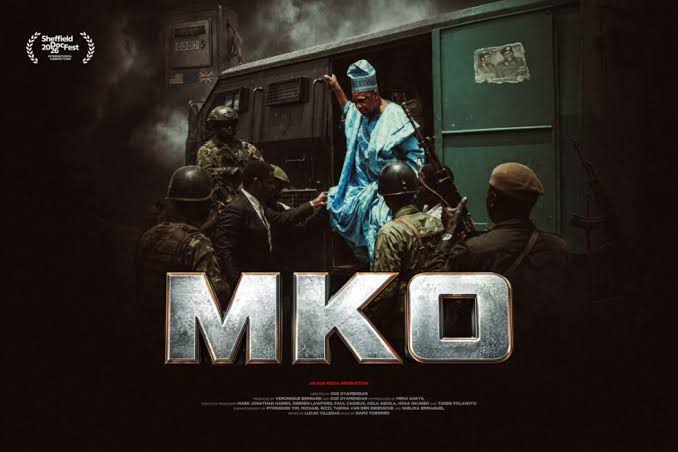
The story of the late Chief Moshood Kashimawo Olawale (MKO) Abiola and the historic June 12, 1993 presidential election is reaching audiences across Nigeria, as the documentary, MKO, continues its theatrical run in 48 cinemas nationwide.
The 108-minute film, directed by Nigerian-American filmmaker Ose Oyamendan, is currently showing in cinemas across Lagos, Abuja, Port Harcourt, Benin, Enugu, Ibadan, Ilorin, Kaduna, Jos, Abeokuta, Asaba, Awka, Owerri, Ile-Ife, Ekpoma, Ede and several other locations.
The nationwide spread marks another milestone for the documentary, which premiered at the National Theatre, Lagos, on October 1 and opened commercially in cinemas the following day.
Now in its second week of theatrical release, MKO is being screened by major cinema chains and independent theatres, including Filmhouse, Genesis, Silverbird, Nile, EbonyLife and others. Its current schedule runs from October 9 to 15.
Lagos has one of the largest concentrations of screening venues, with the documentary showing at EbonyLife, Victoria Island; Filmhouse Landmark; Genesis Maryland; Silverbird Galleria; Silverbird Ikeja; Nile x Viva Ikeja; Ozone Yaba and other cinemas.
In Abuja, the film is screening at The Jays, Silverbird Jabi and Silverbird SEC Abuja, while Edo State audiences can see it at Denco and Sandford cinemas in Ekpoma as well as Genesis and Kada cinemas in Benin City.
It is also showing in Port Harcourt, Enugu, Ibadan, Ilorin, Kaduna, Jos, Asaba, Awka and Owerri, among other cities, taking the June 12 story beyond Lagos and Abuja to audiences in different parts of the country.
Distributed by Nile Entertainment, the documentary is the culmination of a filmmaking journey spanning about 13 years for Oyamendan, who has said that more than $1 million went into bringing the project to the screen.
The film examines Abiola’s political journey, the June 12, 1993 presidential election widely regarded as having been won by him, its annulment and the long struggle that followed.
The crisis generated by the annulment became one of the defining episodes of Nigeria’s political history and eventually helped to make June 12 an enduring symbol of the country’s democratic struggle.
At the Lagos premiere, the Minister of Art, Culture, Tourism and the Creative Economy, Hannatu Musawa, drew attention to the importance of preserving that history for younger Nigerians.
“For too many young Nigerians, June 12 is simply a public holiday,” she said. “This film turns it back into our memory.”
For Oyamendan, MKO also carries a personal professional connection to its subject. The filmmaker began his journalism career at Weekend Concord, one of the publications in the Concord newspaper group founded by Abiola.
He would later pursue a career that took him through advocacy and filmmaking in the United States, but the story of Abiola and June 12 remained a project he was determined to bring to the screen.
The documentary’s appearance in 48 cinemas is particularly significant in a Nigerian cinema market where fictional feature films and comedies traditionally command the widest theatrical distribution.
Its nationwide run is also opening the June 12 story to a generation of Nigerians who were either unborn or too young to have experienced the political turmoil surrounding the annulled election.
More than three decades after the election, therefore, Abiola’s story is moving from history books, newspaper archives and political recollections to cinema screens across the country.
And for a younger generation for whom June 12 may have become primarily a date on the national calendar, MKO is seeking to restore the people, sacrifice and struggle behind the holiday.