Follow Us on Google

In marking the International Day of the Victims of Enforced Disappearances on August 30, the United Nations (UN) drew attention to a painful reality. Across the world, hundreds of thousands of people are missing as a result of armed conflicts, violence, disasters, migration and, in some cases, enforced disappearance. These persons must not be forgotten.
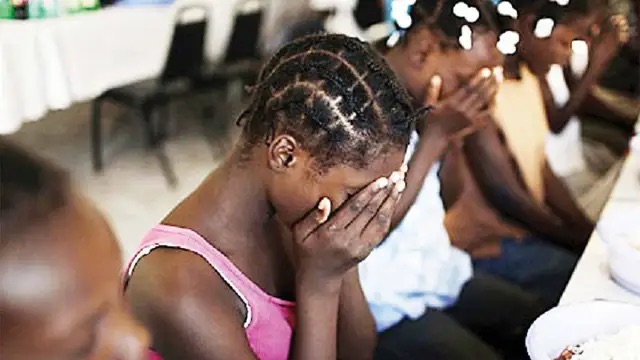
The human cost of the menace is stark. Behind every missing person case is a family trapped in uncertainty, not knowing whether their relative is dead or alive. And they have no idea where that person may be, if alive. In some cases, this can be a lifelong torment.
This year’s observance marks 20 years since the adoption of the International Convention for the Protection of All Persons from Enforced Disappearance. The theme of this year’s celebration, “Victims first, Actions now” is a timely reminder that governments cannot afford to treat disappearance as mere statistics. Every effort must be made to find them and reunite them with their families.
The global picture is distressing. The UN says hundreds of thousands of people have vanished during conflicts or periods of repression in at least 85 countries. Enforced disappearance is not confined to one region or one type of conflict. It is reportedly used as an instrument of repression and terror. Impunity compounds the suffering of victims and their families. Those families have a fundamental right to know what happened to their loved ones.
Globally, there are about 500, 000 cases of missing persons. Nigeria has a particularly troubling story to tell. According to the International Committee of the Red Cross (ICRC), about 17,000 missing person cases, out of about 25, 000 recorded disappearances, are currently being traced in Nigeria. This figure is distressingly huge. Still, the ICRC cautions that many cases are never reported. This gives an idea of the scale of the tragedy.
The North-East bears the heaviest burden. Years of Boko Haram insurgency and other forms of armed violence have separated families, displaced communities and left many people unaccounted for. The figures are particularly alarming. There are about 9,000 cases in Borno, 3,000 in Adamawa and 3,500 in Yobe. The combined total of these figures is 15,500.
However, this tragedy is not restricted to the North-East. There may be substantial numbers of missing persons in other parts of the country, also arising from terrorism, banditry or communal violence. Nigeria therefore needs a nationwide mechanism for documenting, tracing and resolving missing-person cases.
Other News
The North-East nevertheless deserves special attention, if only for the sheer size of its burden. Insurgency remains a major driver of disappearances there. Families have lived for years with the anguish of not knowing the fate of relatives taken during attacks. Some people separated from their families during displacement have simply disappeared from the records. For such families, the passage of time does not necessarily diminish the pain. Sometimes, uncertainty itself may hurt more deeply.
This is why the Federal Government must treat the tracing of missing persons as a matter of national importance. The government should provide necessary assistance to the ICRC and the Nigerian Red Cross Society to intensify their tracing activities. The ICRC has been dogged and quite successful in locating missing persons and restoring family links in Nigeria. The government should leverage this experience.
Government support should include improved access to relevant records, stronger cooperation among security agencies. Humanitarian organisations and communities must also be co-opted into the effort. Adequate funding is indispensable.
But tracing the missing is only one side of the responsibility. The government must confront the conditions that cause people to disappear in the first place. Insurgency, terrorism, banditry, kidnapping and other forms of insecurity must be tackled with greater determination. Where disappearances involve state agents or persons acting with state support, allegations must be investigated promptly, thoroughly and impartially.
The government must also ensure that families are not left to carry the entire burden of the search. The UN emphasises that affected families should be at the centre of efforts to resolve disappearance cases. They need information, psychological and social support and legal assistance. They need justice and compensation.
The International Day of the Victims of Enforced Disappearances should not be reduced to another commemorative event. August 30 should remind Nigeria that every missing person is a human being with a name and a family. It should equally remind the authorities that silence is not an answer to the myriad of questions asked every day by distressed families of missing persons.
Nigeria must address the insecurity that continues to produce new cases. It is not enough to search for people after they disappear; the conditions that make disappearance possible must be dismantled. We urge the Federal and state governments, security agencies, the ICRC, the Nigerian Red Cross Society, civil society organisations and community leaders to strengthen cooperation in tracing the missing persons. No missing Nigerian should be forgotten.