Follow Us on Google


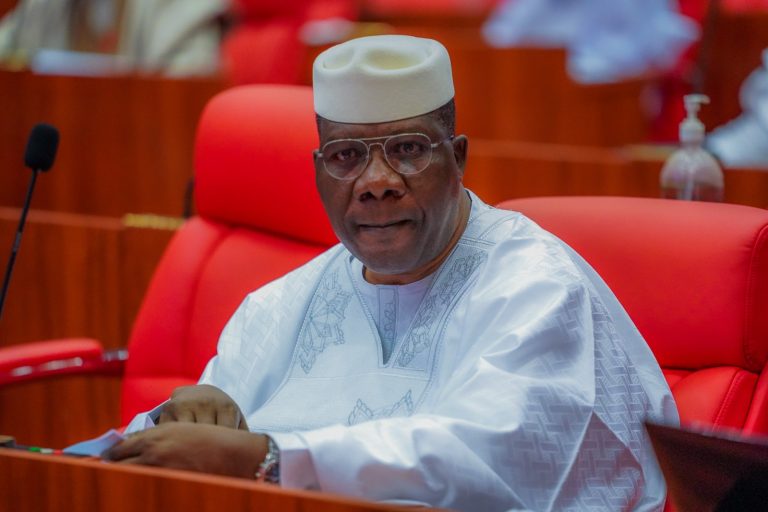
The Senate Leader, Opeyemi Bamidele recently disclosed that the National Assembly has proposed the creation of 74 additional seats for women in the Senate and the House of Representatives. The plan, meant to address gender imbalance in the nation’s political representation, would also ensure the creation of three additional seats for women in each of the 36 state Houses of Assembly. Bamidele made the disclosure at the 2026 Law Week organised by the International Federation of Women Lawyers (FIDA), Ekiti State chapter.
According to the Senate Leader, the new arrangement would provide 37 additional seats in the Senate and 37 additional seats in the House of Representatives. This would ensure that every state of the federation and the Federal Capital Territory (FCT) would have one additional representative in each chamber, without displacing existing constituencies or elected lawmakers. He also explained that the proposed special seats would provide women greater access to elective positions and decision-making platforms, particularly against the background of their low representation in Nigeria’s legislative institutions. He also disclosed that the arrangement would operate for 16 years, covering four electoral cycles, after which it would be comprehensively reviewed. However, the new plan would need legislative backing and approval from the state Houses of Assembly before it is finally passed into law.
Granting women special seats in the National Assembly and the state Houses of Assembly is long overdue. The lawmakers should expedite action on the bill to achieve the desired goal. Female representation in the National Assembly and the state Houses of Assembly is shrinking. For instance, in the current 10th Senate, there are four female senators out of 109 members. This translates to about 3.7 per cent to 4 per cent representation. Similarly, there are 17 women in the 10th House of Representatives out of 360 members. This represents about 4.7 per cent.
The story is not significantly different from what obtains in the state Houses of Assembly. Out of approximately 990 total seats across Nigeria’s 36 State Houses of Assembly, women reportedly occupy between 45 and 54 seats. This represents about 4.4 per cent to 4.5 per cent of the total. This contrasts sharply with what obtains in some African countries.
For instance, Rwanda has good example of female representation in parliament, with women holding 63.75 per cent of the seats (51 out of 80) in the Chamber of Deputies (the Lower House). In the Senate, women hold 42.3 per cent. Female representation in South African parliament stands at roughly 43 per cent to 45 per cent. In the Lower House, women make up about 44.9 per cent to 44.6 per cent. In the Upper House, female representation has fluctuated, shifting to around 39.6 per cent (21 seats) following recent adjustments. Some other African countries may have better female representation in parliament than Nigeria.
We welcome the idea of special seats for women in parliament and urge the lawmakers to ensure its realisation. Having more women in parliament will fast-track the socio-economic development of the country as issues affecting women and children will receive urgent attention. There is the likelihood that women will address societal needs, such as the overhaul of primary healthcare systems, educational reform, protection against sexual and gender-based violence, and the economic empowerment of informal workers.
In a country like Nigeria, where maternal mortality rates remain high and millions of children are out of school, the perspective that female legislators will bring to the budgetary and law-making processes is an urgent developmental necessity. They should redirect legislative oversight toward the very sectors that determine long-term national productivity. This supports the saying – educate a woman, educate a nation.
Furthermore, women in legislative leadership will bring vital perspectives to the pressing challenges of peace-building and national security. While men historically dominate the security apparatus and the legislative committees that oversee them, it is women and children who bear the disproportionate brunt of displacement, economic ruin, and wartime violence.
Female lawmakers will focus on the root causes of these challenges, trauma, healing and economic integration over purely militaristic interventions. Their presence in parliament will ensure that peace treaties and security appropriations are comprehensive and sustainable.
Moreover, women in leadership have historically demonstrated a strong track record of transparency and resource optimization. Their participation often serves as an internal check against corruption, ensuring that public funds are utilised more efficiently for grassroots development.
The pathways to political office in Nigeria are heavily monetised, defined by violent processes, and entrenched male networks that operate deep into the night, which effectively alienates qualified married women. To encourage women to participate in politics, expression of interest forms should be free. Doing so will enable more women participate in politics. Beyond this gesture, we urge women to willingly participate in politics and support their fellow women.