Follow Us on Google
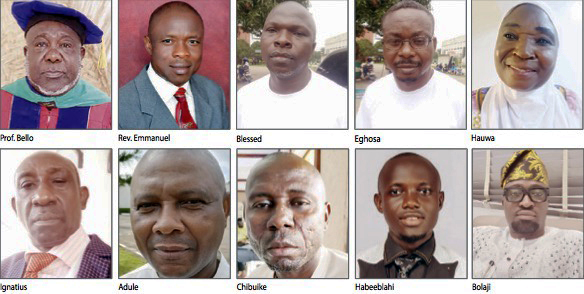
From Scholastica Hir, Makurdi; Tony John, Port Harcourt; Noah Ebije, Kaduna; Lucky Ighomuaye, Benin; Laide Raheem, Abeokuta; Okey Sampson, Umuahia and Femi Folaranmi, Yenagoa
Senate Leader, Opeyemi Bamidele, recently, revealed plans to sponsor a constitution amendment bill to introduce a single six-year tenure for president and governors in Nigeria after the 2027 general elections.
According to him, the current constitution arrangement, which allows for president and governors to serve two four-year terms, often compels political officeholders to begin strategising for re-election after assuming office.
This, he said, diverts attention from governance, and believes his proposed bill will ostensibly remove the pressure and distractions associated with seeking re-election.
In this report, Nigerians share their views on the intended bill.
It has potential to restore public confidence in leadership -Prof. Mohammed Bello Magaji, law lecturer, AUN; Yola
The proposal by Senate Leader, Opeyemi Bamidele, to amend the Nigerian constitution to provide for a single six-year tenure for the president and state governors is a timely and forward-looking reform. It addresses one of the most persistent structural weaknesses in Nigeria’s democratic practice—the overwhelming preoccupation of incumbents with re-election rather than governance. If carefully designed and implemented, this reform holds the potential to significantly improve governance outcomes, deepen accountability, and restore public confidence in leadership.
One of the strongest arguments in favour of a single six-year tenure is that it eliminates the “second-term syndrome” that has come to define Nigeria’s political culture. Under the current two-term structure, elected officials often begin strategising for re-election almost immediately after assuming office. The first term becomes less about delivering on campaign promises and more about consolidating political alliances, appeasing power blocs, and mobilising resources for a second-term bid. This has been evident across multiple administrations at both federal and state levels, where policy continuity and long-term planning are sacrificed on the altar of political survival.
The Nigerian experience has shown that second terms are frequently less productive than first terms. A single tenure eliminates this dichotomy, ensuring that the entire period in office is treated as a unified window for performance and legacy-building.
Nigeria’s challenge isn’t length of tenure, but quality of leadership -Rev. Emmanuel Olorunmagba, cleric; Kaduna
The proposal deserves serious national conversation rather than emotional or partisan reactions. Constitutional amendments of this magnitude must be driven by the long-term interests of Nigeria, not by the political convenience of the moment.
However, I acknowledge the concern that elected executives often become preoccupied with re-election campaigns shortly after assuming office. Indeed, excessive politicking has, in many instances, distracted governments from delivering on their electoral promises. However, replacing two four-year terms with a single six-year tenure does not automatically guarantee better governance.
The real challenge confronting Nigeria is not merely the length of tenure but the quality of leadership, the strength of democratic institutions, accountability, transparency, and effective citizen oversight. A leader who lacks vision, competence, or integrity may perform poorly whether given four, six, or even eight years. Likewise, a committed and visionary leader can deliver remarkable results within the existing constitutional framework.
NASS should concentrate on strengthening institutions that make government to work -Blessed Omoegbe Jattoh, activist; Benin
The failure of governance in Nigeria is not about tenure, it’s not about time. It’s about patriotism. It’s about people that believe in this thing called Nigeria. Now, proposing a six-year tenure for presidency and governors in Nigeria is a distraction from the many issues we have in this country right now.
What the National Assembly should concentrate on is to strengthen institutions that make government to work. We need pure independence for the Independence National Electoral Commission (INEC) and in the judiciary. These are the two organs that politicians have continuously used to perpetuate themselves in power.
It’s dead on arrival -Eghosa Ogbebor, activist; Benin
It is dead on arrival. We should continue our four-year or eight-year (two terms) rather than six -year single term because any serious government will work within the space of four years.
It takes a smart person to actually make Nigeria work again. So, if you are saying six years, if the person is docile like what we have now, the country will continue to suffer. We are all suffering and languishing in poverty and abject poverty.
It’d provide leaders with sufficient time to focus on governance -Benjamin Yager, director, SDGs, Benue State
For me, the six-year single term is the best option. If you carefully examine the current four-year tenure system, you will discover that an elected executive effectively has only about two years to focus on governance. The remaining period is often consumed by campaigns, political mobilisation, and preparations for re-election. These distractions make it difficult for leaders to concentrate fully on governance and development. Government programmes are often delayed because attention shifts toward securing political support and various approvals needed to remain politically relevant. As a result, many projects are stalled, and development suffers.
Other News
A six-year single term would provide leaders with sufficient time to focus on governance without the pressure of seeking re-election. It would allow them to concentrate on delivering results rather than trying to please political interests in order to secure another term.
Six-year term will enable officials focus on delivering results -Hajia Hauwa Isah, chairperson, Women’s Wing, JNI, Makurdi
I think the proposed bill seeking a six-year single tenure for presidents and governors deserves serious consideration.
Under the current arrangement, leaders often spend a considerable part of their tenure preparing for re-election. This diverts attention and resources away from governance and service delivery. Campaign activities consume time, money, and energy that could otherwise be invested in improving the lives of citizens.
If elected officials are given a single six-year term, they can focus entirely on delivering their mandate.
It can curtail self-succession damages -Ignatius Chukwu, media practitioner; Port Harcourt
No system is above abuse by a people determined to destroy their societies due to self-interest or greed. Impunity can destroy even the best concepts and structures. So, the single term intended bill alone cannot go far if other laws do not help to curtail impunity, judicial compromise, defections, etc.
This suggestion was made years back by Goodluck Jonathan but was rejected mostly by then ACN, and those who accused him of seeking to enjoy a fresh term via the new law are coming back to it. That means Jonathan was right, and the likes of Tinubu were wrong.
However, I totally support the idea. It has many advantages, especially curtailing self-succession damages.
This will reduce tension in the polity -Okechukwu Adule, public affairs analyst; Umuahia
In Nigeria, our politicians devote most of their time to politicking rather than to actual service. Someone will be elected into office as a president or a governor, after staying for merely three or six months in office, the next thing that will preoccupy his mind will be how to return for a second term and this will be at the detriment of his service to the people.
This intended bill will not only reduce tension in the polity, but it will also bring sanity and widen the political space.
It is good but should not be pursued with sentiments -Dan Chibuike, journalist; Umuahia
The constitutional amendment for a six-year single term. My prayer is that political meaning should not be read into it, otherwise the proposal may not survive at the National Assembly because many present and former legislators who are now governors are also eying the presidency.
Effective leadership is driven more by accountability than by length of tenure -Habeeblahi Adekunle Tijani, chairman, NANS; Abeokuta
I do not believe that introducing a single six-year tenure for the president and state governors should be a priority at this time. Nigeria is currently confronted with far more pressing challenges that require urgent legislative attention. Issues such as insecurity, youth unemployment, the rising cost of living, inflation, inadequate healthcare, and constitutional reforms that strengthen local government autonomy and electoral credibility deserve greater attention than a proposal to alter the tenure of elected executives.
The argument that a single six-year term would eliminate the distractions associated with re-election may have some merit, but it does not address the fundamental issues affecting governance in Nigeria. Effective leadership is driven more by accountability, competence, and strong institutions than by the length of tenure. A leader who is committed to good governance will remain focused regardless of whether reelection is an option.
We should strengthen our institutions -Bolaji Adeniji, public affairs analyst; Abeokuta
I think the proposal to have a six-year single term for public office holders is for me, neither here nor there. First off, what brought this conversation was the need to engender accountability and deliver better governance to the people and that we’re losing too much with the distraction of re-election under the current system. However, we are dealing with a fundamental issue of culture and mindset that bothers on corruption, mismanagement and crass opportunism on the part of the political class.
Until we strengthen our institutions, clean the electoral process and give more bite and independence to the judiciary, we may just solve one problem to start managing another one. Otherwise, we will only elect people who will stay on for six years and resolve to amass as much as possible for a lifetime, run governance as they wish and leave the stage for the next person who will come to utilise his own six years.
It will help in adapting strategic intentions for governance – Brata Igiran, banker; Yenagoa
It will make them strategic and output measurable. It will help political parties look deeply at long term, medium term and short-term strategies and evaluate performance.
It will also aid to reduce risk of repetitions in projects and development. It will help in adapting strategic intentions for governance.