Follow Us on Google

-
Warns no political ambition is worth blood of any Nigerian
-
Says non-state actors may disrupt movement of sensitive, non-sensitive materials
___________________________________________________________________________
From Romanus Ugwu, Abuja
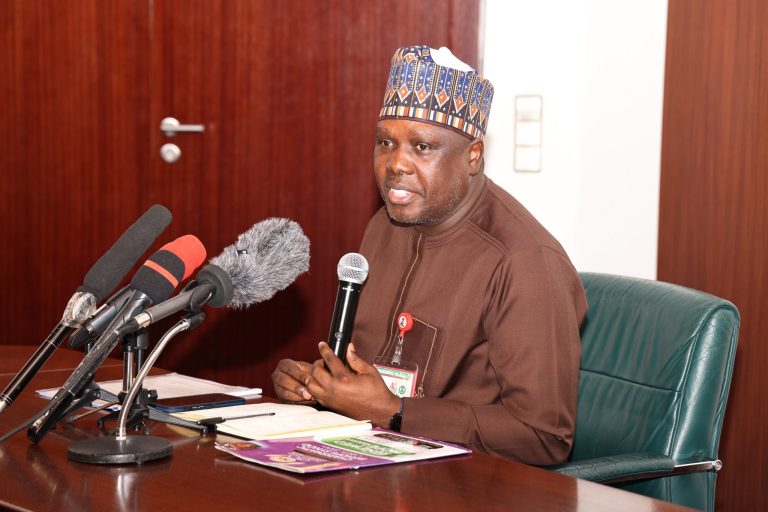
The chairman of the Independent National Electoral Commission (INEC), Joash Amupitan, has lamented that the build-up to next year’s general elections has witnessed a disturbing escalation in political intolerance, incendiary rhetoric and coordinated physical attacks on campaign convoys.
Amupitan expressed the discomfort in his address at the INEC-Office of the National Security Adviser (ONSA) Strategic Election Security Conference held in Abuja on Thursday, warning that no political ambition is worth the blood of a single Nigerian.
He said that such violence had been unleashed on campaign convoys, town hall gatherings, party offices and supporters across multiple states, singling out states such as Lagos, Edo, Ekiti, Enugu, Ebonyi, Delta, Cross River, Oyo and Benue.
“We cannot speak of preparedness without confronting an urgent and deeply troubling reality unfolding across our political landscape right now.
“Since the commencement of open campaigns in August 2026, Nigeria has witnessed a disturbing escalation in political intolerance, incendiary rhetoric, and coordinated physical attacks on campaign convoys, town hall gatherings, party offices, and supporters across multiple states, including Lagos, Edo, Ekiti, Enugu, Ebonyi, Delta, Cross River, Oyo, and Benue.
“INEC condemns this wave of political campaign violence in the strongest, clearest, and most unequivocal terms. Every Nigerian citizen, every political party, and every candidate has an inalienable constitutional right to canvass for votes peacefully in every ward, local government, and state of this federation without fear of ambush, arson, or intimidation.
“No political ambition is worth the blood of a single Nigerian, and no party or political actor has the right to turn public spaces into theatres of thuggery or declare any territory a no-go area for lawful political engagement,” he warned.
Expressing further reservations over the trends, Amupitan said: “Equally unacceptable, and deserving of the severest national condemnation, is the growing pattern of harassment, intimidation, and physical attacks directed against the leadership, staff, and ad hoc workers of INEC by supporters and agents of political parties, both within Nigeria and abroad.
“Over recent weeks, we have seen party zealots attempt to besiege commission facilities, threaten electoral officers, and subject INEC leadership to coordinated hostility. Let me be unmistakably clear: INEC officials are non-partisan public servants discharging a sacred constitutional mandate.
“When party supporters attack our personnel or seek to intimidate our leadership, they are not merely assaulting individuals; they are attempting to coerce an independent constitutional referee and subvert the democratic order. We will neither be intimidated nor blackmailed into compromising our neutrality, and every attack on INEC personnel, facilities, or materials will be met with the full weight of the law.
Other News
“Let me also remind all political leaders and party hierarchies that accountability does not end with the foot soldiers who throw stones or wield weapons. Party leadership bears moral and political responsibility for the conduct of its candidates, campaign councils, and youth wings. Signing peace accords in Abuja while tolerating or financing thuggery in the states is a contradiction our democracy can no longer afford,” he warned.
While enumerating the implications of failure to arrest the situation for next year’s general elections, he said: “We must understand the grave strategic stakes of failing to arrest this violent trajectory immediately. Domestically, unchecked campaign violence carries devastating implications for the 2027 general election.
“First, voter suppression and disenfranchisement: campaign violence manufactures an atmosphere of pervasive fear that depresses turnout.
“When bullets replace ballots and rallies end in bloodshed, ordinary citizens stay home, effectively disenfranchising millions of peaceful Nigerians, particularly women, youth, elderly voters, internally displaced persons, and the 232,658 Persons With Disabilities on our national register.
“An election marked by low turnout driven by fear weakens the democratic mandate of whoever emerges victorious. Secondly is threat to human capital deployment. Conducting a general election across 177,299 polling units requires mobilising over 1.41 million ad hoc personnel, the overwhelming majority of whom are patriotic National Youth Service Corps (NYSC) members, alongside seasoned academics serving as collation and returning officers.
“No parent or institution will willingly deploy young Nigerians into environments where political thugs operate with impunity. The third is poisoning the post-election environment. Pre-election violence conditions the political climate for post-election rejection.
“When campaigns are fought with weapons, hate speech, and existential threats rather than policy ideas, losing parties and their supporters are primed to reject credible outcomes, turning collation centres into flashpoints and triggering protracted civil unrest.
“Beyond our borders, the implications for the West African sub-region are equally profound. Nigeria is not merely another state in ECOWAS; we represent more than half of the sub-region’s population, demographic vitality, and economic weight.
“At a critical historical juncture when West Africa is grappling with democratic backsliding, unconstitutional changes of government, and transnational insecurity across the Sahel, a peaceful, free, fair, and credible election in Nigeria serves as the primary anchor of regional stability and constitutional order.
“Conversely, electoral turmoil or protracted post-election instability in Nigeria would send destructive shockwaves across West Africa, disrupting regional trade corridors, triggering cross-border displacement, emboldening anti-democratic forces, and weakening collective security across the entire Gulf of Guinea and Lake Chad basin. Safeguarding the integrity of Nigeria’s 2027 polls is therefore both a domestic constitutional duty and a vital regional security imperative,” he noted.