Follow Us on Google

Adebisi Tijani
Disturbing incidents of terror and political restiveness in the Sahelian country of Mali have virtually left the government of President Ibrahim Boubakar Keita flat on its torso.
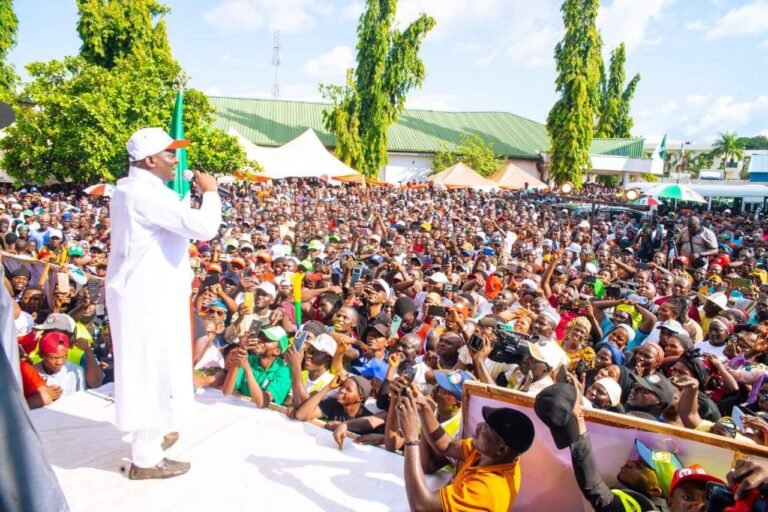
Since the first week of June, tens of thousands of demonstrators have been massing in the capital, Bamako, demanding the resignation of President Ibrahim Boubakar Keita, popularly referred to as IBK.
The first of the protests having taken place on June 5 , the rallying opposition forces behind the civil demonstrations, Rassemblement des Forces Patriotiques (;RFP) – Assembly Of Patriotic Forces- has prefixed June 5 to its name to be known as M5-RFP
Just last week ( July 11) , demonstrators in their thousands stormed the capital once again, calling out for the resignation of President Ibrahim Boubakar Keita.
Leading the mass political movement to effect a new direction and national leadership in Mali is the highly influential Mahmoud Dicko, a strict imam and patriot as well as a former ally of the incumbent president. Dicko has since emerged as the single greatest threat to the administration of IBK .
The long-festering political crises exploded into the streets of Bamako after so much had been endured for far too long under a corruption-propped , tactless and ineffective management of governance. The gross misrule has led to the wanton deaths of thousands of civilians and soldiers, including those of the United Nations peace-keeping forces. And the ever-worsening crises have rendered hundreds of thousands homeless.
Mali has in addition been tragically subjected to the unending tyranny and gruesome attacks of Islamic jihadists. Some of such terror gangs are linked to Al Quaeda while others are affiliated to the Islamic State.
And into the ever-rxpanding catastrophe and mass misery could be added yet numerous victims of deliberately instigated inter-ethnic violence.
Complicating the whole chaos are allegations of massive corruption, the virtual collapse of the economy in ways that have been having an attenuating impact on public services and the educational sector.
Ibrahim Boubakar Keita has been in the saddle as president of this vast but impoverished country since 2013 .
So far, 530 civilians have been killed during the mass demonstrations, according to Michelle Bouchelet, the United Nations Human Rights chief.
In a statement, she declared that ethnic militias, originally formed to protect the Fulani and Dogon communities, have resorted to “ killing people, stealing cattle, looting granaries and burning homes”.
A recent massacre of villagers has exacerbated the fury against the government of IBK. It has been irredeemably failing to bring an end to the devastating attacks of terror groups in northern and central parts of Mali.
According to Le Pont, Imam Dicko had warned IBK about the consequences of his failure to pay heed to public opinion ever before the latest rage of protests. “ He ( President Ibrahim Boubakar Keita) has not taken the lessons. He doesn’t listen to people. But this time around, he’d understand.”
And, surely, IBK is having an emergency grasp of such understanding.
With Dicko as the moral arrowhead of millions of Malians constituting the opposition, IBK is very much on his way to truly ‘understand’
In his crises-weary government,. IBK has had to change prime ministers as though it has been an engagement of changing diapers
For now, the previous government had to step down in the heat of the mass protests, especially in reactions to the massacre of villagers.
The former Minister of Finance, Boubou Cisse,, now the new prime minister, has been saddled with the task of forming a new government.
Since 2012 , when ethnic Touareg fighters launched a rebellion in the north of the country, the terrorist war of attrition has kept expanding its flames of devastation.
The Touareg rebellion got fortuitously hijacked by well-armed terrorist groups that had been for long waiting in the wings. But the destabilizing destructive machinations of the terrorist groups were brought under control as a result of the swift intervention of France in 2013 . It was after the ensuing relative peace that elections were conducted. Ibrahim Boubakar Keita emerged president within hopes that he’d help save Mali from sliding into doomsday.
The presence of thousands of UN troops in the country has not meant much to working out the urgently needed solutions to get the country back on solid feet.
The terrorizing Islamic gangs have not only suffocated the government into administrative paralysis, they have extended their destabilizing and destructive tentacles into the neighbouring countries of Burkina Faso and Niger.
The terrorist groups have seized vast expanses of territory from the government of Mali since 2012 Relying on some marabout magic to get back such lost territories has no space in the well-funded war machines that mint dollars from oil-rich capitals .
Two years ago (2018), IBK was reelected for a second five-year term. But then he has since been having to ride against the waves of political turmoil and terrorist violence. And his administrative headaches have been worsened by the pathological challenges of the coronavirus pandemic.
Nevertheless, despite threats of Islamic terrorist groups and the rage of coronavirus, parliamentary elections were conducted late March. The turnout, at 35 %, was predictably low . During the exercise, there were allegations of vote-buying, rigging and intimidation of opponents by the foot soldiers of the president’s party. Such savage threats to democracy was capped with the kidnapping of the opposition leader , Soumaila Cisse.
The precarious situation got further worsened by the constitutional court which reversed the results of some 30 seats in favour of the ruling party. The kangaroo judgement triggered mass outrage and protests across several cities in the country.
The invidious ruling of the constitutional court served it’s ignoble objectives. IBK’s political ally and loyalist, Moussa Timbine, secured a seat in the legislative house. And he has since been fortuitously transformed into the president of the parliament.
Such open and crude violation of democratic norms has further demonized the image of IBK in the eyes of the opposition and conscientious Malians.
In a proactive stance to bring the crises under control, ECOWAS recently sent a delegation to Mali, offering a pacifist proposal for a “ consensual government of national unity’.
Members of the ECOWAS mission equally drew attention to the fact that the disturbing judgement of the constitutional court , towards the close of April, has led to the exacerbation of the crises in the country.
In a communiqué, the ECOWAS delegation demanded that the government reconsider the contested results across the affected constituencies and hold fresh elections as a matter of urgency.
Judicial sources reveal that four out of the nine-member controversial constitutional court have since opted to bow out.
Having to cope with so much death and devastation across the country, opposition forces are not seeing any possible solution across the mediation efforts of the ECOWAS delegation. In the mind of the group, ECOWAS is perceived as complicitly supporting the government of IBK
However, the regional body’s stance is not about propping up sit-tight rule but midwifing a democratic process that would effect the needed change.
African Union Commission Chairman, Moussa Fak Mahamat, has pleaded for an urgent resolution of the deteriorating political crises. He urged President Ibrahim Boubakar Keita to cooperate with opposition groups in such ways as would facilitate a relieving return to peace and stability in Mali
He equally praised the peaceful character of the protesters and encouraged both government and the opposition to avoid any use of violence in any form.
IBK is still to master the needed statecraft required to get him out of the woods.
And the greatest obstacle to injecting relieving tonic into the polity is his rejection of the opposition’s call for the dissolution of parliament and the institution of a transitional government.
With such a deadlock, the 75 year old President Ibrahim Boubakar Keita seems suicidally willing to hold on to any available straw in efforts to stay in power.