Follow Us on Google
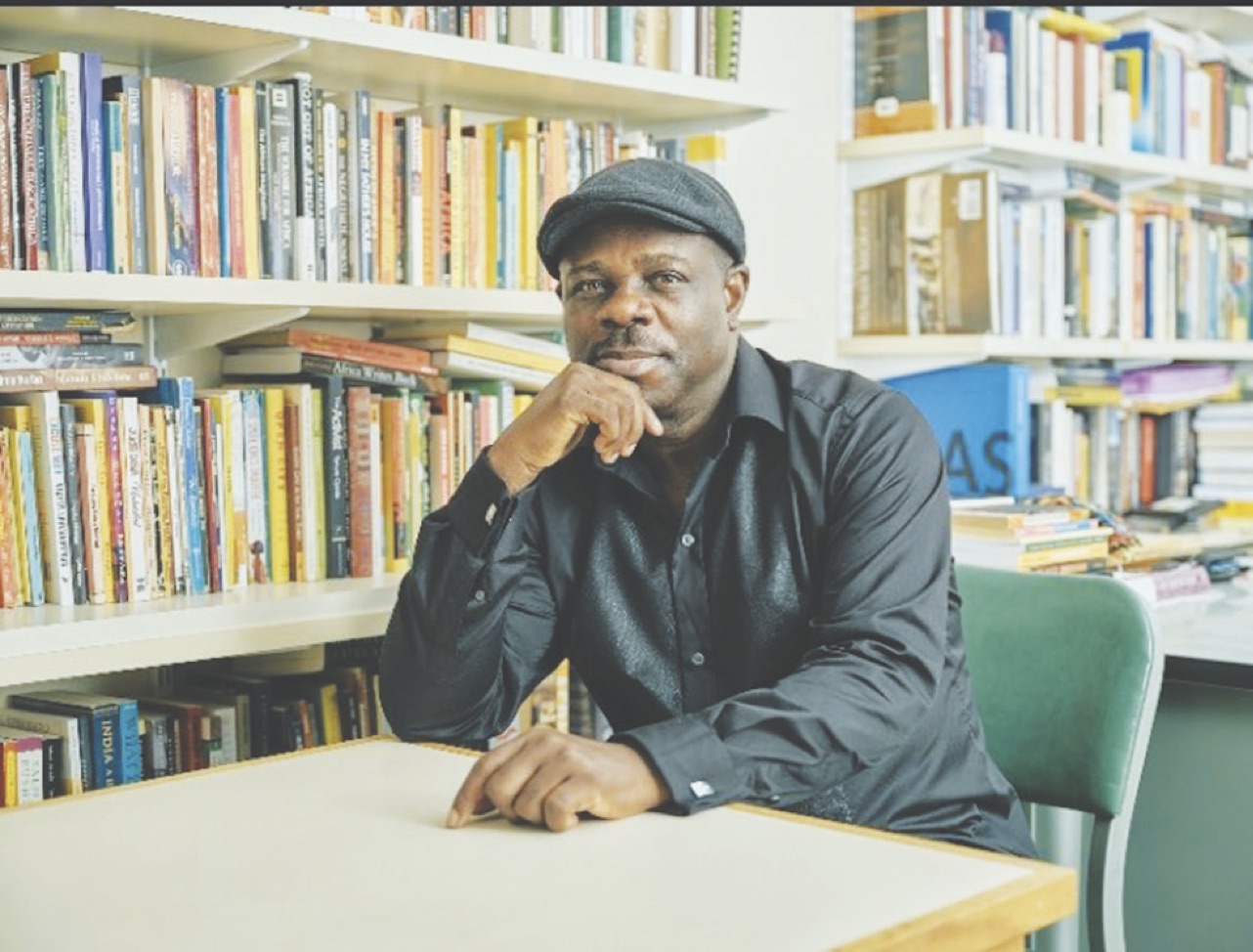
Maik Nwosu is one of the Nigeria’s most notable writers and literary scholars. An award-winning and prolific writer, he has stamped his authority on poetry, drama, fiction and short story, publishing. Prof Maik Nwosu is the chair of the Department of English and Literary Arts at the University of Denver, Colorado. He worked as a journalist before moving to Syracuse University, New York for a Ph. D in English and Textual Studies. Henry Akubuiro interviewed him recently in Lagos, where he shed light on his flourishing literary career.
You are a novelist, short story writer, poet, playwright. Your versatility is phenomenal. You have produced the novels, Invisible Chapters (1999), Alpha Song (2001), A Gecko’s Farewell (2016) and The Book of Everything (2025); the poetry volume, The Suns of Kush (1998), and the short story collection, Return to Algadez (1997). How do you switch across genres with relative ease? What determines a particular genre at a particular time?
I started by writing stories. I’ve narrated elsewhere how I wrote or tried to write my first story in high school in response to a story in Aesop’s Fables. Once I began writing, I was interested in the aesthetics of forms. Each form privileges a different approach or dominant aesthetic and shapes the way the writer’s voice is heard. Note that this may not be true in the same way for all writers. From fiction and its narrative trajectory to poetry and its emotional intensity to drama and its interactive performance – I am fascinated by all these possibilities and the challenges they pose to the writer. Although these are often seen as distinct forms, there are also writers or kinds of writing that transcend these generic boundaries, and there are ways in which each form borrows from or seeps into the other. For me, what determines a particular genre at a particular time depends on what I’m trying to accomplish and what I think is the best way to do so. Sometimes, I change my mind. I did think of writing Alpha Song as a long poem or series of poems, but I eventually wrote it as a novel. For The Book of Everything, I thought about a collage of forms that would bring poetry and narrative and drama together in a way that transcends conventional generic boundaries. Having that sort of conversation with myself is part of my process, and it can be easy or complicated depending on the context.
Do you want each book to stand on its own, or are you trying to build a body of work with connections between each book?
Each book stands on its own, but each is also part of a whole. So, there are connections, both intended and unintended. It would be difficult not to find those sorts of connections in works from the same intelligence or filtered through the same imagination. There are some stories or motifs that recur in some of my books, sometimes contextualized differently. Someone recently told me that he found a character or two in The Book of Everything, my most recent novel, that felt a bit familiar even if they’re not present in my previous novels. I’m always trying to do something new, especially with form, but that sort of familiarity or resemblance isn’t unexpected. In two of my novels, including one that’s yet to be published, there are even closer connections. I’m thinking now of writing a duology. I haven’t decided, but that’s something I might do in future.
What encounter (s) — physical, spiritual or scribal — aided your early journey as a writer? Noticeably, your writing career became noticeable in the 1990s during a turbulent period in Nigeria’s political history.
By the time I published my first book in the 1990s, I had written a few novels that I ended up labeling “Not for publication.” That was my writing school, kind of – writing a book, receiving feedback from diverse sources, going back to take another look not once or twice but quite a few times, then writing another book that was meant to improve on the last. The 1990s opened a new chapter because that was the decade that I really became a journalist, which gave me a front seat to a turbulent era in Nigeria’s history – although you could probably describe almost every era in our history in the same way. Some of my writing responded to that turbulence, but I certainly didn’t want my creative writing to simply function as an extension of my journalism. My first published novel, Invisible Chapters, was in part a response to the demolition of the shantytown known then as Maroko. I didn’t cover the demolition as a journalist, but there was something about that catastrophe that moved or spoke to me as a writer.
How did publishing your first book change your process of writing?
My first published book – that is, by an independent publisher – was Return to Algadez, a collection of short stories, by Malthouse in 1997. It was a form of validation, some sort of road marker that motioned me forward. By then, I had won the ANA/Cadbury Poetry Prize, in 1995. That was also another important validation or road marker. These didn’t change my process, but they certainly strengthened me. The truth is that even without any of these, I would have kept on writing because my writing comes from deep within me; the wellspring of my art is deeper than prizes and presses.
2025 seemed to be your most fecund year so far as a writer with A Quintet for Dawn (drama), Stanzas from the Underground (poetry) and The Book of Everything novel), all published in 2025. What’s the magic behind your prolificity, given your busy schedule as a university professor at Colorado?
None of the books was actually written in 2025. The play, A Quintet for Dawn, was in fact written in 1995, 30 years ago, so long ago that I went back and forth for a long time trying to decide whether it should be published or not. Even now, a part of me still wonders whether I shouldn’t have buried it in the past. I’ve always been interested in drama and theater. I wrote a play as a college student at Nsukka that I tried to get on stage. I also auditioned for a role in a theater group. None of that worked out. But that didn’t douse my interest. A Quintet for Dawn was written years after I graduated from Nsukka, but it connects with that interest. I completed Stanzas from the Underground when I was on a writing fellowship at the Akademie Schloss Solitude in Stuttgart almost 20 years ago, and The Book of Everything when I was on another fellowship at the Stellenbosch Institute for Advanced Study in South Africa about eight years ago. These books should have been published much earlier. I finally got the opportunity to have all of them published this year. I’ve kept on writing, regardless, because I can’t imagine not writing – no matter how busy I am. Writing for me is at the core of the magic of being.
Your latest novel, The Book of Everything, tends to bridge the gap between Africa and the diaspora, the spiritual and the physical world. What informed the gravitation of this work?
I’ve always been interested in the African diaspora. Some of that interest is attributable to books and films that I read or watched a long time ago concerning the African American experience. I once served as a co-tour guide to a group of African Americans, mostly, touring Nigeria, and it was quite a learning experience for me. When I applied for admission to the doctoral program at the University of Benin, my proposed research focus was on African American drama and theater. Then I left for grad school at Syracuse University, New York in 2002. My experiences made me begin writing A Gecko’s Farewell – alongside my doctoral dissertation. In some sense, The Book of Everything reflects as well as extends that concern. As for connections between the physical and the metaphysical world, all my books reflect that concern in one way or the other. Some of that comes from the symbolic mapping of the world in Igbo epistemology, including folkloric contexts, then there’s my upbringing in a strict Catholic family in which spiritual belief was a way of life. And there’s my own constant contemplation of the depth and scope of human existence.
You perceive The Book of Everything as an attempt to create aesthetically a new or polyvalent vision of the world. How can you shed more light on this?
This is the point where I recommend that you reread the book. Readers are co-creators in the sense that they can bring new modes of reading or insights that deepen or expand the thrust of the book. I’ll say this: in every book that I write, I’m trying to say something new, which may not always be possible, or to express in new ways something which may not be altogether new. The form or the frame of a literary work can help to create – for some, if not all – readers a new or polyvalent vision of the world.
To what extent are you indebted to literary predecessors, like Amos Tutuola and Ben Okri, in your exploration of magical realism in The Book of Everything?
As a narrative technique, magical realism has been used in different ways by so many writers, including Tutuola and Okri. I appreciate their distinctive styles, especially Okri in A Famished Road. I use quite a few passages from Okri’s novel to illustrate the concept of “textual magic” in my class on magical realism. I have a fairly long list of writers who have inspired me in some way, some of them African and some of them not. Some of these writers use magical realism, some don’t. The Book of Everything is fluid in that sense, so it incorporates a range of styles or techniques.
How did you condition yourself when you realised language has power? As one can see, you have a way with words.
It was that realization that made me a poet. Poetry has been described as a “language within a language,” which refers to the enhanced resources of language that poetry can call up or create to accomplish the sort of emotional intensity or lyrical immediacy that other literary forms may not be able to do in the same way. There is power in language because, at its best, it’s such a dynamic gathering of lexical and semantic forces – the sort of loftiness that Longinus ascribes to the elevation of the writer “near to the great spirit of the Deity” in his famous essay on the sublime.
For a Nigerian writer living in the diaspora, why is it increasingly difficult to leave out Nigeria’s social issues as a major talking point in contemporary diasporic writings?
For first-generation immigrants, we never really disconnect from our homelands. The first generation is also known as the “sacrifice generation”; sometimes, they give up so much in search of a better opportunity abroad for themselves and the next generation. They remain connected to their homelands, hence their diasporic existence. There’s also the sort of geographical and psychological clustering evident in immigrants from the same country or culture congregating in the same area as residents or for socialization. Think about the number of “Nigerian parties” that take place almost every weekend in major cities in the US, almost all year round – except perhaps during the worst months of winter. It’s only natural that Nigerian writers would write about Nigeria’s social issues as well as other issues under those circumstances. Many of us haven’t stopped being Nigerian and probably don’t plan to. Sometimes, I tell my students that I’ve lived in America longer than any of them and that I’m more American in that sense. But it’s also true that I’ve not lived in America in the same “American” way as some of them have.
What are common traps aspiring writers should avoid? Does a big ego help or hurt writers?
I’m not sure a big ego helps anyone, but it depends. A writer should have or build transformative self-worth. Otherwise, why write at all if you start by believing that you can never be good enough or that everything worthwhile has been written? Writers have to individually figure out what works for them. For me, that figuring-out has also included the realization that the writer – his being, greatness, or whatever – is in the final analysis not dependent on him alone. I don’t believe any of us would have gotten anywhere in life on our own. We’re the products of a collectivity that includes even “random” persons or incidents such as the cab driver who shows up in the rain or the missed flight that opens the door to a new experience.
What does literary success mean to you?
I’m not sure anymore. When I was starting out, literary success would have meant being well-published such that my books would have reached the widest audience possible. That would have challenged me to write even more. I still would like to have my books circulated and read everywhere, but I do have a profound sense of fulfillment thinking and writing them into being. Writing a book, such as a novel, is a long journey, and it’s so fulfilling to consequentially complete that journey – especially after significant wayfinding challenges.