Follow Us on Google
By Ndubuisi Orji, Abuja
The African Democratic Congress (ADC) was unveiled on July 1, 2025 as the “coalition party” for the 2027 general elections. From the onset, the objective of ADC leaders was clear: to galvanize the opposition under one umbrella to oust President Bola Tinubu and the ruling All Progressives Congress (APC) in next year’s elections.
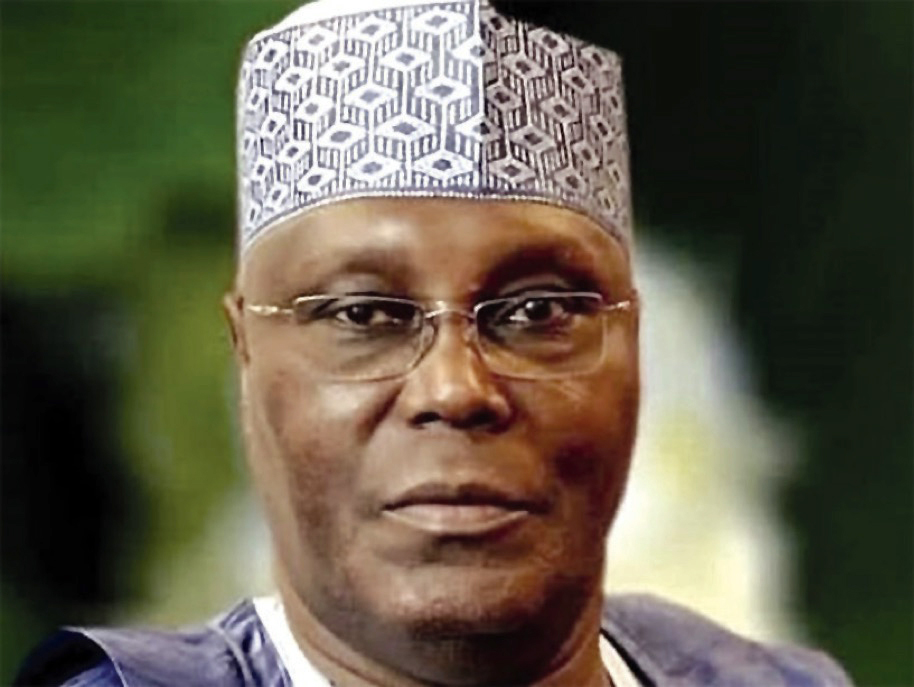
In the aftermath of the 2023 general election, major opposition parties like the Peoples Democratic Party (PDP), Labour Party (LP) as well as the New Nigerian Peoples Party (NNPP) was hit by crises. Amid the lingering crises in the opposition parties, key opposition politicians like former Vice President Atiku Abubarkar, 2023 LP presidential candidate, Peter Obi, former Senate President, David Mark, as well as aggrieved members of the APC like former Rivers State governor, Rotimi Amaechi; former Osun State governor, Rauf Aregbesola among others adopted the ADC as the vehicle for the 2027 polls.
The formal entrance of former Labour Party presidential candidate, into the ADC, last December, 2025, gave a big boost to the opposition party, with many of Obi supporters registering to be members of the party. In April former Kano State governor, Rabiu Kwankwaso formally joined the party, bringing in its own crowd.
With PDP and LP greatly diminished by leadership crises, the ADC became the toast of many opposition politicians and many Nigerians dissatisfied with the President Tinubu administration. Between March and April, this year, no fewer than 30 lawmakers from the two chambers of the National Assembly dumped the major opposition parties for the ADC. While many Nigerians registered as members of the “coalition party.”
For the ADC leaders, with Atiku, Obi and Kwankwaso under one umbrella, there is no stopping the opposition party in next year’s polls. The optimism was understandable. The trio combined had polled more votes than President Tinubu in the 2023 polls. While the President scored a total of 8,794,726 votes; Atiku, Obi and Kwankwaso polled of 6,984,520 votes, 6,101,533 votes and 1,496,687 votes respectively.
Recently, founding National Chairman of the ADC, Chief Okey Nwosu, said the opposition party has want it takes to win the 2027 polls, noting that “with the number we have today in ADC, what we have achieved by the Coalition is phenomenal and no matter how anybody think they can knock this down they cannot. To knock this down will be almost as knocking our democracy down and God will not allow that. We have put enough strategies in places to ensure that it doesn’t happen… The time is over for Tinubu politically, and he must go.”
Nonetheless, the opposition party has been under severe strain, owing to several litigations against the party and its leadership. For instance, the Independent National Electoral Commission (INEC) on April 1, de-listed the Senator David Mark led National Working Committee of the party, citing the order of Court of Appeal that parties in a suit filed by former deputy national chairman of the ADC, Nafiu Bala Gombe should maintain status quo ante bellum, pending the determination of the substantive suit. Gombe is laying claim to the chairmanship of the opposition, following the resignation of the Nwosu led NWC.
However, Supreme Court has vacated the Court of Appeal and ordered parties to return the Federal High Court for the determination of the substantive suit. While the party have heaved a sign of relief following the apex court ruling, which has made INEC restore the Mark led NWC on its portal, it still has the substantive suit to contend with, as well as a suit by by the Incorporated Trustees of the National Forum of Former Legislators (NFFL) seeking the deregistration of the ADC and four other political parties, over alleged non-compliance with constitutional requirements.
While the party has tried to downplay the court cases, pundits say the outcome of the cases would have far reaching implication for the ADC in the run-up to the 2027 polls.
In a twist, Obi and Kwankwaso exited the ADC. The former Anambra governor in a post on his official X account had noted that he was leaving the party because “the same Nigerian state and its agents that created unnecessary crises and hostility within the Labour Party that forced me to leave now appear to be finding their way into the ADC, with endless court cases, internal battles, suspicion, and division, instead of focusing on deeper national problems and playing politics built more on control and exclusion than on service and nation-building.”
Other News
The defection of the duo triggered a defection from the opposition party, as their supporters quickly denounced the ADC and aligned with the Nigeria Democratic Congress (NDC), where the two men have berthed. Barely two days after the exit of the two former governors, 17 members of the House of Representatives, who had recently joined the ADC from Labour Party and NNPP, announced their defection from the coalition party. There have also been mass resignation by supporters of the two men across the country.
Analysts say the exit of Obi and Kwankwaso from the ADC is likely to weaken its opposition party considerably, given their strong support base at the grassroot and growing influence in the polity. Pundits say Obi and Kwankwaso’s exit from the platform has altered the dynamics for the coalition and opposition politics generally in the run-up to the 2027 general elections.
Expectedly, some leaders of the ADC, who have launched a tirade against the former LP Presidential candidate, since his defection, have continued to downplay the implication for the party.
Obi, a former Anambra governor emerged as a major political force in the 2023 poll, after he led the LP to the last general election, and polling n6. Something votes and wining 12 states in the presidential contest. Besides, the party produced 35 House of Representatives and 15 Senators. Prior to 2003, LP, had remained a fringe party, after the exit of Olusegun Mimiko, who first won election under the party in 2007. Obi commands a large army of foot soldiers on the aegis of the Obidient Movement.
Similarly, Kwankwaso, who came fourth in the last presidential poll as candidate of NNPP, and winning majority of the National Assembly seats in Kano, is perceived to be one of the most popular politicians in the North. Like Obi, the former Kano governor has a very strong support base organised under the Kwakwassiya movement.
The ADC National Publicity Secretary, Bolaji Abdullahi, says why the defections constitute a set for the opposition party, it is not much of problem, noting that it also offers an opportunity for the ADC to re-calibrate, ahead of the 2027 polls. Abdullahi noted that the exit of two former governors will only make the victory of the ADC, in next year’s poll difficult, but not impossible
According to him, “It was difficult as it was even together as a collective, as a single unit, as a single coalition, it was difficult to challenge an incumbent. But what the action of Peter Obi and Kwankwaso has done is to make it even more difficult, not impossible. But make it more difficult. Because what they have done now to create a three-horse race rather than a two-horse race. A two-horse race was difficult enough, but it was easier to manage.
“Now we have a three-horse race. It’s not impossible for us, because the mission is very clear. But what they have done is to help President Bola Tinubu, because at the point, it was very clear that it was him versus the Nigerian people. But what they have done now is to have handed him a lifeline. Peter Obi and Kwankwaso, by their action, have handed President Tinubu a lifeline. And there’s no contradiction about it.”
The optimism by ADC leaders not withstanding, a public affairs analyst Jide Ojo to Daily Sun that the exit of Obi and Kwankwaso has dealth a deadly blow on the ADC. For Ojo, while the leaders of the “coalition party” may not admit it publicly “The defection of Obi and Kwankwaso has decapitated ADC, because their permutation was to use Obi to leverage entrance into Southern Nigeria while Atiku Abubakar becomes the standard bearer. And now they are in quandary.”
He added “the permutation has changed. Thy still have plethora of litigations to contend with. You don’t expect them to Publicly admit don’t that they have been decapitated. When you have 17 House of Representatives s members leaving a party in one fell swoop; how many elected represented did Atiku brig. How many did Amaechi bring. How many dd Tambuwal bring. These two gentlemen (Obi and Kwankwaso) brought 80 percent to 90 percent of elected representatives to the ADC. So, they were the lifeline of the ADC. “