Follow Us on Google

From Godwin Tsa Abuja
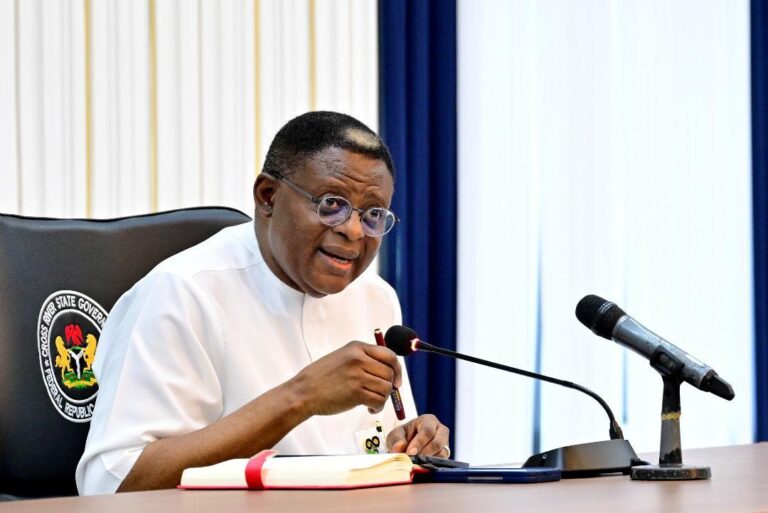
The Minister of Livestock Development, Idi Maiha, has disclosed that the country’s leather industry holds immense economic potential, with an estimated N23 billion and the capacity to employ 700,000 Nigerians.
While reaffirming the governments’ commitment to transforming the country’s livestock and leather industries, the minister, however, lamented that, “local practices such as burning animal skins with kerosene, which is both hazardous to health and detrimental to the leather industry, need to be addressed.”
Maiha, who disclosed this while speaking on Channels TV about recent developments in the sector, said the President Bola Tinubu administration was committed to ensuring hygienic meat production, boosting value addition, and creating employment opportunities for Nigerians.
Meanwhile, in a statement by the Director, Information and Public Relations Department, Ministry of Livestock Development, Ben Ben Goong, the minister said: “there was an urgent need to regulate meat processing in controlled environments to guarantee hygiene and maximise by-products such as hides and skins.
“To achieve this, the government plans to establish skin collection centres (SCCs) in rural areas, that would engage local youths in aggregating and semi-processing hides for value addition.
“Nigeria’s leather industry holds immense economic potential, with an estimated value of N23 billion and the capacity to employ 700,000 Nigerians. However, local practices such as burning animal skins with kerosene, which is both hazardous to health and detrimental to the leather industry, need to be addressed. “Currently, 90 percent of Nigeria’s leather is exported, primarily to Italy and Spain, due to limited value addition. However, the government is working with stakeholders to encourage local production of high-quality leather goods such as shoes, belts and bags.”
Maiha noted that “Shoemaking factories in Maiduguri and Aba are already producing footwear, including jungle boots for security forces, demonstrating Nigeria’s ability to develop its leather industry.”
He, however, stressed the need for Nigerians to embrace locally-made leather products to reduce reliance on imported brands, saying, “Many luxury leather products globally are made from Nigerian hides and skins. We must change our mindset and take pride in made-in-Nigeria goods.”
Addressing broader livestock development, the Minister assured stakeholders that efforts were ongoing to support poultry farmers, particularly in reducing the cost of feeds, which has significantly impacted production.
Other News
“The government has engaged feed millers and grain producers, and with the declining prices of grains, the cost of poultry products, including eggs, is expected to stabilise in the coming months.”
He further disclosed that the government was engaging the chamber of commerce and industries to expand local production and investment.
On disease control, the Minister noted that bird flu outbreaks had been isolated to Zamfara and Kano, with swift government intervention. He stressed the importance of biosecurity measures to prevent disease spread among poultry farms.
“Beyond traditional livestock farming, the government is set to launch a massive campaign to promote apiculture (bee farming), an industry with high export potential.
The Minister, also a beekeeper, noted that honey is the cheapest bee product, with other high-value derivatives like bee wax, pollen, royal jelly and bee venom offering lucrative opportunities.
“Bee farming requires minimal investment, is highly profitable and supports job creation. The government will drive awareness and capacity building to attract more Nigerians into this sector,” he added.
Commenting on the issue of herders and grazing reserves, Maiha revealed that the government has identified four grazing reserves in the Federal Capital Territory (FCT) and would collaborate with the FCT Minister and local council leaders to develop them.
“Stakeholders’ engagements with pastoral organisations like Miyetti Allah are also planned to hold in the coming weeks, to guarantee smooth implementation,” he disclosed.
“The government is committed to sustainable livestock management, ensuring that herders have secure, well-developed grazing reserves with access to essential infrastructure,” he said.
In his conclusion, Idi Mukhtar reaffirmed the government’s dedication to unlocking the full potential of Nigeria’s livestock sector, boosting job creation, ensuring food security and strengthening local industries.