Follow Us on Google
By Oludayisi Oyeyinka Fabowale
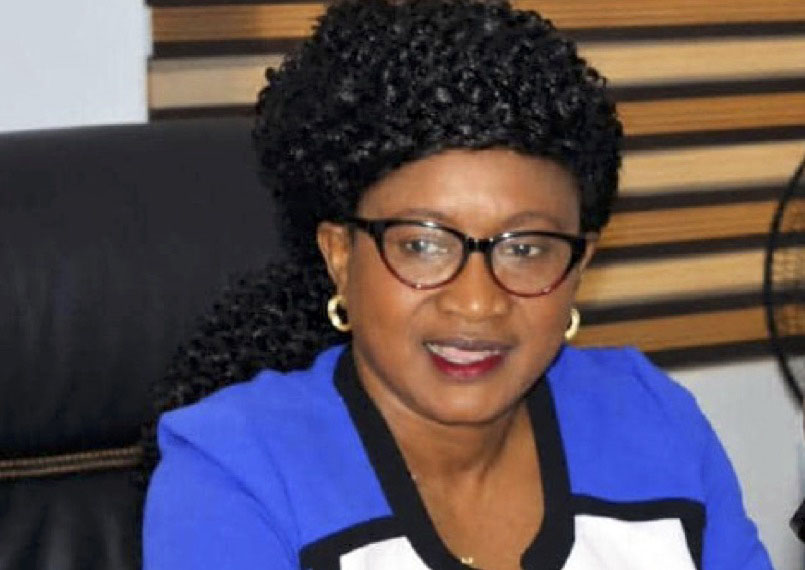
Even before she comes to the job as Vice Chancellor, Koladaisi University, Ibadan, Professor Olajumoke Abimbola Morenikeji has been highly reputed to be a result-driven, reform-oriented academic leader, with a clear vision and proven capacity to build systems, mobilise stakeholders, and deliver measurable institutional progress. As Dean of the Faculty of Applied Sciences, and pioneer Deputy Vice-Chancellor, she played a central role in strengthening governance, quality assurance, and institutional development of the institution.
A University of Ibadan alumnus and Professor of Zoology and Parasitology, the KDU new VC is an internationally sought after scholar with extensive and distinguished research portfolio, including over 120 peer-reviewed publications and seven scholarly books. She holds the MIM/TDR Postdoctoral Fellowship of the National Institute for Medical Research, London, and the TWAS-DBT Fellowship at the National Institute of Malaria Research, New Delhi, India and was at the Harvard School of Public Health, United States, where she obtained a Certificate in International Health Research Ethics. She has attracted funding, fellowships, and research support from numerous national and international organisations.
Prof Morenikeji is the Pioneer President of the Nigerian Association of Zoological Gardens and Wildlife Parks, Chair of the Olusegun Obasanjo Presidential Library Wildlife Park, and Founder/Chair of the Pangolin Conservation Guild Nigeria. She also serves as Regional Chair (West Africa) of the IUCN Species Survival Commission Pangolin Specialist Group.
Her appointment as VC , the first female in succession to three erudite male academicians and administrator, is, therefore, acclaimed as a significant step in the continued advancement of the mission of the private university to foster academic excellence, innovation, and societal impact.
In this interview, she speaks about herself and her new office, among other issues.
What difference do you bring to this office, considering that your predecessors were all men?
I do not really think about one gender being able to do something and another gender not being able to do it. Work is work, and you just have to do it to the extent that you know you have given your best. One of my principles is that whatever is worth doing at all is worth doing well. So, in everything I lay my hands upon, I put my best into it and give myself completely to what is expected of me. When I was appointed, I did not feel female. I just felt it was another call to affect humanity, impact the younger generation, and contribute to lifting education to the best level we can achieve in the country and in our institution. I believe though that one of the things women have is their ability to multitask. Women are not one-way individuals; we are able to handle several things at the same time. As I sit here, I may be thinking about different things that need attention. That ability can be brought into the workplace because it helps you achieve more, gives you speed and momentum, and allows you to consider different aspects of a situation. Women also have a large heart and, in many cases, a motherly instinct. You want people around you to be comfortable, to do well and become better. As a leader, you want your students to have what it takes to face the world after school, and you want your staff members, both academic and non-academic, to thrive and achieve their maximum potential. I think these are some of the abilities women bring into the workspace.
How does this connect with your vision for the university? Also, does the idea that women in leadership tend to feel pressured to prove themselves and could thus be overly assertive apply to you?
Other News
I do not think so. I just do my things normally. What I focus on is being the best version of myself, making sure everything I do reflects excellence. It is not about being assertive or proving anything. There is no point to prove. It is about doing the work to the best of your ability. For you to become a Vice-Chancellor, you have already proven yourself through the experiences and responsibilities you have handled. When I came into this role, 13 people competed for the position, and I was the only female among them. That shows that females can do anything.
So what visions do you have for the university?
The first thing for me is academic excellence and teaching excellence because that is the reason we are here — to produce graduates who can fit into society and do well. I am very particular about how we teach our students and the outcomes we achieve from their education. Beyond academics, we are interested in student formation and ensuring that our graduates are equipped with entrepreneurial skills. We do not want students to graduate and simply wait for someone to employ them. We want them to have skills of their own, build enterprises and explore opportunities. Staff development is also very important to me. I am interested in good governance and ensuring that the university positively affects the community around us. We should not exist as an isolated institution; whatever we do should have a positive impact on our environment.
There are concerns over declining standards and credibility of research findings due to slide in ethics in research, and reports of study findings being influenced by external interests rather than strict academic standards. What are your thoughts on this?
There is nowhere in the world where you will not find some research outputs that are not really up to standard. Nigeria is not an exception. Anywhere you go, you find researchers who are not producing top-notch or cutting-edge research. However, that does not mean cutting-edge research does not exist. We have many excellent researchers in Nigeria, and we also have research that focuses on solving problems within our local environment. At Koladaisi University, we do not do research for research’s sake. We do research because we want it to solve problems and impact society. When I was in London, I met a woman who told me she had worked on malaria for over 30 years but had never seen anyone suffer from malaria. I wondered about that because I have seen children die from malaria. So, when I work on malaria, I work with my spirit and soul because I want to find solutions that can help our people and our country. That is the kind of dedication we want to instil in our students. We want research to have a purpose and be translated into solutions. That is why we encourage our students to interface with industries and companies. We recently organised a career fair where industries and companies engaged with our final-year students. We had sessions on entrepreneurship, CV writing and interview preparation through a CV clinic and interview clinic. We are not just interested in producing graduates; we are interested in their lives and their performance after graduation. Currently, we have a Research and Innovation Committee working to ensure that research is deeply established across Koladaisi University.
Recently, one of our lecturers, Dr Mojisola Karigidi of the Department of Applied and Basic Sciences received a patent protection from the Federal Government of Nigeria for a bio-pesticide developed from plant materials for the protection of stored cowpeas/beans, maize and rice in storage against weevil attack. The commercialisation of this liquid spray formulation, has the potential to contribute significantly to reducing postharvest losses, improving food safety, and promoting environmentally sustainable pest management practices in Nigeria and beyond. We also have collaborations with universities abroad, and our staff members have international research partnerships.
From your experience as previous Dean of Applied Sciences, tell us what KDU has already done or doing in that regard, that is, producing entrepreneurial and value added graduates?
In my faculty, we had innovations, and we did not keep those innovations to ourselves. We organised programmes where we shared these innovations with over 50 secondary schools. We also encouraged the schools to bring their own innovations. We also have innovation hubs and entrepreneurial hubs. Our students have start-ups, and we encourage them. We are creating innovation spaces, digital spaces, and encouraging interests in areas such as artificial intelligence, technology and entrepreneurship. Our students are also very interested in what is happening globally, particularly in digital technology, AI, innovation and start-ups.