Follow Us on Google
By Maduka Nweke
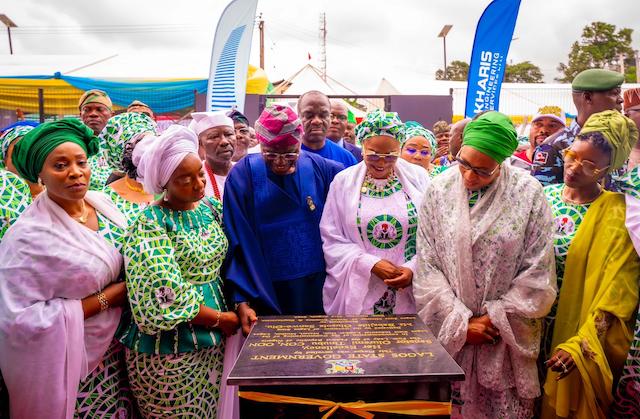
The Managing Director of Kharis Engineering Company Limited, Bolaji Adebajo, has said the newly commissioned Lagos Industrial Leather Hub will play a key role in reducing unemployment in the state by training over 1,000 young people every year.
Speaking at the inauguration of the facility over the weekend in Lagos, Adebajo described the hub as the first of its kind in West Africa, adding that it was designed to equip young people with creative and technical skills to thrive in the leather value chain.
“The idea is to be able to train at least 1,000 youths per annum to be self-reliant. The project, as envisaged by Governor Babajide Sanwo-Olu, is to create something new for the leather industry in Lagos, a place where you can come in, manufacture shoes, bags, belts and allow people to express their creativity,” Adebajo said.
He noted that the hub was conceived as a modern industrial training complex that provides both learning and production opportunities. “One of the main reasons why the Governor came up with this idea is to reduce the importation of shoes, belts, and bags, which drains a lot of foreign exchange. With this facility, we can produce more locally. For instance, the shoe factory here is designed to produce about 3,000 shoes per day. These will serve security agencies, school children, and general consumers, thereby reducing the need to go to China for production,” he said.
Highlighting Nigeria’s natural advantage, Adebajo pointed out that the country is among the world’s major producers of leather. “Now, we can produce our own leather, make our own shoes, and save a lot of foreign exchange. This aligns with the vision of the Governor and also with the President’s vision for the economy,” he added.
According to him, the hub’s ripple effect will be significant across the industry’s value chain. “The leather industry already employs over a million people. With this hub, we’ll be able to directly and indirectly engage about 100,000 people every year, particularly the youth. This will reduce the number of people on the streets, expand job opportunities in Lagos, and create an ecosystem that rewards creativity. This is truly a groundbreaking initiative,” he declared.
Governor Babajide Sanwo-Olu, in his keynote address, described the commissioning as more than just the opening of a factory. He called it a landmark investment in the future of Lagos and a bold step toward strengthening Nigeria’s non-oil economy.
“This state-of-the-art, first-of-its-kind facility in our country is more than bricks, steel, and machinery,” the governor said. “It represents a gateway to global competitiveness in Nigeria’s leather value chain. It is a launchpad for thousands of decent jobs and a shining example of the power of visionary governance and purposeful partnership between the federal and state governments.”
He emphasized that the hub would transform raw materials that previously left Nigeria unprocessed into high-quality finished products. “From today, the hides and skins that once left our shores unprocessed will be transformed here into world-class footwear, garments, and accessories, proudly stamped ‘Made in Lagos, Made in Nigeria,’ for the global market,” Sanwo-Olu said.
Beyond job creation, the governor stressed that the hub would stimulate innovation, empower small and medium-sized enterprises (SMEs), and strengthen Lagos’s position as a hub for non-oil exports. “This facility will undoubtedly boost the local economy by creating jobs, fostering innovation, and providing a platform for SMEs to grow. It will enhance competitiveness, attract investment, and ultimately improve the standard of living of many Lagosians,” he said.
He added that the initiative was part of Lagos’s broader commitment to diversifying its economy and turning ideas into tangible products that can compete globally. “The commissioning of this leather hub further strengthens our resolve to build a non-oil economy that serves as an anchor for sustainable growth,” the governor concluded.