Follow Us on Google
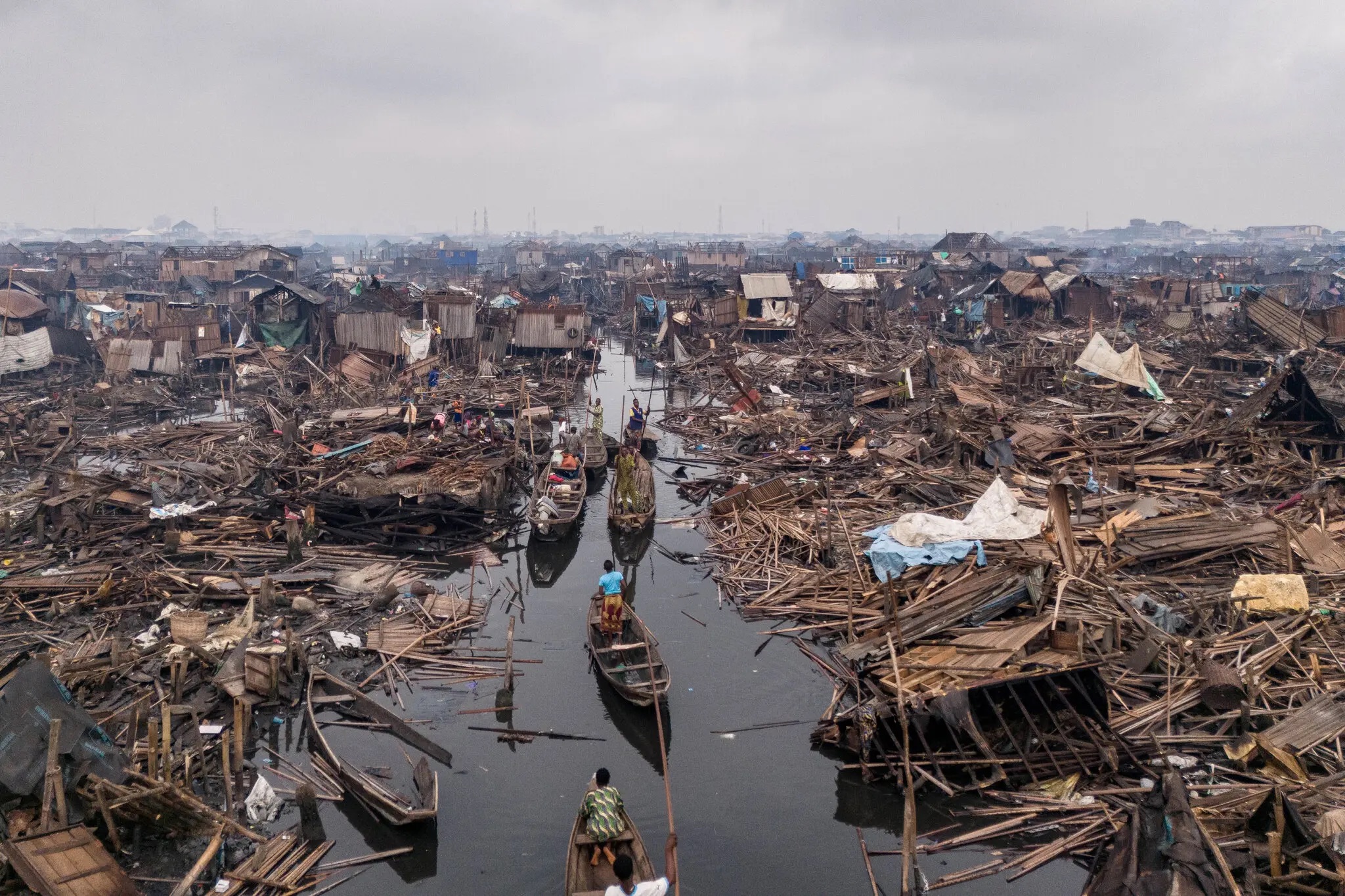
• We lost over 3, 000 homes, businesses, more than 10, 000 displaced
– Victims allege • Activists, rights groups condemn demolitions
By Kehinde Aderemi and Lukman Olabiyi
Residents of Makoko and adjoining communities in the Yaba area of Lagos are having sleepless nights over the demolition of their homes by the Lagos State government.
Makoko, Oko-Agbon and Sogunro towns, which are largely slums, had, for years, been historic waterfront settlements estimated to be home to over five million people in Lagos State. Also known as Ago Egun, the three towns are rich and economically viable communities. Many of the residents are dependent on fishing and waterfront trade for survival.
Their homes are merely shanties, yet they have lived in the communities all their lives. They now live in agony as they count their losses, following the demolition of their communities by the Lagos State government.
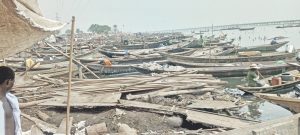
From Makoko junction to Apollo Street, one of the longest streets in the community leading to Sogunro town, the atmosphere was still tense as mobile policemen and Lagos Task Force officials mounted guards in strategic locations.
Their presence, Saturday Sun learnt, was meant to serve as a deterrent to protesters and those who may want to confront the task force officials as many of them have been rendered homeless and jobless.
Many of the displaced residents were seen lying down with their new born babies in the rubble of their demolished shanties by the lagoon.
As they continue to express worry over what they described as unfortunate incident that has befallen them, one of the residents, who is also a victim, Esther Nicholas, told Saturday Sun that the demolitions began on December 23, 2025, just two days to Christmas and has affected more than 3,000 homes, while an estimated 10,000 residents have been displaced.
Nicholas explained further that the bulldozers that demolished their houses navigated the lagoon through Ebute Metta.
“I have been living here for the past 20 years. When the task force came last week, they started firing teargas at residents. Many residents, including a woman who gave birth to twins after 20 years of marriage, lost her babies and belongings and she is now homeless. Schools, clinics and places of worship were also destroyed,” she stated.
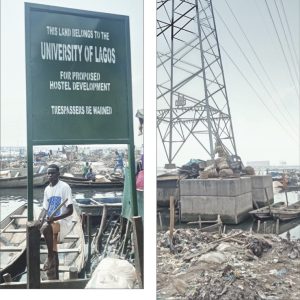
The communities, Saturday Sun gathered, have been in existence for over 100 years. The demolition of their structures was said to be due to its proximity to a power line. Residents claim they were given conflicting instructions on the required distance from the power line. While some said it was 30 metres, others said it was 100 metres.
A traditional ruler of one of the affected communities, Agbaakin of Sogunro, Chief Edupo Benjamin, said he was disappointed with the way the Lagos State government carried out the demolition.
He added that although there was an earlier agreement with the government to demolish structures within 30 metres of the power line along the lagoon, the demolition extended to about 520 metres from the high-tension poles.
Edupo stated further that repeated appeals to the government to clearly mark the boundary yielded no positive results. He said there were reports of deaths from different sections of the waterfront community during and after the demolition exercise.
One of the victims, he said, was Papa Eve Amossou, who lost his three-week-old daughter, Morenikeji, during the demolition.
Edupo explained how Amossou ‘s wife fell into the lagoon with their newborn baby while trying to escape the chaos that followed the tear gas fired by policemen attached to the task force team.
“On that day, the police officers fired tear gas because they said they did not want people to gather in groups. So, as Amossou’s wife was trying to move away from the area, she fell into the lagoon with her three-week old daughter.
“People tried to rescue them from the lagoon, but it was too late for the infant to survive the trauma and they were rushed to the hospital immediately, but the doctors later confirmed that the baby had died even before they got to the hospital. The sad incident has left the family and residents of this community devastated.
“We are saddened by the demolition of our houses. The Lagos State Government also disappointed us because during the election period, we usually vote for the APC and that is why we still stay here till today. Many of the residents have vowed not to vote for the APC in future elections, citing the government’s wicked actions.
“I was born here and I am 55 years old now. This is where I have lived all my life with my family. We have residents that have lived longer than 60 years in this community and many of them are fisher men and women,” he stated.
Some of the residents who spoke to the reporter said at least five residents lost their lives during and after the demolition exercise. They also claimed that two children and three adults reportedly died within the period.
Rachael Jekinni, a resident, also accused the government of being deceitful. She explained that on several occasions, officials of the state government visited the area to assure them of their safety, only to come now and demolish their homes.
“The Lagos State government had previously demolished the Okobaba market and they later built a new one for them, but in our own case, we are not being treated fairly,” she lamented.
One of the residents of Ago Egun, Ramon Yusuf, described the government’s actions as unfair. Yusuf said the demolition had left many of them with no option than to relocate to Benin Republic where they came from.
“Many of us are considering relocating from Lagos to our states. It showed clearly that the Lagos State government is using demolition as a strategy to send us back to our various states. That was what they did at Alaba International Market; that was what they did at Oworonshoki; that is what they are doing now across the state with the ongoing demolitions.
“Many people have lost their property and as I am talking to you now, some people have started relocating to Benin Republic to start a new life,” he lamented.
Flora Tina, a 65-year-old widow said she has been living in the shanties with her children until last week when her house was demolished.
Other News
Tina said she lost her husband six years ago and continued to live in the shanties because she had no other place to live.
As the demolition continues, Chief Edupo and other residents of Makoko appealed to the Lagos State government to consider their plights by allowing them to continue to live in their homes. He said none of the residents can say categorically what will happen to them the next day as they continue to agonise.
“We are the largest producers of fish in Lagos State. Not Badagry, not Epe, but we residents of Ago Egun provide the largest amount of fishes in the state. We were born in Lagos. We deserve to enjoy the best from the state government, but we have nowhere to go. This is our home, and we are appealing to the state government to consider us by allowing us to live peacefully in our home,” he said.
While the Lagos State government has justified the demolitions on safety grounds, citing the proximity of structures to power lines, many people, including organisations have also been reacting to the demolition exercise.
They cited similar experiences in other areas across the state, even as they described the demolition as a calculated strategy to send non-Lagosians out of the state. They also disputed the state government’s claim that due process was ignored.
Activists, rights groups condemn demolitions
Human rights lawyer and Senior Advocate of Nigeria (SAN), Femi Falana, condemned the continued demolition of waterfront communities in Lagos, describing the actions of the state government as illegal, unconstitutional and contemptuous of subsisting court judgments.
Falana recalled that on June 22, 2017, the Lagos High Court declared as unlawful, a series of government-ordered evictions that rendered more than 30,000 residents homeless. In the judgment delivered by Justice Adeniyi Onigbanjo (now retired), the court held that the fundamental rights of the affected residents had been violated, awarded N3 million in damages to the claimants, and ordered a halt to further evictions.
The court also directed the Lagos State government to engage affected communities on resettlement plans in line with its urban renewal policy, a move that was expected to protect an estimated 270,000 residents of waterfront communities from displacement.
Falana further referenced a more recent judgment delivered on August 25, 2025, by Justice F.N. Ogazi of the Federal High Court, Lagos, which restrained the state government, its agencies and the Nigeria Police Force from carrying out further demolitions or evictions in Makoko, Oko-Agbon, Sogunro and Iwaya waterfront communities.
The order was granted to safeguard residents amid what the court described as continuous threat and fear of imminent demolition. Despite these rulings, Falana alleged that the Lagos State government has continued to demolish waterfront properties, including schools and medical facilities, leading to loss of lives and the displacement of thousands of residents.
Similarly, a coalition of human rights, environmental and social justice organisations condemned the action of the Lagos State government, describing it as systemic and illegal forced evictions in several communities across the state, including Makoko, Oworonshoki and Baba-Ijora.
The groups, in a joint statement, accused the government of carrying out demolitions and displacing residents without adequate notice, consultation, compensation or resettlement plans.
The organisations alleged that the demolitions disproportionately affected low-income residents, including fishermen, traders, women, children, the elderly as well as persons living with disabilities, accusing the state government of prioritising private development interests over the welfare of vulnerable citizens.
According to the coalition, the recent demolitions are part of a long-standing pattern of forced evictions in Lagos. They cited past exercises in Otodo Gbame between 2016 and 2017, Oworonshoki in 2023, Orisunmibare in February 2024, Otto in March 2024, and Oko-Baba in September 2024.
Meanwhile the Lagos State Government has defended the demolition of structures in Makoko and other communities, insisting that the exercise was carried out to protect lives, property and critical infrastructure.
Government officials made the clarification during Ask Lagos, a weekly X-space discussion designed to foster engagement between the state government and residents.
Speaking at the session, the Commissioner for Information and Strategy, Mr. Gbenga Omotoso, and the Special Adviser to the Governor on e-GIS and Urban Development, Dr. Olajide Abiodun Babatunde, said the demolitions in Makoko and other waterfront settlements were necessary steps toward building a safer and more sustainable megacity.
He actions have drawn criticism from sections of the public, with some describing them as “anti-poor” and “unnecessary.”
However, Omotoso rejected the claims, stressing that the demolitions were driven by public safety, environmental protection and security concerns, particularly the risks posed by illegal structures erected under high-tension power lines and along vital waterways.
“No responsible government anywhere in the world can allow people to live directly under high-tension cables or obstruct critical waterways.
“These actions are not punitive; they are preventive — to protect lives, avert disasters and secure the future of Lagos,”Omotoso said.
Responding to allegations that residents were not given adequate notice, Omotoso said the government had engaged affected communities for more than five years.
He explained that existing laws require buildings to be at least 250 metres away from power lines, noting that many of the demolished structures were built directly beneath the cables.
“Imagine a power line falling into the lagoon. The scale of the disaster would be unimaginable,” he said, adding that some residents had appealed to the government to reduce the setback from 100 metres to 50 metres.
Dr. Babatunde said the demolitions formed part of a broader urban regeneration and planning framework aimed at making Lagos more resilient and investment-friendly.
He cited previous interventions, including the relocation of residents from Oko Baba to purpose-built housing estates with modern facilities.
“Housing alternatives have been provided to ensure that those affected are not left without options,” Babatunde said, adding that decisions were based on approved master plans, safety standards and environmental regulations.
He urged developers and residents to comply with planning regulations to avoid future conflicts.