Follow Us on Google
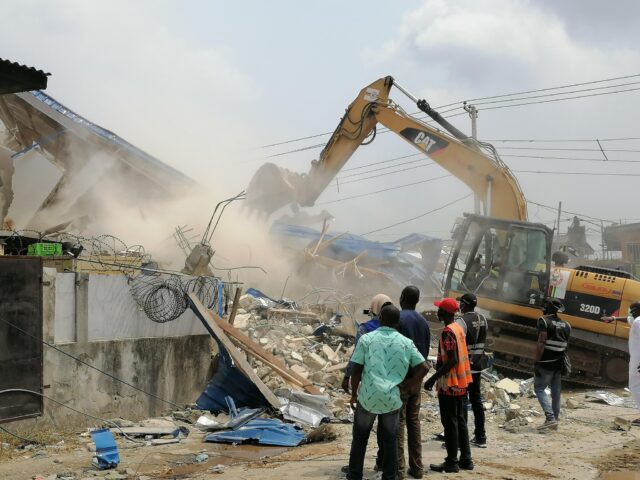
The scenes at the Lagos State Government Secretariat last week were as disturbing as they were revealing. Citizens whose homes had been demolished and many rendered homeless overnight gathered peacefully to protest and to demand answers from their elected representatives. Instead of empathy or dialogue, they were met with teargas. That this assault occurred in the very shadow of the chambers of the Lagos State House of Assembly makes it even more alarming.
A democratic government should not brutalise citizens for exercising their right to protest, especially when the protest is borne out of official actions that have deepened human suffering.
The Lagos State Government has explained the demolition exercise as part of its “urban renewal” plan. There is nothing inherently wrong with altruistic urban renewal. Across the world, cities redevelop, modernise and reorganise space to improve safety, infrastructure and quality of life. But in all civilised societies, urban renewal has a human face. It is guided by law, fairness, transparency and compassion. There is due process, adequate notice, consultation, and adequate compensation and resettlement.
In Nigeria, however, urban renewal too often translates into state-sanctioned dispossession, executed with impunity and enforced with brute force. There should be a difference between urban renewal and bizarre politics. This contradiction is particularly stark in a country grappling with an estimated 15 million housing deficit. At a time when millions struggle to find shelter, governments should be expanding access to affordable housing, not demolishing homes without humane alternatives.
Subjecting displaced citizens to teargas and intimidation when they dare to express their anguish is not governance; it is cruelty. We deplore the role of the Nigeria Police Force (NPF) in this needless brutalization of the citizens. Nigerians have a right to express their pain, anger and frustration. That right is guaranteed by the Constitution and ought to be protected and not criminalised by the state and its agents.
Lagos State has a long and troubling history of controversial demolitions carried out in the name of urban renewal. Markets, houses and shops have been pulled down with little regard for the livelihoods destroyed in the process. The ghost of Maroko still looms large in the collective memory. Thousands of poor residents were forcibly evicted, only for the land to be later reallocated to high-end developers.
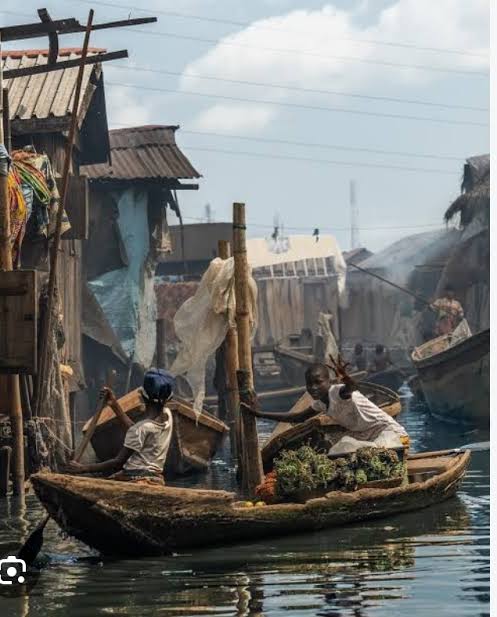
Today, residents of Makoko and Oworonshoki fear a similar fate, worried that “renewal” is merely a euphemism for the transfer of land from the poor to the powerful. The inconsistency and hypocrisy of Lagos urban renewal policy implementation further erode public trust.
Other News
In Lagos, shops built under high-tension power lines have been demolished on safety grounds, with owners sent away without sustainable alternatives. Yet, in some of these same locations, new and “befitting” structures have reportedly emerged under the same dangerous cables. When rules appear flexible for some and rigid for others, citizens are entitled to question the skewed urban renewal policy.
Beyond Lagos demolition, the clampdown on protesters fits into a broader and deeply worrying national pattern of state brutalization of hapless citizens. The assault on democracy and civil liberties in Nigeria is intensifying.
Late last year, women protesting the alarming rise in kidnapping in parts of Kwara State were reportedly flogged by thugs outside the Government House. To date, neither the perpetrators nor those who enabled them have been identified or prosecuted. Under the Bola Tinubu administration, citizens protesting hunger, economic hardship and poor governance have been rounded up and detained by the police. Even more troubling were reports that some of those detained were minors, allegedly emaciated while in custody. A government confronted with mass suffering should respond with policy corrections and social protection, not arrests and incarceration.
The repression has also extended to the digital space. The Cybercrimes Act, particularly its notorious Section 24, has become a weapon against journalists, activists and online commentators. Its vague provisions on “cyberstalking” and “insult” have been used to harass and silence critics, drawing international condemnation.
The Socio-Economic Rights and Accountability Project (SERAP) and the ECOWAS Community Court of Justice have both called for the abrogation or expunging of this section, describing it as incompatible with democratic norms and freedom of expression. Yet, the law remains on the books, chilling dissent and shrinking civic space.
Against this backdrop, the dehumanization of Lagos protesters is not an isolated incident; it is part of a larger democratic regression. When governments respond to social grievances with force, when peaceful protest is treated as a security threat, and when the law is weaponised to silence criticism, democracy is reduced to a hollow slogan.
A democratic country should act like one. Democracy is not measured by elections alone, but by how power is exercised by those in government. It is also measured by how governments treat the weakest, listen to dissenting voices, and respect civil liberties. Urban renewal must not become urban repression. Protest is not a crime. Pain deserves empathy, not teargas. The Lagos State Government and indeed the federal authorities must step back from this dangerous path. They must embrace dialogue, humane policies and respect for rights. Anything less is an assault on Nigeria’s fragile democracy.