Follow Us on Google
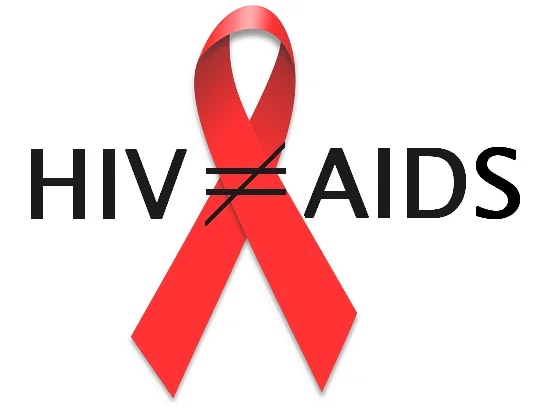
Lagos State government has dismissed widespread reports suggesting the state recorded the highest number of new HIV infections in Nigeria in 2025, insisting that the figures had been misinterpreted and do not reflect fresh infections.
At a press briefing in Ikeja, Chief Executive Officer of the Lagos State AIDS Control Agency (LSACA), Dr. Folakemi Animashaun, said the controversial figure of 10,430 widely reported in the media represents newly diagnosed HIV-positive cases, not people who became infected with HIV during 2025.
She explained that many of those diagnosed may have contracted the virus years earlier but only recently got tested, while others came to Lagos from different states for diagnosis or treatment because of the state’s robust healthcare system.
“The figures being circulated require proper technical interpretation. Newly diagnosed HIV cases are different from new HIV infections. Confusing the two creates unnecessary panic, fuels stigma and discourages people from going for HIV testing,” she said.
Animashaun disclosed that the state has already engaged relevant stakeholders to clarify the methodology and reporting assumptions behind the published figures to ensure accurate public understanding.
She noted that Lagos, being Nigeria’s commercial capital, the country’s most populous state and one of its biggest healthcare referral centres, naturally records high volumes of HIV testing, treatment and patient referrals.
According to her, stronger surveillance systems and expanded access to healthcare inevitably lead to more diagnosed cases and should not be mistaken for a worsening HIV epidemic.
Presenting the state’s latest programme data, the LSACA boss said Lagos conducted 504,800 HIV tests in 2025, identifying 11,940 HIV-positive cases, representing a positivity rate of 2.4 percent.
She added that in the first quarter of 2026 alone, the state carried out 179,229 HIV tests, with 3,390 positive cases, while the positivity rate further declined to 1.9 percent, describing the trend as evidence of improving epidemic control.
She also revealed that 147,904 people are currently receiving antiretroviral therapy (ART) across Lagos, with 97 percent achieving viral suppression, a development she described as a major public health milestone.
She further disclosed that Lagos has recorded remarkable progress in preventing mother-to-child transmission of HIV, with the Early Infant Diagnosis positivity rate dropping from 5.1 percent in 2020 to 1.5 percent in 2025.
Other News
According to her, these indicators demonstrate that Lagos has built one of Nigeria’s strongest HIV surveillance, prevention and treatment programmes.
She announced that Lagos has commenced a three-month HIV Response Acceleration Plan covering July to September 2026, aimed at expanding HIV testing, strengthening treatment enrolment and retention, improving service quality, scaling up community prevention, enhancing data quality and ensuring programme sustainability across all 20 local government areas and 57 local council development areas.
She said the state is also expanding access to HIV prevention through both oral and long-acting injectable Pre-Exposure Prophylaxis (PrEP).
In what she described as a landmark achievement, she announced that Lagos had become the first sub-national government in Nigeria to independently procure antiretroviral medicines for people living with HIV.
She disclosed that the first batch of the state-funded antiretroviral drugs is expected to arrive before the end of August.
According to her, the initiative underscores Governor Babajide Sanwo-Olu’s commitment to reducing dependence on donor funding, while guaranteeing uninterrupted access to life-saving HIV treatment.
The government, she added, is equally exploring local production of HIV commodities by leveraging international best practices, including Kenya’s pharmaceutical experience, in collaboration with global partners such as UNAIDS.
She urged residents not to be alarmed by the recent reports but instead to know their HIV status, embrace available prevention and treatment services and reject stigma and discrimination.
“There is no cause for panic. HIV remains preventable and manageable. With early diagnosis and sustained treatment, people living with HIV can live long, healthy and productive lives.
“Lagos is not defined by the number of people it tests. Lagos is defined by the strength of its response,” she said.