Follow Us on Google
…As Nigerians audit activities of Tinubu’s cabinet
By Omoniyi Salaudeen
The recent surge in political activity has shifted public discourse from electoral rhetoric to tangible deliverables, casting a spotlight on the perceived underperformance of certain members of President Bola Ahmed Tinubu’s cabinet. While some proponents point to steady progress in infrastructure and socioeconomic reforms, critics are less forgiving, dismissing several ministers as abysmal failures. This damning verdict is not merely anecdotal; it is a direct reflection of the documented performance—or lack thereof—within specific ministries and agencies.
A sectoral analysis of development indices spotlights the Ministries of Power, Transportation, and Marine and Blue Economy, and a few others, as inefficient, unproductive and poorly managed by those in charge.

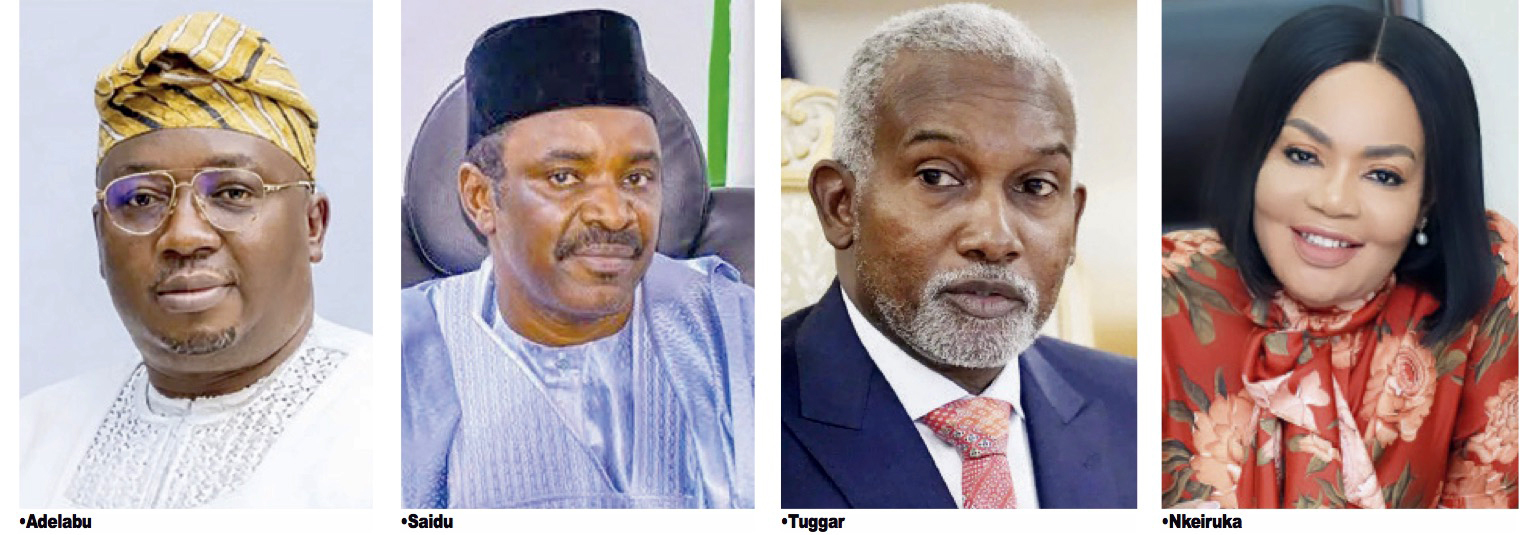
Adebayo Adelabu
The criticism directed at the immediate past Minister of Power, Adebayo Adelabu, often centres on the disconnect between his professional background and the technical demands of the ministry. As a former Deputy Governor of the Central Bank of Nigeria (CBN) and a finance expert, his appointment was met with immediate scepticism regarding his ability to navigate the complex engineering and regulatory landscape of the Nigerian Electricity Supply Industry (NESI). Several issues have fuelled the narrative that he is struggling to find his footing in the role. Aptly described as a round peg in a square hole, critics argue that while Adelabu understands fiscal policy, he lacks the nuanced understanding of the national grid’s technical fragility, which has led to multiple collapses in recent years.
The introduction of the Band System in April 2024, and its evolution into 2026, has arguably become the most polarising policy of Adelabu’s tenure.
The core of the criticism is that the system has created a two-tier society.
By guaranteeing 20+ hours of power to Band A areas at a premium rate, the ministry is accused of diverting limited generation away from lower-income Band B, C, and D areas.
Industry stakeholders view the jump from approximately ₦66/kWh to over ₦209/kWh for Band A- a 230 percent increase as exploitative and arbitrary. Even at that, following the recent hike in domestic gas prices to $2.18/MMBtu, there is immense pressure on NERC to raise these tariffs even higher, potentially pushing the cost of power beyond the reach of even the middle class.
Much more disturbing is that the promised 20-hour minimum for Band A is frequently unfulfilled. Thousands of consumers in Ogun and Lagos states have complained about being migrated to Band A while still experiencing the same frequent blackouts as Band C.
Aggrieved customers argue that the ministry is trying to run a luxury billing system on a dilapidated grid. In most cases, when the national grid collapses—which it has done multiple times in the last 24 months—even Band A customers lose power, leading to accusations of extortion under the guise of reform. While the policy was designed to make the sector bankable, it has had a devastating effect on the cost of doing business.
For small hotels, cold rooms, and bakeries that were categorized as Band A, electricity bills have ballooned by millions of naira. Because these businesses cannot absorb the costs, they pass them on to consumers. Many analysts blame the Band System for a significant portion of the persistent food and service inflation seen in 2025 and 2026.
In March 2026, a fake resignation letter circulated suggesting Adelabu was stepping down to pursue the governorship of Oyo State. He debunked this as a blue pen forgery. But he has since resigned and is pursuing his governorship bid under the All Progressives Congress (APC).
To the populace, the band system is the ultimate proof of his ineptitude—a fiscal tool designed by a banker to solve a problem that requires an engineer’s solution. He managed to make electricity more expensive without making it significantly more available.
Sceptics argue that the ministry, under his leadership, was better at drafting roadmaps than executing tangible improvements in megawatts on the ground.
Currently, the gap between President Tinubu’s campaign rhetoric and the present reality of the power sector has become a focal point of national frustration. While the administration points to legacy debt clearance and legislative groundwork, the three pillars of the value chain remain fundamentally compromised.
Despite an installed capacity of approximately 13,000 MW, the actual generation on the grid frequently hovers between 4,000 MW and 5,000 MW. The Transmission Company of Nigeria (TCN) remains the most criticized link in the chain. While GenCos can produce more, the TCN’s aging infrastructure can barely wheel (transport) more than 5,500 MW under optimal conditions.
The grid has remained notoriously brittle. In 2024 and 2025, the nation recorded over a dozen total or partial collapses. Even in early 2026, system disturbances have forced consistent load shedding, particularly affecting industrial clusters in the South-West. Progress on the Presidential Power Initiative (Siemens) has been described by critics as glacial, with equipment procurement delays preventing the anticipated jump to 7,000 MW capacity.
Most DisCos lack the capital to replace aging transformers and feeder lines, leading to significant commercial and technical losses.
The 2023 campaign promise—”If I don’t give you constant electricity in four years, don’t vote for me”—is being used as a weapon by the opposition as the administration enters its third year.
Sa’idu Ahmed Alkali
In compliance with President Tinubu’s directive, the Minister of Transportation, Sa’idu Ahmed Alkali resigned to pursue his ambition to contest for the Gombe State governorship election. His departure leaves behind a contentious record, with critics and sector analysts pointing to several key areas where the ministry appeared to stall during a period of national urgency. The most significant criticism levelled against Alkali’s tenure is the perceived lack of momentum regarding the Presidential Compressed Natural Gas Initiative (PCNGi). While the Federal Government positioned CNG as the primary buffer against the removal of the fuel subsidy, the Ministry of Transportation was expected to be the engine room for converting commercial fleets. Critics say the inability to rapidly deploy CNG-powered buses or conversion kits has contributed directly to high transit fares. Since transportation is a core component of the Consumer Price Index (CPI), this inertia has exacerbated food inflation, as the cost of moving produce from farm gates to urban markets remains tied to expensive diesel and petrol.
Analysts argued that the tenure lacked policy direction, noting that much of the ministry’s energy remained focused on the standard gauge rail projects initiated by previous administrations. While continuity is usually a virtue, critics argue there was a lack of fresh initiative to solve the last-mile logistics crisis that plagues Nigerian ports and interstate commerce.
Additionally, there has been a noted disconnect in creating a seamless transition between maritime hubs and inland dry ports, which remains a bottleneck for the Nigerian economy.
Alkali’s transition from the federal cabinet to the gubernatorial race in Gombe will likely be framed by this performance. Opponents might likely weaponise the abysmal failure, questioning how a minister who struggled to drive national transport policy will manage the specific infrastructure and agricultural logistics needs of Gombe.
Yusuf Tanko Sununu
The exit of Dr Yusuf Tanko Sununu, the Minister of State for Humanitarian Affairs and Poverty Reduction, mirrors the optics of the Transportation Ministry’s leadership change. His resignation to contest for the Kebbi South Senatorial District has triggered a similar wave of scepticism regarding the effectiveness of the Humanitarian Ministry under the current administration. The criticisms following Sununu’s departure generally focus on three main areas: pervasive poverty, inflationary pressure and focus on emergency relief. Despite the high-profile rebranding of the ministry to include poverty reduction, critics argue that the impact on the ground has been negligible. While Sununu frequently spoke on the Performance Management System (PMS) and measurable outcomes, the reality for many Nigerians is a deepening poverty crisis.
Like the Ministry of Transportation, the Humanitarian Ministry was expected to provide the primary social safety net to cushion the effect of subsidy removals. The failure to deploy a transparent, wide-reaching, and non-partisan palliatives system has left the Renewed Hope agenda vulnerable to claims of being purely academic.
Another major point of contention is the ministry’s perceived inability to move beyond emergency relief- distribution of bags of grain toward sustainable humanitarian architecture. Much of Sununu’s documented activity involved flagging off relief distributions in Northern states. Analysts argue this is a fire-brigade approach that fails to address the root causes of displacement or the structural nature of poverty in the North-West and North-East.
Like in the transportation sector, the Humanitarian Ministry’s failure to stabilise food security for the most vulnerable has allowed food inflation to spiral. Critics argue the ministry should have been more aggressive in integrating agricultural support with humanitarian aid.
Sununu’s move to return to the National Assembly having previously represented Ngaski/Shanga/Yauri in the House of Reps is being interpreted by some as a tactical retreat, suggesting a priority shift from governance to personal political survival.
In Kebbi South, Sununu will have to defend his ministerial record. Opponents are already framing his tenure as one of missed opportunities, questioning why a minister in charge of poverty reduction could not significantly alter the economic trajectory of his own home state during his time in the cabinet.
The overarching sentiment among analysts is that these key ministries—Transportation and Humanitarian Affairs—were the two most critical pillars for mitigating the hardships of the 2024–2026 economic reforms. The fact that both leaders are exiting while those hardships remain at a peak has fuelled the abysmal failure tag being used by their political detractors.
Nkeiruka Onyejeocha
The case of Nkeiruka Onyejeocha, the Minister of State for Labour and Employment, follows a nearly identical script. She formally resigned her appointment on Friday, April 3, 2026, just missing the March 31 deadline set by the Presidency. While she has been somewhat vague about her next specific target, political indicators suggest she is recalibrating for a major run in Abia State, likely the governorship or a return to the National Assembly.
Her exit is being met with the same performance critique that has trailed Alkali and Sununu, though with a specific focus on the volatile labour landscape.
The most damning criticism of her tenure involves the protracted and often contentious negotiations over the New Minimum Wage. Critics argue that as a key figure in the Ministry of Labour, she presided over one of the most unstable periods of industrial relations in recent history. The administration’s inability to swiftly reach a sustainable agreement with the NLC and TUC—while inflation soared—is seen by many as a failure of proactive mediation. Her tenure saw repeated threats of nationwide strikes. Analysts point out that the ministry often seemed to be in damage control mode rather than offering a strategic roadmap for wage stability in a high-inflation economy.
Despite the ministry’s title, the Productivity aspect of her mandate has been under heavy fire. With the National Bureau of Statistics (NBS) showing persistently high underemployment and youth unemployment rates, labour analysts have dismissed the ministry’s various job creation schemes as largely performative. There is a growing sentiment that the ministry failed to create any meaningful policy to address the mass exodus of skilled Nigerian professionals, particularly in the health and tech sectors—a critical component of labour productivity.
Much of her early time in the cabinet was perceived to be split between ministerial duties and her legal battle to reclaim the Isuikwuato/Umunneochi Federal Constituency seat from Amobi Ogah. Critics argue this dual focus diluted her effectiveness as a minister.
Like Sununu, her move is being characterised by some as a strategic retreat to a legislative seat to escape the growing unpopularity of the executive arm’s economic policies.
With Adelabu, Alkali, Sununu, and now Onyejeocha exiting within the same window, a clear narrative is forming among political commentators:
Other News
There is significant concern that these ministries will now enter a period of acting leadership or stagnation just as the 2027 election cycle begins to dominate the national conversation.
Adegboyega Oyetola
The Ministry of Marine and Blue Economy, led by Adegboyega Oyetola, is frequently cited by critics as the quintessential placeholder ministry. While other ministries are battling active fires, the Blue Economy is perceived as a silent passenger—a new creation that has yet to justify its existence beyond administrative overhead.
Unlike the more vocal or action-oriented ministers, Oyetola’s leadership style is often described as overly cautious or colourless. His perceived colourless disposition stems from several structural and leadership critiques, including absence of a defining policy framework and vague mandate.
Despite being carved out as a standalone ministry to unlock a trillion-dollar industry, there is a glaring lack of a National Blue Economy Roadmap.
While the minister talks about port modernisation and fisheries, these were existing functions of the Ministry of Transportation and the Ministry of Agriculture. The ministry has struggled to articulate what new value it brings that couldn’t have been achieved under the old structure.
There is also a legislative vacuum stalling key reforms like the Coastal and Inland Shipping (Cabotage) Act and the Nigeria Ports Economic Regulatory Bill. These remain stuck in various stages of stagnation. Without these legislative teeth, the ministry is essentially a landlord over inefficient infrastructure rather than an economic driver.
Oyetola recently touted a 160 per cent increase in revenue, reaching N1.83 trillion in 2025. However, analysts argue this is a fiscal illusion.
Much of this revenue growth is attributed to the devaluation of the Naira, as port charges and duties are often dollar-indexed. It does not reflect an increase in the volume of trade or the efficiency of Nigerian ports.
According to industry players, Nigeria’s ports remain some of the most expensive and slowest in the world. The Blue Economy has not yet translated into lower clearing costs or faster turnaround times, which are the true metrics of value, they argued.
Weeks ago, Oyetola had to order an investigation into the takeover of barge operations by foreign-linked entities. Local operators feel abandoned. The fact that foreign companies are allegedly squeezing out Nigerians in the logistics segment—under the nose of a dedicated Marine Ministry—is seen as a failure of the ministry’s primary duty to protect and grow local maritime capacity.
The perpetual delay in disbursing the Cabotage Vessel Financing Fund remains a sore point. Year after year, promises are made to empower local ship-owners, yet the Blue Economy remains dominated by foreigners.
There is a lingering suspicion that the minister remains more focused on the political dynamics of Osun State than on the technical complexities of deep-sea mining, maritime security, or renewable ocean energy.
The ministry has yet to show significant collaboration with the Ministry of Environment on Green Shipping or with the Ministry of Power on offshore wind, leaving the Blue aspect of its name largely ornamental.
The questioning of the ministry’s relevance is valid because it operates more like a Revenue Collection Agency for the Federal Government than a developmental ministry. If it continues to be a new bottle for old wine, the calls for its merger back into the Ministry of Transportation will only grow louder as the 2027 election cycle approaches. It has been simply dismissed as a way to create jobs for the boys during the initial cabinet formation.
Yusuf Tuggar
The consensus on Ambassador Yusuf Tuggar, the Minister of Foreign Affairs who also resigned on March 31, 2026 (to contest for the Bauchi State governorship), is notably different from his counterparts in Transportation or Labour. His tenure is generally viewed as one of the few high-performing bright spots in Tinubu’s cabinet. Analysts argue he fared better because he provided exactly what the other ministries lacked: a clear, intellectual, and actionable policy direction.
Unlike the colourless Marine Ministry or the drifting Transport Ministry, Tuggar established a concrete framework called the 4D Doctrine: Democracy, Demography, Development and Diaspora. His democracy dictum reasserts Nigeria’s leadership in ECOWAS to counter the wave of coups in the Sahel. His demography concept is meant to leverage Nigeria’s youth population for global tech and labour markets, while development concern focuses on reforming the foreign service to prioritise Foreign Direct Investment (FDI). Diaspora initiative actively engages Nigerians abroad as a pillar of national development.
Tuggar is credited with moving Nigerian diplomacy from prestige seeking to revenue seeking.
Just before his exit, he led high-level business summits in Spain to position Nigeria as a bridge between Europe and Africa. His background as a former Ambassador to Germany allowed him to fast-track deals involving Siemens and energy infrastructure.
He continued the momentum of bringing back Benin Bronzes and other stolen heritage, using cultural diplomacy to boost Nigeria’s soft power globally.
While the Ministry of Humanitarian Affairs struggled with internal poverty, Tuggar was forced to navigate the exit of Mali, Burkina Faso, and Niger from ECOWAS. He was seen as a stabilising voice during the Triple Exit crisis, advocating a firm but flexible approach that prevented a total collapse of regional security cooperation.
He was a frequent and articulate figure on the global stage at the UN, G20, and World Economic Forum, effectively defending the Renewed Hope reforms to sceptical international investors.
Despite his higher performance rating, Tuggar is not immune to the same abysmal failure tag being applied to the group, but for a different reason. Critics argue that his governorship ambition in Bauchi State was a poorly kept secret that eventually slowed down foreign policy execution.
Many Nigerians still complain that despite his 4D doctrine, the ease of travel and the green passport value have not improved. Reciprocal visa issues with countries like the UAE and the UK remained a thorn in his side until his resignation.
Overall, Tuggar is widely seen as intellectually superior to many of his cabinet colleagues, but his exit is still being characterized as part of a governance exodus. By leaving to run for governor, he joins Alkali and Sununu in the narrative that the current cabinet was merely a waiting room for 2027 political ambitions rather than a dedicated team for national transformation. Analysts argue that a better minister who leaves midway through a crisis is just as much of a loss as a bad one who stays.
Wale Edun
The departure of Wale Edun as the Minister of Finance and Coordinating Minister of the Economy has continued to generate significant public discourse, largely centred on the challenges faced during his tenure.
While the official position from the Presidency states that Wale Edun and the former Minister of Housing and Urban Development, Ahmed Musa Dangiwa, voluntarily resigned—citing health reasons and personal matters—the development has been closely linked to broader criticisms regarding the government’s fiscal management. Edun, who turned 70 on Monday, April 20, 2026, submitted his resignation letter that day and subsequently paid a valedictory visit to President Bola Ahmed Tinubu.
Specifically, contractors’ grievances reflect a period of intense pressure that defined the latter part of his time in office. A primary source of tension was the persistent backlog of payments to government contractors. Reports indicate that Edun was often criticised for operating like a goalkeeper, withholding or delaying the release of capital funds even after certificates of completion had been issued. This was a frequent point of frustration across various ministries and departments.
Earlier in the year, the National Assembly raised alarms regarding the zero implementation of the 2025 capital budget in certain sectors, despite funds being allocated. This led to heated exchanges between the legislative and executive arms, with some lawmakers calling for his removal.
Edun’s defence—that the government had moved away from what he termed the unsustainable practice of printing money in favour of prioritising debt servicing—often clashed with those who argued that the resulting liquidity crunch was stifling economic activity and infrastructure development.
His tenure also faced scrutiny regarding the transparency of public finance management, with some media reports suggesting that international bodies had previously questioned the government’s fiscal clarity, contributing to internal friction at the Villa.
Following his resignation, President Tinubu has appointed Taiwo Oyedele, the former Minister of State for Finance, to take over the role. The administration has explicitly directed the new minister to consolidate ongoing reforms and advance fiscal objectives with renewed focus, discipline, and innovation, signalling an attempt to address the bottlenecks in capital releases and budget implementation that marked the previous months.
Ahmed Dangiwa
Like Wale Edun, the discourse surrounding Ahmed Musa Dangiwa’s exit has been sharp, with many stakeholders characterising his tenure by a significant gap between policy ambition and practical delivery.
While his supporters project the groundwork he laid for systemic reform, the prevailing critiques show that housing sub-sector under his leadership struggled to meet public expectations.
The sentiment is primarily fuelled by a lack of policy articulation. Despite the hyped Renewed Hope Housing Programme, critics argue that the actual number of housing units delivered remained negligible compared to Nigeria’s multi-million unit housing deficit. The ambitious policy frameworks often felt disconnected from the reality on the ground.
A central point of contention was that the projects launched were largely perceived as being out of reach for the average low- and middle-income Nigerian. The units that were completed or showcased were frequently criticised for failing to address the mass housing need, catering instead to a demographic that did not reflect the broader population.
Industry analysts point out that while Dangiwa attempted to reposition housing as an economic tool, the sector remained hobbled by perennial issues like land administration and executive bottleneck.
While in charge of the ministry, complexities in land titling and registration persisted, creating major bottlenecks for mortgage penetration.
Additionally, high construction costs, rampant inflation, and the lack of low-interest mortgage availability made it nearly impossible for the average citizen to participate in the housing market, even where federal initiatives existed.
Similar to the frustrations voiced against the former Finance Minister, Dangiwa’s tenure was marked by complaints regarding slow implementation, regulatory delays, and the inability to effectively leverage Public-Private Partnerships (PPPs) at a scale that could move the needle on the national deficit.
While public sentiment is largely critical, some industry professionals have adopted a more nuanced stance, noting that he was operating within an extremely restrictive fiscal environment. These observers argue that his strength lay in policy groundwork—attempting to standardize processes and engage investors—but acknowledge that he failed to overcome the systemic constraints that ultimately defined his era.
Ultimately, his departure is being interpreted by many as an admission of dissatisfaction with the pace of performance, with the Presidency signalling a desire for a more aggressive, results-oriented approach to infrastructure and housing delivery.