Follow Us on Google
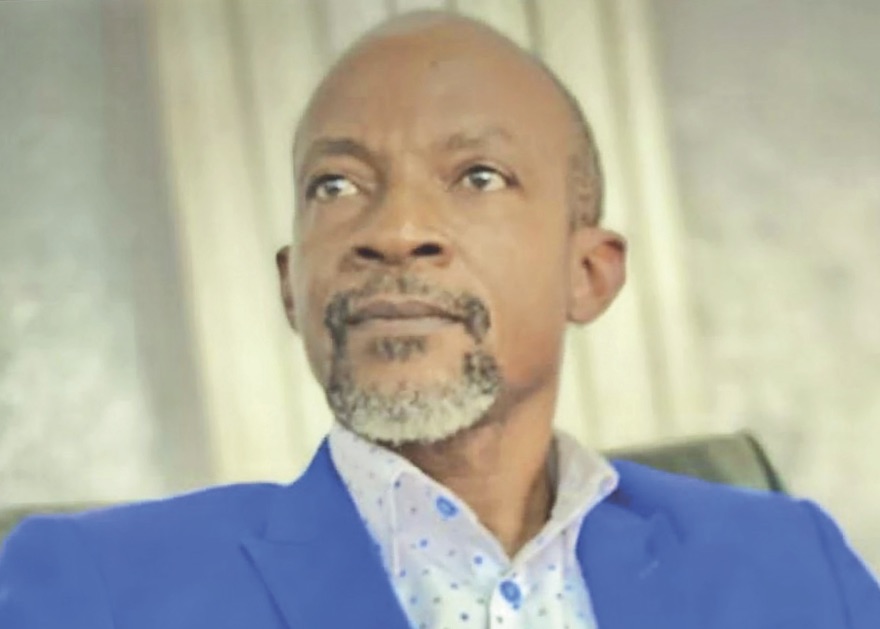
– Pastor Olusola Stevens, Mission Director, Vine Heritage Missions Consult
By Juliana Taiwo-Obalonye
In March 2013, our sister publication, Saturday Sun exposed horrors in over 40 Federal Capital Territory villages: twins poisoned or strangled as abominations. Deformed infants buried alive. Survivors of dead mothers tied to corpses. Lacking roads, water, or clinics in Abaji, Kwali, Gwagwalada, and Kuje, isolation fuelled the evil. FCT formed an anti-infanticide committee; the Christian Missionary Foundation (CMF), Centre for Democracy and Development (CDD), and Amnesty International launched campaigns reaching Yaba, Kiyi, and others. Pastor Olusola Stevens, then CMF North Central Director (a role he left 14 years ago), faced death threats but persisted.
For over 20 years, Pastor Stevens— Mission Director at Vine Heritage Missions Consult, Head of Operations and CEO of Vine Heritage Home Foundation—has been the relentless frontline warrior rescuing nearly 295 children from FCT’s barbaric twin killings and infanticide since 1996. Operating Vine Heritage Home since 2004, he’s reunited 47 with families (including 14 last December), tracked 70 practising communities (12 now reformed), and houses 225 kids devouring a 50kg rice bag daily—all without steady government funds.
Trapped in Abuja for 13 years without travelling, even as his wife, Dr Chinyere Stevens—his steady support system until kidney failure struck (down to 3 per cent function and ₦300, 000 weekly dialysis)—he declares zero regrets.
“What we sow returns. These kids cared for her when she nearly died.”
In this interview, he speaks on his work to stop the practice of twin killings, among others.
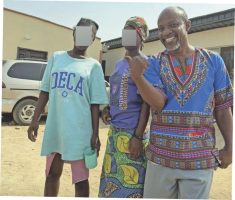
How long has Vine Heritage Home been rescuing children from twin killings and infanticide in FCT villages?
The first child was rescued way back in 1996, but we didn’t formally establish Vine Heritage Home until 2004. That’s when the influx truly began—more children started arriving as communities consciously surrendered them to us, like floodgates suddenly bursting open after years of secrecy and stigma. By that point, we already had two little ones under our care from earlier interventions. Now, over two decades later, the mission has grown into a lifeline that’s saved nearly 295 lives amid unrelenting challenges.
What have been your experiences battling this practice?
It’s been a mixed and challenging experience over these years, particularly from the communities themselves. Some, probably out of shame, kept denying outright that the practice even exists anymore. But with all my evidence staring them down—the twin altars they set up, the rituals, and the rest—they simply couldn’t deny it any longer. On top of that, the FCT rural communities remain very, very backward, with the majority still cut off from basic civilisation, which makes change agonisingly slow. And the fact that up to 70 per cent of the children we receive each year stem from one persistent practice really gives cause for concern.
That practice? Nursing mothers dying in large numbers. When a mother dies and the child survives, they insist the infant is responsible for her death—possessed by evil. So, the baby is either buried alive with the mother’s corpse tied to it, or left abandoned in the community without care or nurture until it starves or dies. But the steady stream of babies and babies keeps coming, which means maternal mortality hasn’t stopped at all. We’re not happy about that reality.
Recently, I was talking with someone and confided in him. I’ve even stopped praying to God for no new babies to arrive, because when I look at the mounting challenges, I sometimes say, “God, please, I don’t want any more babies.” Then I hear a voice say to me, “Then you are saying that he or she should die.” Guess what, any day I ever dare pray that prayer, that very week I’ll get like five new babies. That’s clear disapproval from God that I must do it.
On a brighter note, the other practice—the outright killing of twins—is going down rapidly, thanks to the advocacy we carried out with Action Aid Nigeria and others across many communities. In fact, I now have more than 10—actually 12 communities—that are totally keeping their twins now, having abandoned and renounced the practice completely.
When they have them, they still inform me right away. “Pastor, we have another set of twins.” And I usually say, “Please take care of them, since you’re now agreeing with us that no twin is evil.” But even after delivery, they often call back: “We have a twin here.” I reassure them: “If you have any challenge with them, please call us.” Because if those twins die, the other villagers will point fingers—“See, twins cannot survive here”—but we want to prove them wrong, that twins can survive and thrive. In some cases, we’ve gone out of our way to provide free medical treatment for those children, reinforcing our message: there’s no god killing them—it’s the village system that’s been killing the children, not any deity. And so I’m happy today that these 12 communities are fully on board, keeping their twins.
We only have about four die-hard communities left where, if twins are born or a child loses its mother, we still have to struggle intensely to rescue them. Majority of the others now openly admit: “Pastor, everybody’s saying this practice is not good, that such children are evil, but we cannot keep them ourselves—you’ll be taking care of them for us; when we are ready to accept them back, we’ll come.” And that’s exactly what happened last December 14th—we reunited 14 children back to their families, including Elijah, Elisha, Lovett, Lovina, Goodness, and Hope (some names changed now that families have reclaimed them). But that also leaves us with the ongoing responsibility to monitor their welfare as they go back.
Just three days before you came for this interview, I spoke directly with the mother of Hope and Goodness’, and another two; Micah’s father called me recently too.
His only complaint? Because we enrolled them in private schools here, the boy is finding it difficult adapting to the local primary school back home. But on the other hand, I want the government to pay serious attention to maternal health in these rural communities—because the more they do for the women there, the lighter our workload becomes. In fact, I’m earnestly looking forward to that day when we can go like a full year without receiving a new baby. It has not happened yet—in fact, we can’t even do six months without a new one. So I pray that the government, since the Minister of Women Affairs, Hajia Imaan Sulaiman-Ibrahim has visited here, the First Lady, Senator Oluremi Tinubu has also shown concern, and the current Mandate Secretary for FCT Women Affairs, Dr. Dayo Benjamins-Laniyi, is also very keen and has been in touch with me, working around the clock. I pray God will empower them to do the needful, so that more women will be saved from death. That’s my deepest concern.
Other News
Since 1996, what is the total number of children you’ve rescued? How many have been reunited with their families? And how many FCT communities remain involved in infanticide practices?
Since 1996, over 290 children have passed through our care. Some, unfortunately, did not survive because many of the rescued women had no idea what to expect. We always do our best to take them to the hospital, but some still die there. Altogether, nearly 295 children have come to us from different communities. So far, we have reunited 47 of them with their families.
When you first visited our home, about 40 communities were known to be practising the killing of twins and similar acts. Today, that number has risen to around 70. Each time a new community brings a baby to us, we record their name and update our system. After all, if they weren’t still involved in such practices, we wouldn’t be receiving babies from them. So yes, as it stands, we now have about 70 communities on record.
What are your biggest challenges running this home?
Our first major challenge is related to managing the health crisis of our children. Most of the babies brought to us arrive very late and often with severe complications. We recently lost one after spending about ₦1.4 million at the teaching hospital’s special care unit. Sadly, the FCT health insurance system for children aged 0 to 12 has not yet been activated, so we bear all medical expenses out of pocket.
The next big issue is feeding. Infant formula is extremely expensive, especially for babies aged 0–6 months who have no alternative sources of nutrition. We even lost one child who required a special Isomil milk (well-known soy-based, lactose-free infant formula) we could only find at Sahad Stores. For the older children, we currently feed about 225 of them, and they consume a full 50kg bag of rice every day. The First Lady supports us by sending foodstuffs every two months, but the supply only lasts for about 50 days.
Education is another serious concern. All our children begin schooling from age three and above. Christ Academy in Gwagwalada here where most of them are covers about 80 per cent of their academic needs as a way of giving back, but we still shoulder the cost of uniforms and books—some of which cost around ₦19,000 per child. For those in higher institutions, the burden increases with acceptance fees, hostel accommodation, and even essentials like gas cylinders.
Then there’s facility maintenance and staff welfare. I personally receive no salary, and we currently have only 16 workers, down from 35 after the MATAI Project (Mobilising Actions Towards the Abolition of Infanticide) ended. It was a project launched around 2018 with European Union sponsorship through Action Aid Nigeria. With no steady government funding, it is a struggle to keep everything running. Honestly, even a consistent ₦1 million per week from the government would make a major difference.
This work clearly comes with great personal sacrifice for your family. Any regrets? And how old are some of your earliest rescues, like Godiya and Israel?
No, we have no regrets at all. Last year, my wife’s kidney failed. Her kidney function dropped drastically—from 120 per cent down to just 3 per cent. She now undergoes dialysis every week, which costs about ₦300,000, while a transplant would cost around ₦40 million.
But during that difficult period, some of the children we rescued, like Israel and Godiya who are now grown, stood by her in the hospital. Israel is now studying at a Federal University, and Godiya, who was almost buried alive when we found her, will turn 22 this April. She came to us back in 2004, alongside others like Olufemi, Goodness, and Miracle—all of whom are now in the university, pursuing their dreams and building meaningful lives. Truly, what we sow always finds its way back to us.
You don’t allow adoptions. Why is that? And has the approach been effective?
Allowing adoptions would defeat our purpose. Our mission is to rescue, nurture, and reunite children with their families as living proof that no child is born evil. If we gave the children up for adoption, it would erase the evidence we need to show the government and social welfare authorities that these beliefs are false. It could even lead critics from these communities to accuse us of being afraid of the children ourselves.
Adoption would also hinder the long-term goal of ending stigma. The transformation happens when families and communities see these children thriving. For example, after 18 years, Miracle’s father returned and witnessed his child living a healthy, joyful life—that moment alone challenged decades of fear they had held unto.
We help reintegrate the children into their communities through the Matai Project, which includes supervised visits, schooling, and sports activities. Only in cases where a child’s family is completely untraceable would we consider other options, but so far, all the children have come from identifiable communities.
Our older youths serve as surrogate mothers for the babies arriving now, creating emotional bonds that reduce trauma. During holidays, they help care for the little ones, strengthening the sense of family and belonging the home provides.
Do you ever get personal time or the chance to travel?
Hardly ever. I haven’t left the FCT in the past 13 years, except once last year when I went to Nasarawa State University, Keffi to receive an award from the Institute of Strategic and Development Communication (ISDEVCOM) during the 6th International Conference on Development and Communication in Africa, in recognition of our work here. The arrival of new babies here is completely unpredictable, and because of that, I’m always needed—especially when it comes to supervising the staff during training on umbilical cord care and other delicate needs. Looking ahead, I’m hopeful that in the next eight years, some of our children who are now graduates, like Olufemi who manages our documentation, will be able to fully take over the work. Whenever I playfully say I will go on holiday, I will retire some day, they often tease me and say, “Daddy, you can’t leave us!”
On March 8, we celebrated the International Women’s Day. March has been declared the women’s month. What message would you like to share with the government and development partners regarding maternal health?
My message is simple—let the government and partners prioritise rural women. Many of them still lack access to basic medical support, especially when it comes to twin pregnancies. We need scanning machines in rural communities so that such pregnancies can be detected early. The government should also introduce incentives—perhaps ₦1,000 weekly for antenatal visits and about ₦2,000 after delivery to help with baby formula and related needs—for at least five to ten years. This will encourage mothers to stop relying on untrained birth attendants.
Most of the complications we see, such as heavy bleeding after delivery, often lead to deaths, and sadly, people end up blaming the babies. The truth is, these deaths can be prevented. We must save the mothers because when they die, the fathers suffer greatly. Look at Eric’s father, for example, who still calls every day in pain. These women are bringing future leaders into the world; if we neglect them, we are endangering the very future of Nigeria.