Follow Us on Google

By Gabriel Dike
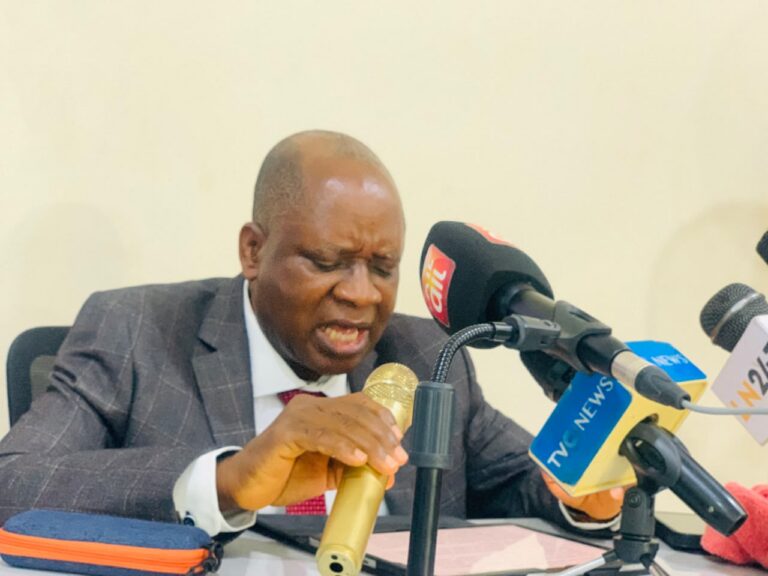
The Director General, Centre for International Advanced and Professional Studies (CIAP), Prof. Anthony Kila and ace broadcaster, Dr. Reuben Abati, has acknowledged that the Tertiary Education Trust Fund (TETFund) intervention in the nation’s public tertiary institutions made a major impact in improving their facilities, research, scholarship for lecturers and their other areas of needs.
The duo spoke at the 2025 TETFund Board of Trustees Town-Hall meeting in Lagos, which attracted the Chairman of BOT, Aminu Bello Masari, Executive Secretary of TETFund, Sunday Echono, Chairman, Senate Committee on Tertiary Institutions and TETFund, representative of Governor Babajide Sanwo-Olu, vice chancellors, rectors, provosts and staff unions.
Kila who spoke on, “Tertiary Education in Nigeria and the Relevance of TETFund” said Nigeria’s tertiary education system has not burned down, but has certainly endured heat, cracks, and shocks over the decades, stating, that within these crises lies the nation’s chance to rethink, rebuild, and reposition.
He raised four major issues affecting tertiary education in the country with funding as the main problem.
According to him, “funding remains both inadequate and unstable: Even with the support of TETFund, our per-student funding lags far behind international standards.
“While the world spends generously to stay ahead in the global race, we allocate funds merely to keep the lights on, fighting to survive rather than to thrive. While the rest of the world is spending to win, we seem to be paying to survive.
“Our research output is remarkably low. Nigeria contributes less than 0.3% of the world’s research papers. Just to put things into perspective, considering a population of 200 million, this stark reality amounts to an intellectual emergency of epic proportions.
“The gap in infrastructure continues to be vast. An alarming number of tertiary institutions still find themselves without state-of-the-art laboratories, comprehensive libraries, robust ICT facilities, or secure, welcoming learning environments. In some cases, I have come across institutions that resemble nothing more than secondary schools in the midst of a hasty makeover, trying to pass as premier centres of higher learning.
“TETFund is and will continue to be a vital institution because Nigeria’s education system still requires a dedicated and structured approach to funding. Without targeted intervention financing, public educational institutions risk further decline and deterioration.”
Kila tasked staff unions in tertiary institutions student unions to adopt advocacy rather than disruption to secure better funding and also learn to demand accountability from management and members in a constructive manner, not just from the government.
He said to achieve better results in the future; government must show commitment to strengthening TETFund, reforming the institutions, and building a tertiary education system befitting a nation of ideas, promise, and possibility.
In his presentation, Dr. Reuben Abati described TETFund as a key part of the nation’s higher education and that the fund is presence not only in the buildings on campuses but also in important improvements to research, staff training, and support for institutions.
He said TETFund’s story began in 1993 with the Education Tax Fund (ETF) and at that time, tertiary institutions faced decaying infrastructure, obsolete labs, empty libraries, and chronic underfunding, student numbers grew as infrastructure collapsed and lecturers struggled with limited opportunities and support.
The ace broadcaster disclosed that TETFund’s influence is broad and unlike other agencies, the fund covers nearly all aspects of academic life—building infrastructure, supporting research, and fostering academic development.
“Its most visible contributions are in infrastructure across universities, polytechnics, and colleges, providing essential lecture halls, labs, libraries, hostels, and offices, especially where government funding falls short,’’ he added.
Abati noted that to understand the significance of TETFund within Nigeria’s higher education ecosystem, it is necessary to move beyond perception and examine the fund’s impact through multiple lenses, stating, “its contributions are multidimensional, spanning infrastructure, human capital, research, equity, and broader societal outcomes. Viewed collectively, these interventions reveal why TETFund is widely regarded not merely as a funding agency, but as a vital engine of public value.’’
Other News
He argued that TETFund is arguably the largest institutional sponsor of academic staff development in Africa with its investments in human capital, targeting both the quality and global competitiveness of Nigerian academics, through scholarships and grants, thousands of lecturers have pursued MSc and Ph.D programmes both locally and internationally, acquiring advanced knowledge and skills that they bring back to the campuses.
His words: “Despite its remarkable achievements and central role in Nigeria’s tertiary education system, TETFund faces a range of structural, operational, and systemic challenges. Understanding these constraints is essential for assessing the fund’s effectiveness and for charting a path forward that strengthens its impact, accountability, and public value.
“One of the most persistent challenges confronting TETFund relates to bureaucratic processes. Procurement procedures, though designed to ensure transparency and accountability, are often slow and cumbersome.
“Financial limitations constitute another significant constraint. The demand for TETFund interventions consistently exceeds available revenue, particularly because the fund relies primarily on the 2% education tax from registered companies.
“Macroeconomic factors, such as inflationary pressures, exchange rate volatility, and rising construction and material costs, further strain available resources. These financial pressures mean that not all worthy projects can be funded immediately, creating competition among institutions and the potential for unmet expectations.”
According to him, the fund must position itself as a more agile, transparent, and strategically aligned institution, capable of responding to emerging national challenges, supporting innovation, and maximising the impact of every intervention.
On the way forward, Abati said the fund must deepen transparency, strengthen research, enhance institutional capacity, communicate effectively, and invest in future-oriented development, noting, “by doing so, the fund can not only maintain its current successes but also future-proof itself, ensuring that Nigeria’s tertiary education system remains resilient, relevant, and capable of driving sustainable national progress.”
In their goodwill message, President of the Colleges of Education Academic Staff Union (COEASU), Dr. Ahmed Bazza saif the event represents another step in the nation’s collective commitment to strengthening Nigeria’s education sector and advancing the quality of learning in the institutions.
Bazza who represented by COESAU President, Dr. Samuel Akindele drew the attention of the gathering to a policy issue that would hinder the growth and sustainability of colleges of education especially the newly established colleges.
He noted: “The TETFund provision that denies intervention to institutions with fewer than 1,000 students. While this threshold may have been well-intentioned, its practical effect will result in the systematic collapse of colleges of education and exclusion of young institutions that urgently require support to stabilize, develop infrastructure, and attract enrollment.”
The COEASU stressed that new colleges of education cannot grow without foundational facilities, stating, that the new institutions need classrooms, laboratories, staff offices, libraraies, and capacity building opportunities for academic.
“Denying them access to intervention funding at their formative stage only deepens inequality within the system and slows the expansion of teacher-education opportunities across underserved communities.’’
He appealed to TETFund to revisit the policy and assured the fund that COEASU remain committed to working with TETEFund to promote policies that strengthen the institutions and sustain teacher preparation.
In his speech, Chairman of TETFund, Board of Trustees, Aminu Bello Masari, said tertiary education flourishes best when stakeholders engage in a shared conversation about its direction, challenges, and potentials and that the Town Hall meeting provides a rare and valuable opportunity for constructive dialogue, feedback, and collaboration.
He added: “While TETFund is committed to its mandate, we emphasise that the sustainability of these interventions requires shared ownership. Institutions, host communities, industry partners, alumni networks, and civil society must work hand-in-hand to safeguard the facilities, utilise them effectively, and ensure maintenance culture across campuses.
In his remarks, the Executive Secretary of TETFund, Sunday Echono, disclosed that the fund has improved learning experience of lecturers in tertiary institutions and provided numerous facilities to universities, polytechnics and colleges to boost learning and research development.
Echono explained that TETFund is promoting digital education and innovation in beneficiary institution with a focus on knowledge driven economy, adding, ‘’we should shift to import of knowledge and goods to producing them locally.