Follow Us on Google
…as NiMet DG flags data gaps
Minister of Aviation and Aerospace Development, Festus Keyamo, has called for increased private-sector investment in Nigeria’s weather, water and climate infrastructure, saying the government cannot bear the entire cost of developing and maintaining systems needed to manage climate risks.Keyamo seeks more investment in climate infrastructure.
He said private investors could contribute capital, technology, innovation and expertise to strengthen weather observation, forecasting and early-warning services, while partnerships with government would help improve service delivery and climate resilience.
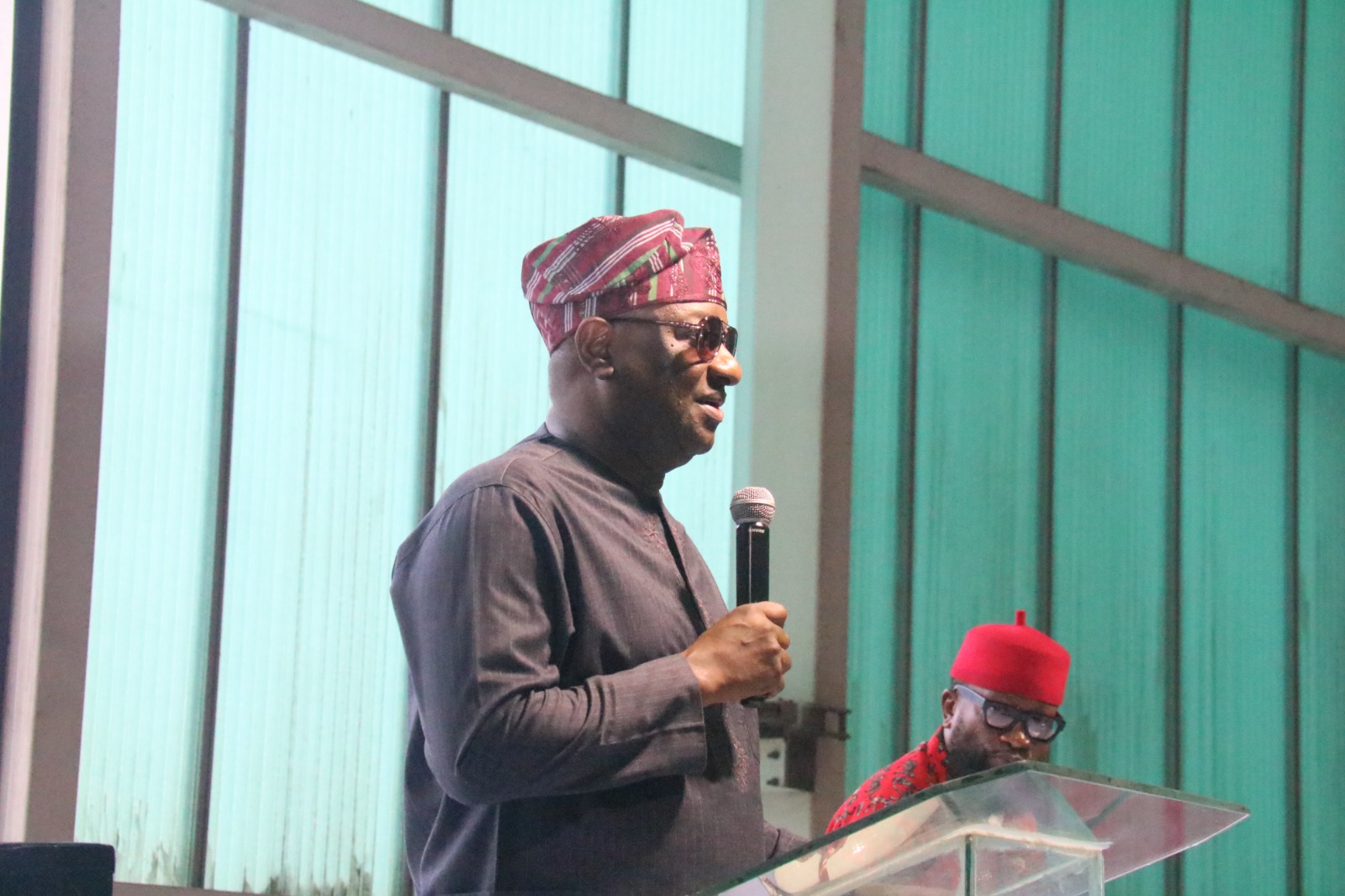
Keyamo made this call at the 2026 annual meeting of the Alliance for Hydromet Development in Lagos on Tuesday hosted by the Nigerian Meteorological Agency (NiMet) where he said climate-related financing must translate into projects that address real development needs rather than remain policy commitments.
He said the Federal Government had established the Nigerian Climate Investment Platform to mobilise funding for climate-resilient infrastructure, adaptation and related priorities, with a target of $500 million.
“These developments, as significant as climate finance, must ultimately translate into projects that address real developmental issues,” he said.
He also cited the government’s approval of a national carbon market framework and efforts to explore green bonds and other financing instruments to support climate-related investments.
He added that the Nigerian Sovereign Investment Authority’s accreditation as a direct access entity to the Green Climate Fund would strengthen Nigeria’s capacity to access international climate finance.
He said climate finance should be linked more closely to national development planning and investment preparation, with institutions such as the NiMet involved in identifying risks, assessing adaptation needs and developing credible investment proposals.
“We must therefore strengthen the connection between climate science, climate action, national development planning, and investment preparation,” he said. According to him, investment in weather observation, forecasting and early-warning infrastructure is among the cost-effective ways to prepare for climate-related threats and protect economic activity.
Keyamo said “the private sector must bring not only capital, but also innovation, technology, distribution networks, business expertise, and new approaches to service delivery.”
On his part, Lagos State Governor Babajide Sanwo-Olu, represented by the Secretary to the State Government on Blue Economy, Oluwadamilola Emmanuel, called for stronger investment in flood preparedness, reliable forecasting and early-warning systems.
Sanwo-Olu said flooding and other climate-related disasters continued to threaten lives, livelihoods, infrastructure and economic development, particularly in Lagos, where intense rainfall and exposure to flooding required effective infrastructure and proactive planning.
He added that timely weather information and the ability to act on forecasts could determine whether a climate-related threat remained manageable or developed into a disaster.
Other News
“The 2022 floods in Lagos displaced over 2.4 million people, claimed more than 700 lives and caused an estimated US $1.84 billion in damages,” he said.
He added that every dollar invested in multi-hazard early-warning systems could generate approximately $9 in net economic benefits, making preparedness an important consideration in climate-related investment decisions.
Sanwo-Olu identified stronger partnerships among government institutions, meteorological agencies, emergency responders, researchers and private-sector organisations as necessary to ensure that forecasts translated into practical measures to protect communities and infrastructure.
He also called for the application of artificial intelligence, satellite technology and digital platforms to improve forecasting, stressing that such innovations must provide practical benefits to farmers, aviation operators and communities preparing for potential flooding.
Meanwhile, Director-General of NiMet, Professor Charles Anosike, said inadequate weather observation infrastructure and limited funding remained major constraints to the provision of reliable meteorological services in Nigeria and other African countries.
Anosike said Africa had some of the world’s largest gaps in basic weather and climate observations, with many rural, agricultural and remote areas lacking standard observation stations because of funding constraints.
He said Nigeria, with a land area exceeding 900,000 square kilometres, required extensive observation coverage to generate the information needed for accurate forecasts and effective climate-risk management.
“Modernizing weather and climate observation infrastructure requires significant capital investment,” he said adding that weather and climate information provides economic value when it is integrated into decisions affecting agriculture, aviation, maritime operations, disaster preparedness and investment planning.
Anosike stressed that NiMet was strengthening partnerships with government institutions, development organisations and private companies to improve access to climate information and develop services that respond to users’ needs.
He disclosed that in agriculture, the agency was working with partners to improve access to high-resolution climate information and use artificial intelligence and digital advisory systems to translate forecasts into practical guidance for farmers.
“A forecast is not an early warning until it reaches the people at risk,” he said.
He added that NiMet was looking to engage the Securities and Exchange Commission (SEC) to establish a platform linking Nigerian research agencies with the Nigerian Commodity Exchange to improve crop yields, stabilise supply chains and reduce market risks through the application of weather intelligence.