Follow Us on Google
Desmond Mgboh, Kano
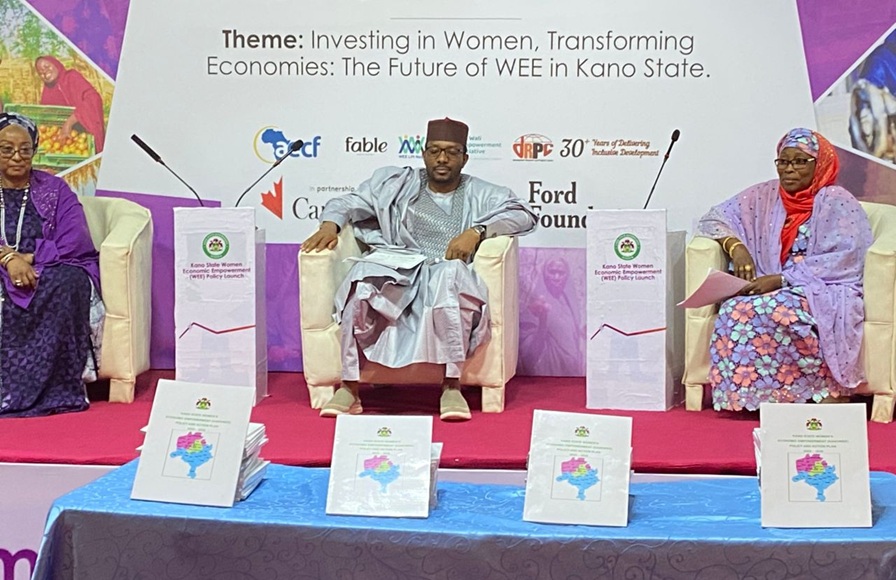
Kano State Government has officially launched Women Economic Empowerment (WEE) policy designed to reposition the fortunes of women in the state.
Speaking at the event marking the take off of the WEE policy, Kano State Governor, Abba Kabir Yusuf described the event as a milestone to attaining inclusive and sustainable development in the state.
Represented by the Commissioner for Rural and Community Development, Abdulkadir Abdulsalam, the Governor noted that the policy reflected his administration’s vision of building a Kano that is inclusive, just and prosperous.
He was optimistic that the policy would provide direction, meaningful change depends on implementation and sustained partnerships.
Other News
According to him, the state government has already begun translating the policy into action through significant budgetary allocations to the Ministry of Women Affairs to prioritise women and other vulnerable populations.
He urged development partners, civil society organisations and the private sector to collaborate with the Ministry of Women Affairs to ensure that the policy is translated into tangible improvements in women’s lives across the state.
Daily Sun reports that the development of the policy was supported through technical collaboration with the development Research and Projects Centre (dRPC).
In his remarks, the Emir of Kano, Muhammadu Sanusi, noted that the domestication of the WEE policy sends a strong message that Kano State is committed to advancing women’s empowerment. He emphasised that women’s empowerment should not be viewed as a foreign concept but rather as one deeply rooted in the state’s cultural and religious values.
The Commissioner for Women Affairs, Children and Persons with Special Needs in the state, Amina Abdullahi Sani, disclosed that the Kano State Government’s ongoing monthly disbursement of N50,000 to 5,200 women across the 484 wards in the state’s 44 local government areas demonstrates the government’s commitment to translating policy into concrete action, adding that the programme strengthens household economies, supports small businesses and empowers women who serve as the backbone of their communities.