Follow Us on Google
• Farmlands recovered, schools, livestock markets reopened
• Dismisses ADC as association, not yet political party
From Desmond Mgboh, Kano
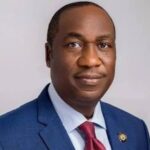
Ahmed Maiyaka, Kaduna State Commissioner for Information, was formerly the Managing Director of the Kaduna State Media Corporation. In this interview speaks on how the state is fighting banditry, expresses concern about the increasing case of insecurity, the political difference between the present administration in the state the former governor, Mallam Nasir el-Rufai. Also, he gives insights to the politics of the state ahead of the 2027 general election, among other issues.
One key issue that has troubled Kaduna State in the past few years is security. From your own assessment, where are we today with regard to this fight?
Well, insecurity was a major setback, not just for Kaduna State, but for the entire Northern Region and largely for Nigeria as a country. It formed one of the major campaign issues in Nigeria in the last two, three sets of elections, from 2015 and 2019 to 2023. Now the issue of security has remained a major one within this cycle of elections. In Kaduna State, our case is very peculiar because we have been faced with challenges of banditry and kidnapping. At some point, travelling from Kaduna to other places was quite tedious. It was faced with a lot of risk. Faced with the risk of being kidnapped for ransom and our farmers couldn’t access their farmlands. Quite a number of people were kidnapped along Kaduna highway and also Kaduna’s Birin Kwari became a no-go-area because of the high level of insecurity within the area. Also, the southern part of the state was a very difficult terrain. Kaduna to Katsina and Kaduna to Funtua roads were very, very difficult terrains. About 500 schools were closed down- our children could not go school. Moreover, about 190 health facilities were also closed down- people did not have access to health and our markets were closed down for over a decade. Our farmers could not go to the farms. And they attempted, they had to pay taxes to bandits and so the issue of food security became a very big challenge. Kaduna is within the corridor that connects most states to Northern Nigeria. So, coming from Abuja to Kaduna became very difficult or coming from Kaduna to Zamfara, to Birin Jwari or to the Southern part of the state became a herculean task.
But what is the situation like today, under the watch of your governor?
Thankfully, since the assumption of His Excellency, the Governor of Kaduna State, Senator Uba Sani, things have changed. He has served in the Senate, and also understands these issues very clearly and had multi-faceted community peace model, because the community members are in the leadership of the model, the traditional rulers are involved, the religious leaders are involved and of course the leaders of thought in the area are there too. This is just to ensure that we have something that works for everyone. And of course, the bane of this model is actually trust. You need to build trust among the members of the community. And this is where we are. Today, with the peace model in practice, we have not only achieved peace and security in Kaduna State, but some of the gains have been tremendous and also very fascinating. Within the last two and half years, we have recovered over 500,000 hectares of farmlands from the bandits. Our farmers are back to the farms and over 532 schools have been reopened. Our children can go back to school and our markets are back. The livestock market in Birnin- Kwari that was shut down about 8-10 years ago has been reopened, businesses are back in the market and people are able transport livestock from Birnin- Kwari to the southern parts of the country. The route from here to Birnin-Kwari, before now, was impassable. You could not dare travel to Birnin-Kwari, but today you can drive and walk to Birnin Kwari without any fear. This is all as a result of the successes that have been recorded around the Kaduna peace model that has restored hope to our people. The yields have been very positive and the government has continued to support our farmers with farm inputs and fertilizers at no cost. The tradition is for the state to provide some subsidy and then farmers pay a part of it. But in the case of Kaduna, our farmers, small holder’s farmers and not the big boy farmers got the imputs at no cost at all.
Earlier at the workshop, you expressed worries over banditry spreading to places like Kano given the recent happenings in some parts of the state?
Other News
Yes, I am getting to that. I am just trying to tell you how much we have achieved using the Kaduna peace model and our concern has been to have an integrated strategy that covers the entire North because whatever you do in Kaduna has a lot of effect on about eight Northern states including Kano. Kaduna is bounded by Niger, Zamfara, Katsina, Kano, Bauchi, Plateau, Nassarawa and then of course the Federal Capital Territory. So, whatever happens in Kaduna has an indirect effect on these states. We must have an integrated strategy that works for Kaduna so that you don’t have an overflow, a ripple effect of what is happening in Kaduna State moving back to Kano. Kano, in the midst of all this insecurity has not suffered. Kano is relatively peaceful; there have been no skirmishes in terms of insecurity in the state in the last 10-15 years. Kano is very central to the nation because Kano is a commercial nerve centre of Northern Nigeria. The businesses that boom in Kano are of international repute because you have people coming from African countries to do businesses in Kano. So, whatever happens to Kano, I can assure you, has a ripple effect on the entire region of the north and the nation – considering the population of Kano. We are approximately talking a number of about 20 million. Based on the last census, Kano has about 15 million people. So if there is any insecurity breaking out in Kano, you can imagine how the people would have to move to the neigbouring states and of course to neighboring countries. Kano is very central and we are really concerned. We are really concerned about the recent skirmishes in some parts of Kano, especially the area bordering Katsina State. That is of great concern. As the media, you guys have a great role to play. The Kaduna peace model was achieved partly by the role of the media. The media has a role to play, by not promoting the bandits and by promoting the positive outcomes. The media played a great role in Kaduna’s peace model. Unlike Kano, Kaduna is a multifaceted society. We have a mix of different religions and people of different backgrounds living in Kaduna. It is more sensitively diverse than what you have in Kano. For Kaduna, we believe that if we are able to achieve this, if replicated in Kano, they too should be able to achieve lasting peace. I am concerned, not just for Kano State but for the entire region. We must be able to achieve this peace around the entire region for prosperity and the development of our people.
The government of Kaduna State has had a near frosty relationship with the former governor, Mallam Nasiru el-Rufai. What is the status of things? Where are you at this moment?
Well as a government, we are not aware of any bad relationship between the former governor and the current governor. We have been very relative, but of course, we may differ in terms of strategy of leadership. Of course, the Kaduna State Governor Uba Sani is someone who has worked in the trenches, who has been in the forefront of campaigning for pro-poor strategies, policies and programme. He is someone who has been in the forefront of ensuring the return of democracy in Nigeria. He has been part of the family of human rights activists. He has a different way of how leadership should be done and that is why he is more democratic. One of the key things that I would like to share with you is this: in the 2026 budget, we have been able put in place a provision of N100 million per political ward. We have 255 wards. In each of these wards, the members of the community would decide what project should be done with that amount – that is about N2.55 billion. That is his style of leadership. It is participatory, it is democratic and it is an inclusive government. That is one example. One other area people may think that my governor differs from the former governor is that when he came, the school fees of tertiary institutions were too high. This made a number of students to drop out of school. Since he assumed office, he has reviewed the state tuition fee policy by 50 percent and has also provided scholarship worth more than N400 million indigenes of the state.
Are you people not afraid of the new party, ADC, led by people like Mallam el-Rufai, coming to be a potential political threat to the Uba Sani administration?
AADC in Kaduna State, as far as I am concerned, is still an association. This is because in the last elections bye-election in Kaduna, in an area where APC had never won an election, APC scored 34,000 votes. All the other political parties put together, including the PDP that has won that constituency since 1999 and the SDP and the ADC, they all got one third of what the APC got. And this is purely because of engagement. This is because the governor has extended his hands of friendship to the people of that part of the state, ensuring that we have inclusive development in the area. This is a community where you have 95 percent Christians and the governor is extending to everyone. As a leader, he is concerned that he is a leader of all, irrespective of whether they voted for him or not, whether they are in the same party or not and whether they are in the same religion or not. The previous administration, perhaps, abandoned that part of the state because of their kind of thinking.
The 2027 is fast approaching. What is your take on the politics of the state and that of the centre?
If governance and elections are based performance, on the basis of the people voting for someone who cares for them, who is concerned about leadership, who is concerned about their aspirations, someone who is not just concerned, not just the elections but about the future of their generations – because the reopening of these schools is one major policy of ensuring that every child goes to school, then the governor is the right person. I want to assure you that by 2027, not just 2027 even if elections were conducted today, the people of Kaduna will speak loud by ensuring that they return the governor to the seat of power!