Follow Us on Google
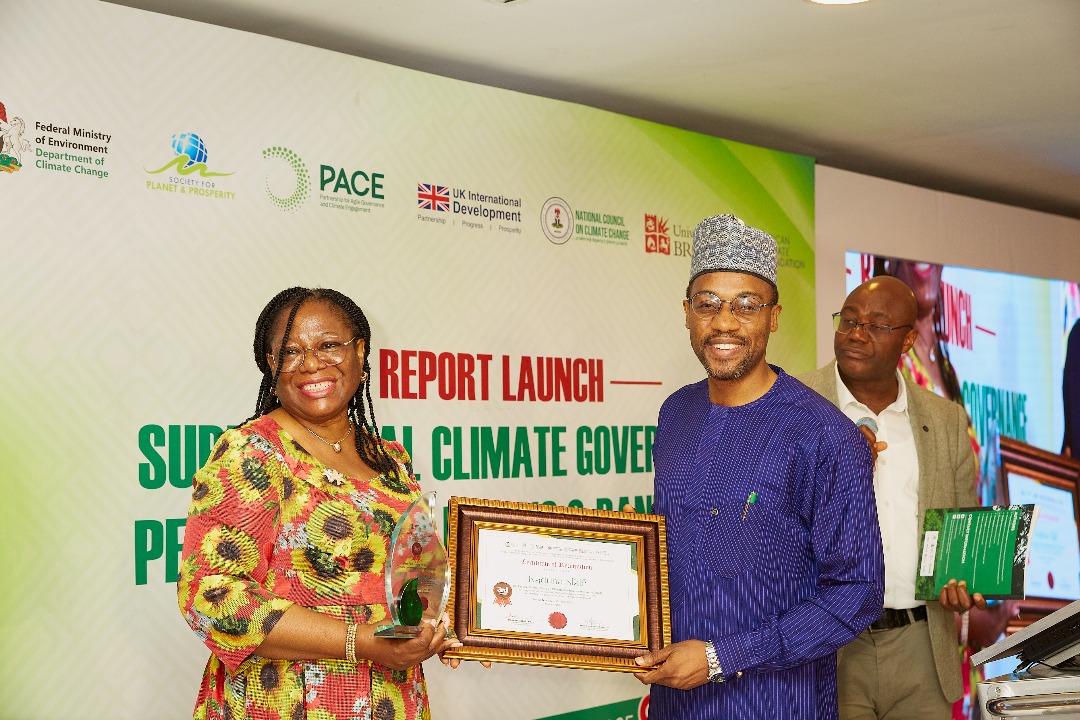
Kaduna State recently emerged third overall in the 2025 Subnational Climate Governance Performance Rating and Ranking, marking a major leap from its 16th position in 2024 and reflecting significant reforms in climate governance across the state.
The rating exercise, led by the Society for Planet and Prosperity (SPP) in partnership with the Department of Climate Change of the Federal Ministry of Environment, assessed the performance of all states across five key dimensions of climate governance.
Hon. Abubakar Buba, Commissioner for Environment and Natural Resources, said the 13-place jump was the result of deliberate, structured actions taken by the state government to strengthen institutional capacity and scale up climate interventions.
Buba said the state intentionally used the ranking framework — supported by UK FCDO’s PACE programme — as a roadmap for governance reforms.
According to him, the state focused on improving institutional arrangements, climate policies and legal frameworks, budgetary allocation, project implementation, monitoring systems and public communication.
Kaduna scored 120 points in Climate Institutional Arrangements, earning the highest rating nationwide for coordination and governance structures. It also recorded 50 points each in climate budget allocation and online visibility.
He said a key milestone on the state’s journey was the launch of Kaduna’s 10-year Climate Change Policy in August 2024 — the first such policy in Northern Nigeria.
“The policy commits us to low-carbon, climate-resilient and gender-responsive development,” Buba quoted Gov. Uba Sani as saying at the launch.
To support implementation, the government established the Kaduna Climate Change Accountability Mechanism, a multi-stakeholder framework anchored on the state’s Open Government Partnership commitments.
Technical Working Groups have also been set up across the 23 Local Government Areas to strengthen grassroots coordination and data-driven monitoring.
Buba said the governance reforms have begun translating into measurable impacts across sectors.
As one of Nigeria’s leading agricultural producers, the state has prioritised climate-smart agriculture through partnerships with the Federal Government and the African Development Bank under the Special Agro-Industrial Processing Zones (SAPZ) programme.
He said the programme is modernising agricultural value chains, boosting productivity, increasing farmer incomes and creating youth employment.
Other News
In March 2025, the state disbursed USD 25,000 in community revolving funds to 10 communities for climate-smart rain-fed agriculture, alongside green skills training for women and youth.
Kaduna also launched the Dry Season Agricultural Empowerment Programme in February 2025, distributing 10,000 solar-powered irrigation pumps to smallholder farmers, with priority given to women and other vulnerable groups.
“These interventions are expanding dry-season production, reducing dependence on diesel and improving food security,” the commissioner said.
On urban resilience, the state commenced a major drainage desilting and widening programme covering 200,000 metres of drainage channels, alongside dredging of key sections of the River Kaduna to reduce flooding risks.
The state has also embedded climate action in local development financing through a community-driven model adapted from the ranking project.
For the 2026 budget cycle, Kaduna has proposed ‘Project 255’, which allocates ₦100 million to each of the state’s 255 wards.
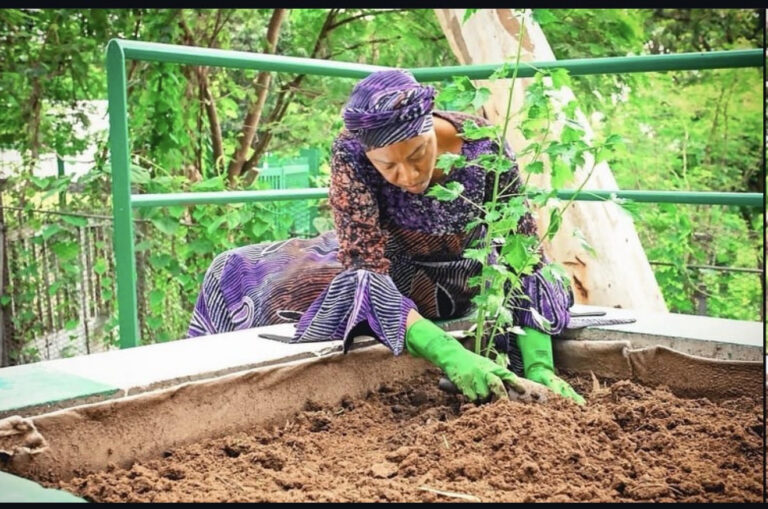
Buba said environmental restoration remains a priority. Under the Greening Kaduna Initiative, the government has committed to planting 10 million trees over four years, with over two million already planted since 2024.
“These efforts are reducing heat stress, improving air quality and restoring degraded landscapes across the state,” he said.
He acknowledged that while progress has been made, funding constraints and technical capacity gaps remain.
However, he said the improved ranking has boosted investor confidence and opened doors for new national and international partnerships.
“We welcome the ranking not just as a scoreboard but as a tool for learning and continuous improvement. Kaduna’s journey to third place shows what political will, institutional reform and citizen engagement can achieve,” Buba said.
He added that the state would continue to deepen reforms, expand implementation and pursue climate-resilient development for the benefit of its people.