Follow Us on Google
…Says February 25 presidential poll was mockery of democracy in Nigeria
By Christy Anyanwu
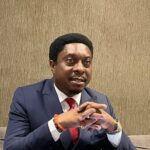
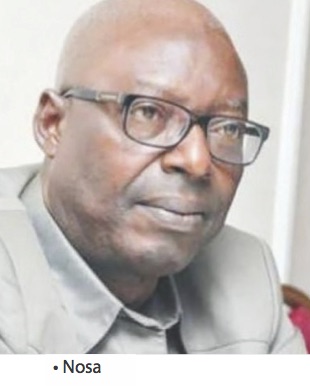
Mr Nosa Igiebor is the co-founder/president of TELL Communications, publishers of Tell Magazine.
In the course of Nigeria’s democratic march, the TELL team opposed military rule and strongly believed that the interim government put in place following the annulment of the June 12, 1993, presidential election was illegitimate, arguing that Nigerians had a valid election, but the outcome was aborted.
Igiebor was arrested and imprisoned because of the June 12 struggle. He later went into exile but eventually returned to Nigeria.
In this interview, he shared his thoughts on the June 12, 1993, struggle, and what has become of the democratic system of government they fought to enthrone in the country. Excerpts:
Today, June 12, is 30 years since the 1993 election. What lessons do you think Nigeria has learnt from it?
In my own opinion, we haven’t learnt any lesson from June 12, 1993, which was a very pivotal time in the country’s history. We thought that June 12 was the re-birth of democracy in Nigeria because the struggle was one that took its stand against military dictatorship. But if you look at what has happened since 1999 till date, you can’t describe what we have in Nigeria as democracy. Every four years we pretend to hold elections that really don’t reflect the will of the people. June 12 was against autocratic rule, against dictatorship, against impunity. But what we have now is different from what June 12, which was a symbol of the free expression of the people’s will. Impunity has become more entrenched and normalisation of criminality is the order of the day. So, for me, we haven’t learnt anything, which is very sad.
The election of June 12 and the recent general elections, do they look alike, is there any comparison?
They don’t look alike. They are different, but a bit similar in some way. June 12 was a free expression of people’s wishes. The mode of election was very ordinary, very prosaic. People lined up in front of the symbols of the parties of their preferred candidates. And there were only two candidates, two parties, in that election, and the election was done; (the result) was not declared. Unfortunately, the military regime at that time truncated the whole realisation, the positive outcome of that election. But our recent election, which was the February 25, 2023, presidential election, it was a mockery. To call that an election would amount to a mockery of democracy. That was why I said that we haven’t learned any lesson from the June 12 experience. What I find very distressing about it is that the election was held and the majority of the voters, teams of observers, both local and international, all came to the same conclusion, that the election was a sham. The result declared, again, did not reflect the true wishes of the people, and then we are told to move on. I keep asking myself, why do Nigerians accept illegality, why do we accept impunity, why is it only in this country we spend hundreds of billions to conduct an election with a dubious outcome? INEC (Independent National Electoral Commission), which is the institution in charge of presiding over elections, made lots of the promises, (such as) if you give us a new, amended, electoral law, we will do better. At the end of the day, INEC conducted the election in a very shoddy manner, breaking all the laws, breaking its own rules, and they are telling us we should move on. To describe what we have as a democracy would be stretching it too far, which is really unfortunate.
What would it take to have really free and fair elections in Nigeria?
There is no magic for it; having free and fair elections is no rocket science. The question is, are we ready to have free and fair elections? We will have free and fair elections when we are ready to have free and fair elections. In this last exercise, the people were ready for a free and fair elections, but the institutions of state, led by INEC, the body in charge of our elections, were not ready for free and fair elections. The problem is not the people, we are always ready. We are told and assured that our votes would count and we go out on election day, whether it’s raining or in the sun, and at the end of the day, they don’t allow our votes to count. We can have free and fair elections when those in charge of our public institutions are prepared for us to have free and fair elections. The problem is not with the people, it is with those who control the levers of power and they are in a position to manipulate the process. You can’t continue to play with the people’s will and then you pretend you have democracy. It doesn’t work that way. That’s why, in my opinion – I don’t have anything against the man who has been declared president and sworn in – but I can confidently say that, given the way the elections were conducted and the hurried nature of the declaration of the winner, one can argue very creditably that his presidency lacks legitimacy, which itself is tragic especially when a government does not have the support of the people. Look at this way, assuming he even won the election, freely and fairly, how many people voted for him? A country of over 200 million people. They told us that the number of registered voters was 90million-plus. Those with permanent voters’ cards, about 87 million. Then we had the worst turnout for elections in the last 20 or 30 years. Less than 30 percent of voters showed up. And the man declared the winner scored approximately nine million votes. Assuming he won fair and square, how does that confer legitimacy on his government? It does not. Plus the added shenanigans that we all witnessed in the conduct of the election. It’s very unfortunate. Then you have the man who has been declared president and sworn in, saddled from the word go with the question of whether his government is legitimate or not. Yes, he may have been sworn in according to the Constitution, but in the eye of the people, does he have legitimacy, is he accepted? All of these would have been avoided if the right things were done the right way.
Share with us memories of June 12, 1993; for instance, you were out of the country on exile, so, what does June 12 mean to you as a person?
June 12 meant something to me then, not anymore. Like I said, we had thought June 12 symbolised the rebirth of democracy in Nigeria. Look at our experiences since 1999 when we thought we were beginning a new era of democracy. Can we really say that what we have in Nigeria is democracy? No. We might have what you grudgingly accept as an ‘elected’ government, or, like someone has said, a ‘selected’ government or civil government, which is different from democracy. One of the major pillars of democracy is when people freely express their will and elect their leaders. Once that is absent, you can’t describe what you get from that as democracy. On Monday now, they would say they are marking June 12, but it has become hollow ritual. That was why, two years ago, when the immediate past President held a big-do in Aso Rock, trying to memorialise June 12 and honour those who stood their ground on June 12, and I was invited, I did not go. Within me, I just didn’t see the point. In 2019, INEC told us they had a server. Election came and they said they didn’t have a server. When the leading opposition party was able to access that server and retrieve the original results INEC transmitted to the server, the commission denied what it had said about the server. This time, they said they were going to use BVAS and the results would be posted to IREV. At the end of the day, what happened? Again, we were betrayed. For me, June 12 has become hollow and it’s sad, given the sacrifices Nigerians made to make that June 12 the fulcrum of the fight against dictatorship. People died, people lost their businesses, a lot of people were sent into exile and all of that. The man who won the election himself did not even survive it. M.K.O. Abiola died. When you see where we are today, you would begin to ask yourself, was June 12 worth that entire struggle? In my opinion, it isn’t worth it because, where we are today, are we better off now than how we were at the time we were fighting for June 12? We are far worse off now. Yes, you may say there’s no more dictatorship in the country, but we have a dictatorship different from what we had at that time. What we have now is what political scientists call “state capture” by a political class of Nigerians who go there, who enthrench themselves and whose overarching desire is to capture power at all costs, win elections illegally and otherwise. And when they get there, they take care of themselves and forget the people.
Another June 12 is around the corner, I no longer participate in celebrating it. On June 12, I mourn. June 12 no longer represents the essence of democracy in our country because there is no real democarcy in Nigeria. June 12 only reminds me of how hollow the democracy we have today is, and I’m very sad.
What do you think of President Muhammadu Buhari asking Nigerians to forgive him as he was about to leave office?
Well, I have nothing to forgive him for. You know why? Because Buhari did not disappoint me. Why do I say so? In 2015, I knew that the man was going to be a disaster for this country. Like Chief Ayo Adebanjo kept saying, he was waiting expectantly for Buhari to disappoint him, to prove him wrong. Buhari never did. Buhari only ended up proving him right that he was the most unfit and the most unprepared person to be the president of Nigeria by the time he came in 2015. We can see the result. We don’t need to tell any Nigerian the disastrous consequences of eight years of Buhari in Aso Rock. So, I have nothing to forgive him for. Like I said, he didn’t disappoint me, he didn’t prove me wrong; he proved me right. I should thank him for proving me right. It’s unfortunate, but that is the reality. When people say Nigeria is a difficult country, that the people are hard to govern, I say, no, you are insulting us. We are the easiest people to govern. We are the most accommodating people on Mother Earth. Can you mention any other country where the prices of commodities overnight would go up by 300 to 400 percent and people are not on the streets to say, ‘No, we can’t take this’? When they say Nigerians are difficult to govern, that’s just an excuse for their incompetence. We have leaders who don’t know what leadership is all about, and that’s the tragedy of Nigeria. Prof. Chinua Achebe said it in his book, The Trouble With Nigeria: When a country allows its Fourth 11 of people to be those controlling its affairs, what we will have is where we are today.