Follow Us on Google
By Godwin Tsa, Abuja
Election petition tribunals occupy a strategic position in Nigeria’s democratic process, deciding disputes that can determine the political fate of elected officials and, in some cases, reshape the entire trajectory of governance in a state or at the federal level. Members are appointed primarily by the President of the Court of Appeal, drawn from serving judges across the High Courts, Sharia Courts of Appeal, and Customary Courts of Appeal, under Section 285(2) of the 1999 Constitution as amended.
The judiciary maintains that these appointments rest on integrity, competence, and consultation with state Chief Judges and other judicial stakeholders. But away from the public contest of politicians jostling for votes, a quieter contest is said to unfold inside the judiciary itself, one allegedly involving lobbying, networking, and in some accounts outright inducements, all aimed at securing a tribunal seat before the campaign season reaches its height.
The appeal of such a seat is not hard to understand. Tribunal assignments carry significant public visibility and access to sitting allowances and logistics support that, over a months-long tribunal lifespan, can amount to substantial sums. That is a meaningful draw in a judiciary still contending with chronic funding gaps, irregular emoluments, and infrastructure deficits that have long undermined both judicial welfare and public confidence. That perception, whether or not it reflects every officer’s experience, is enough on its own to make lobbying a rational strategy for those seeking appointment.
As Nigeria heads toward the 2027 general elections, a cycle that will generate its own wave of tribunal litigation, the question deserves serious scrutiny: is lobbying for tribunal seats a documented reality, or largely speculation dressed up as common knowledge?
The National Judicial Council’s Guidelines and Procedural Rules are explicit on this point. Any candidate found to have canvassed or lobbied for judicial appointment, directly or through intermediaries such as politicians, traditional rulers, or other judicial officers, is disqualified from consideration. The same prohibition extends to serving judges seeking elevation within the system.
Former Chief Justice of Nigeria, Aloma Mukhtar once described lobbying for judicial appointment as a culture that weakens the judiciary’s standing. The rules governing tribunal constitution mirror this concern, with the Chief Justice of Nigeria, acting through the NJC and the President of the Court of Appeal, holding broad discretion over who sits on these panels.
Critics argue that concentrating this decision in a few hands creates an obvious structural vulnerability: where one office controls access to high-value assignments, the incentive to cultivate closeness to that office follows naturally and almost inevitably.
A UNODC working paper on judicial selection in Nigeria reached a similar conclusion, noting that many respondents in its research raised concerns about the outsized influence the Chief Justice of Nigeria holds over the process, limiting institutional checks and balances in ways that leave the system exposed to informal pressures that formal rules cannot easily detect or prevent.
The claim that lobbying occurs is not merely anecdotal. Several documented sources support it, directly or by clear implication, and the weight of that evidence has accumulated steadily across multiple election cycles.
Professor Attahiru Jega, who chaired Nigeria’s electoral commission through the 2011 and 2015 elections, has said publicly that some judges have become known for what he called “cash and carry” judgments, particularly in election-related matters. That allegation carries real weight given his vantage point overseeing two election cycles and witnessing at close range how tribunal outcomes can diverge from both evidence and legal reasoning in ways that invite uncomfortable questions.
Former EFCC Acting Chairman Ibrahim Magu offered one of the clearest public confirmations in 2019, stating that judges and lawyers were lobbying for tribunal assignments because of the financial benefits attached to them, and warning against tribunals becoming conduits for siphoning public funds. That the warning came from the country’s top anti-corruption official at the time lent it institutional weight, confirming that the allegations were taken seriously inside government, even without resulting prosecutions that produced convictions.
The historical record includes harder evidence still. In 2016, the Department of State Services raided judges’ homes nationwide, recovering large sums of cash in circumstances that shocked the legal community and briefly focused national attention on the relationship between electoral litigation and judicial corruption.
Other News
Subsequent investigation alleged that a sitting governor had paid tribunal judges N2 billion at the trial stage and a further N5 billion at the Court of Appeal stage of an election dispute, figures that entered the public domain even though prosecutions never followed through to conviction.
A more conclusive case involved five judges, including former Akwa Ibom Chief Judge Justice Effiong Udo, who were sacked by the NJC and charged by the ICPC over allegations of accepting bribes to influence a governorship tribunal outcome. Unlike many other cases, this one carried prosecutorial follow-through, establishing that tribunal outcomes had, at least once, been bought and that the judges responsible faced formal consequences.
The late Justice Kayode Eso captured the phenomenon in a phrase that has outlived him: “billionaire election tribunal judges,” language that stuck precisely because it named something widely suspected but rarely stated on record by someone of his standing and authority within the Nigerian legal tradition.
Most recently, in December 2025, the President of the Court of Appeal acknowledged that the court continues to face recurring allegations of bribery, undue influence, and inconsistent decision-making that are eroding public trust in the institution. He stopped short of addressing tribunal lobbying specifically, but the remarks, coming from the institution responsible for constituting tribunals, amounted to an implicit admission that the problem has not gone away and that the court’s leadership is aware of the reputational damage it is causing.
Legal practitioners familiar with tribunal politics, none willing to be named for this story, describe lobbying operating through several channels simultaneously. The most direct route runs through proximity to the Chief Justice of Nigeria and the President of the Court of Appeal, who exercise the greatest control over tribunal composition. Judges interested in appointment are said to signal availability through informal channels, through intermediaries, professional associations, or colleagues with access to the appointing authorities, in ways that are difficult to trace and almost impossible to prove.
A second route runs through politicians themselves, who have an obvious stake in who adjudicates their electoral disputes. Accounts spanning multiple election cycles describe political actors lobbying on behalf of preferred judges, or in some cases approaching judges directly with inducements tied to future rulings. The relationship, where it exists, is therefore bilateral: judges seek access to tribunals and politicians seek access to judges, and both needs are said to find accommodation through channels that operate well below the surface of public institutional life.
A third, more structural channel involves professional and personal networks, shared chambers of origin, or ethnic, regional, or religious ties to appointing authorities, that are said to confer informal advantages in selection, distorting the process even without anything resembling explicit lobbying or the exchange of money.
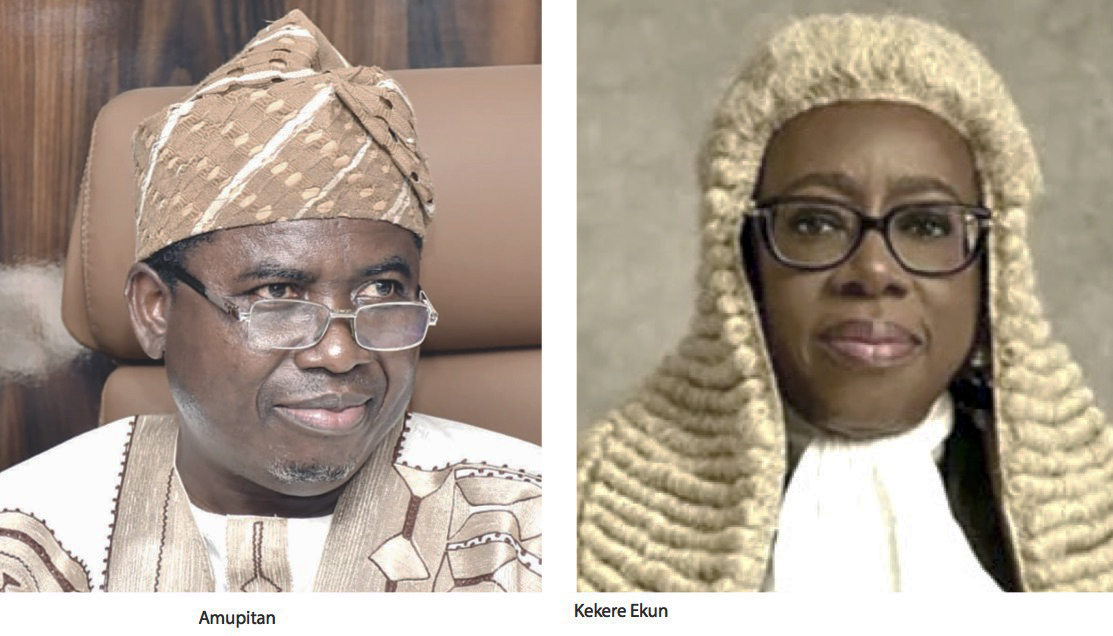
Fairness requires acknowledging the countervailing view, which does not deny that abuses occur but insists the full picture is more complicated than the most damning accounts suggest. Under current Chief Justice Kudirat Kekere-Ekun, the NJC approved a 2025 policy requiring public disclosure of candidates under consideration for judicial appointment, opening the process to public objection before appointments are finalised, described by the Chief Justice as an added layer of transparency in line with international standards. Whether that principle will be extended to tribunal constitution, which is handled separately from standard judicial appointments, remains an open and pressing question.
It is also true that most judges who have served on tribunals have done so without incident, producing judgments that held up on appeal. Between 2003 and 2023, more than 5,000 election petitions were filed before Nigerian courts, according to the World Justice Project, a volume and diversity of outcomes suggesting that while corruption exists, it does not determine every result. Africa Check also debunked a viral 2024 claim that a senior Court of Appeal justice had admitted tribunal members were bribed during the 2023 presidential election proceedings, a timely reminder that documented evidence and viral rumour are not the same thing and that the distinction matters enormously for public discourse.
With the next general elections approaching, proposed reforms have multiplied. One idea would replace discretionary tribunal appointments with a randomised or algorithmic selection process, eliminating the human judgment that lobbying depends on. Another would mandate recusal for any judge with personal or financial ties to a party before the tribunal. A third, backed by some senior lawyers, would have the NJC publish its tribunal selection criteria and submit the final list to independent review before it is gazetted, narrowing the discretion any single official currently holds.
The federal government’s 2026 budget allocated N341.6 billion for judicial salaries and allowances, a sharp increase following the Judicial Officers’ Salaries and Allowances (Amendment) Act of 2023. Better baseline pay, proponents argue, weakens the financial pull of tribunal service in the first place and reduces the conditions that make the alleged lobbying rational.
Whether any of this changes the pattern of past election cycles is uncertain. What seems beyond dispute is that the underlying problem is real, the stakes attached to it are high, and the judiciary’s credibility as the final arbiter of Nigeria’s elections depends on confronting it honestly rather than managing its public perception from a distance.