Follow Us on Google
…Obi, Mbah, Ohanaeze, Malawian VP eulogise erudite scholar, eminent lawyer
From Daniel Ezindu, Enugu
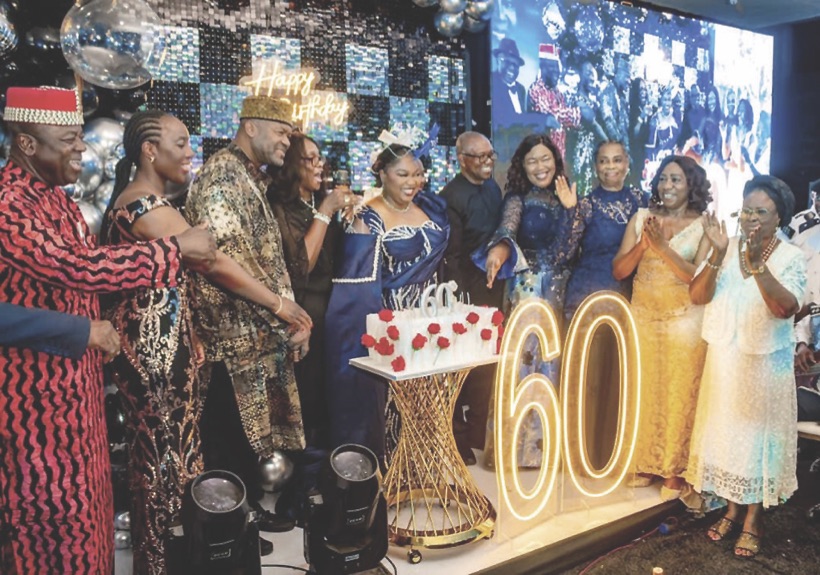
Joy Ezeilo, a quintessential scholar, eminent lawyer, rights activist and immutable humanist, recently turned 60. And the celebration marking the event was every bit colourful and dazzling.
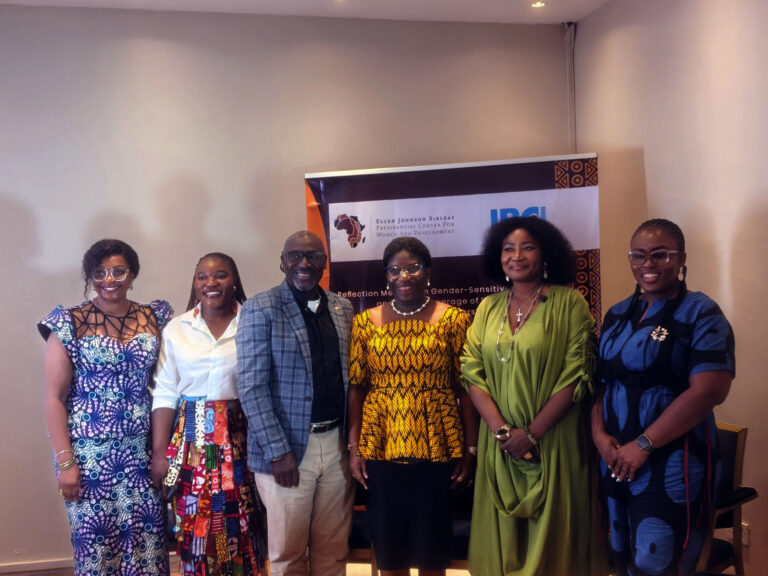
Prominent personalities from within and outside Nigeria gathered in honour of the amazon. They included former governor of Anambra State and leading presidential hopeful on the platform of the African Democratic Congress (ADC), Mr. Peter Obi, Enugu State Governor, Peter Mbah, represented by the Commissioner for Agriculture, Patrick Ubru, President-General of Ohanaeze Ndigbo, Sen. Azuta Mbata, former Minister of Education, Dr. Oby Ezekwesili, president of the Nigerian Bar Association (NBA), Afam Osigwe, SAN, and chairman of Enugu Council of Traditional Rulers, Igwe Samuel Asadu (Ogadagidi). Vice President of the Republic of Malawi, Jane Ansah, also graced the occasion.
In a gathering that drew policymakers, jurists, academics and cultural leaders, the 60th birthday lecture evolved beyond a ceremonial milestone into a pointed reflection on the state of women’s inclusion in governance and development.
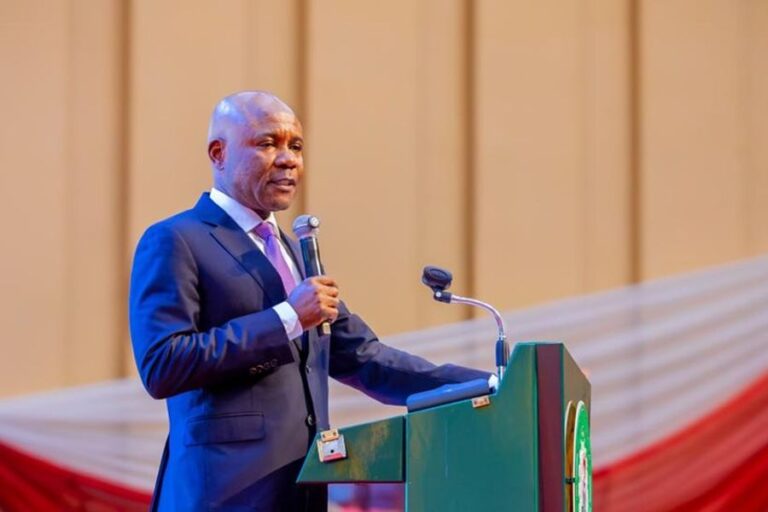
The keynote delivered by Malawi’s Vice President Jane Ansah at the March 27, 2026, event in Enugu set the tone – measured, grounded in experience and unmistakably urgent.
Ansah did not dwell on celebration. Instead, she used the moment to interrogate a persistent contradiction: the global consensus on gender equality and the slow, uneven pace of its implementation. Drawing from years in public service, she argued that sustainable development remains fundamentally constrained where women are excluded from shaping policy and influencing economic direction.
“Inclusion is not symbolic – it determines whether institutions work for everyone or only for a few,” she noted.
Her remarks carried the weight of experience. As a former Electoral Commissioner and now Vice President of Malawi, Ansah pointed to governance systems where women’s participation has strengthened accountability and broadened policy focus. In such environments, public decisions are more likely to reflect real social priorities—healthcare, education and social protection—rather than narrow institutional interests. Where women are absent, the consequences are not theoretical; they are visible in outcomes.
Other News
But governance, she made clear, is only one layer of the challenge. Across many societies, structural barriers continue to define the limits of women’s participation. Unequal access to education, restricted financial inclusion and cultural expectations that quietly shape ambition remain deeply embedded.
These are not isolated issues; they form a pattern that reduces development to a partial exercise—ambitious in design but limited in reach.
It was within this broader context that the significance of the celebrant came into view. Without slipping into sentiment, Ansah acknowledged the importance of sustained advocacy and institutional engagement—qualities long associated with Joy Ezeilo, Senior Advocate of Nigeria. The occasion, in that sense, was less about marking time and more about recognising a trajectory: the steady, often difficult, work of expanding space for women within systems that do not easily yield.
Other voices at the event reinforced this central argument from different vantage points. Representative of the Governor of Enugu State, Ubru, highlighted the state’s development approach, noting that sectors such as agriculture and enterprise already depend heavily on women’s participation. The challenge, he suggested, is not involvement but recognition and structured support that allows that contribution to scale.
In a more reflective intervention, wife of Nigeria’s first President, Prof. Uche Azikiwe, situated the conversation within a longer historical curve. She spoke of women whose contributions have shaped communities and institutions, often without formal acknowledgment. Her point was understated but clear: the issue is no longer whether women contribute but whether systems are willing to recognise and amplify that contribution in meaningful ways.
Former Anambra State Governor, Peter Obi, approached the matter from a governance and economic lens. Excluding women from productive and leadership roles, he argued, is not only unjust but inefficient. Economies that fail to utilise the full capacity of their population inevitably operate below potential—a reality with direct implications for growth and competitiveness.
From a socio-cultural standpoint, the President-General of Ohanaeze Ndigbo Worldwide, Senator Mbata, addressed the tension between tradition and transformation. Cultural identity, he noted, remains important but it must not be used to justify limitations that hinder progress. His remarks echoed a recurring theme of the evening: that many of the barriers women face are sustained not only by policy gaps but by inherited assumptions that go largely unchallenged.
Chairman of the Body of Benchers, Chief Rafiu Adeyanju Lawal-Rabana, who presided over the occasion, drew attention to the legal dimension of the issue. The law, he noted, provides a framework for equality, but its effectiveness depends on enforcement and societal acceptance. Without both, legal provisions risk remaining aspirational rather than transformative.
Taken together, the interventions did not dilute Ansah’s keynote—they sharpened it. What emerged was not a collection of speeches but a coherent argument: that women’s inclusion is central, not peripheral, to development outcomes.
In her closing remarks, Ansah returned to the question of accountability. Commitments to gender equality, she argued, must be backed by measurable outcomes. Policies must be tracked, evaluated and enforced, if they are to produce real change. The gap, increasingly, is not in what is known, but in what is implemented.
As the event drew to a close, the symbolism of the moment lingered. The celebration of Joy Ezeilo at 60 became, in effect, a convergence point—of ideas, of experience and of unresolved questions. Anchored by Vice President Ansah’s address, it served as a reminder that progress on women’s inclusion is neither automatic nor guaranteed. It requires intention, consistency and, above all, the willingness to confront its limits.