Follow Us on Google
“Leadership is a privilege to better the lives of others. It is not an opportunity to satisfy personal greed.”
—Mwai Kibaki
Safe inside the cocoon of official privilege, many government appointees exist in a reality entirely detached from the citizens they claim to serve, turning the promise of public duty into mere performance art. Surrounded by state-funded generators, fuel allowances, and domestic aides who buffer them from every administrative friction, high-ranking officers frequently lose sight of ordinary life. In their insulated world, governance becomes less about solving structural crises and more about managing optics, crafting flattering headlines, and offering glib excuses when public utilities collapse.
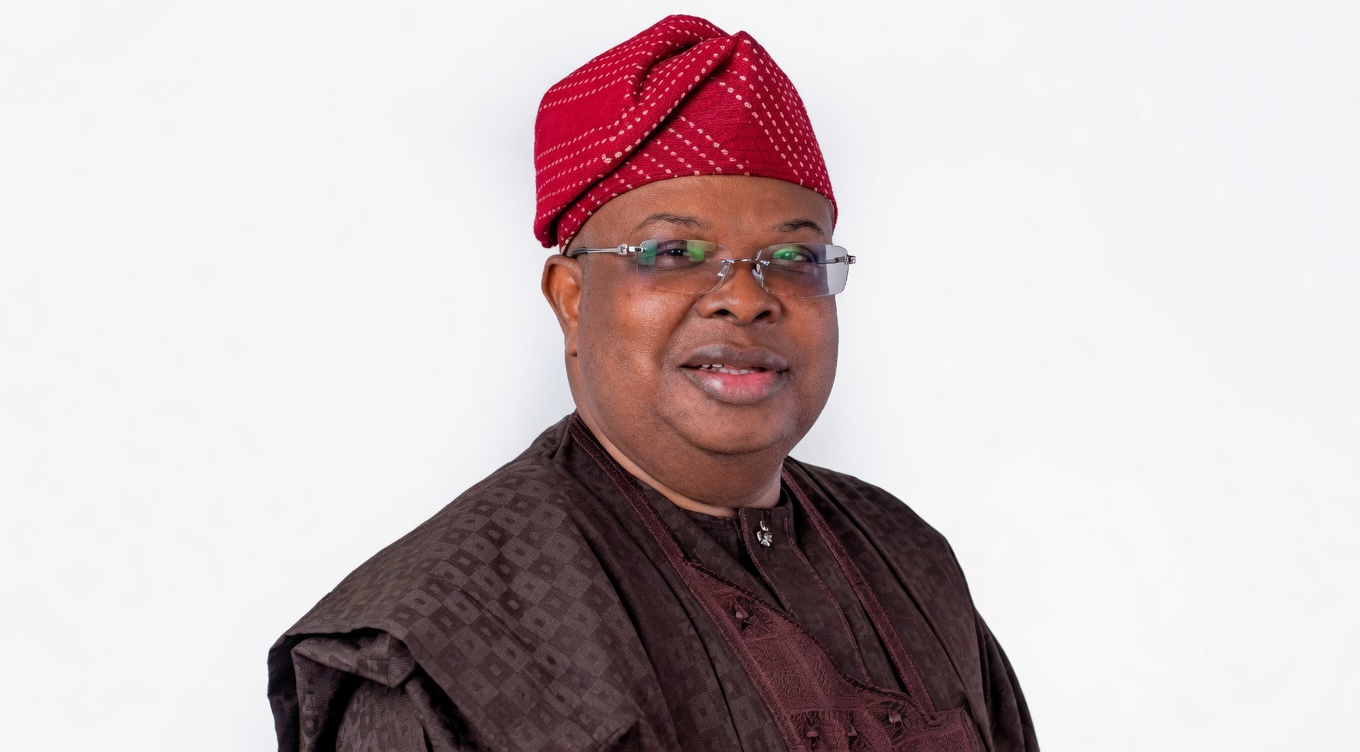
Though not an isolated case, the recent assertion by the Minister of Power, Joseph Olasunkanmi Tegbe, that citizens asked him to ‘slow down’ power restoration because their freezers were working continuously, is emblematic of this disconnect. Beyond its absurdity, the statement trivialises deep-seated sector failures and glosses over the massive economic toll inflicted on families struggling under high tariffs and erratic supply. It transforms severe national hardship into a self-congratulatory narrative, leaving a struggling populace to wonder whether those managing critical infrastructure are aware of what transpires beyond their official residences.
While giving a self-comforting assessment at the commissioning of the three-megawatt solar hybrid project at Yakubu Gowon University, formerly University of Abuja, Tegbe said he had been receiving feedback commending improvements in supply. Addressing the gathering with the confidence of an official who believes a breakthrough has been achieved, he painted a rosy picture of a stabilising grid, citing anecdotal satisfaction that contrasts sharply with blackouts across industrial hubs and residential neighbourhoods.
“Places that didn’t have light at all for three months are now having 18 hours light. Some areas called me to say, look, I should slow down, that everything in their freezer is freezing. That is what freezer is meant to do. Let it freeze the food that needs to be frozen,” he stated.
This is reducing tragedy to comedy — downplaying incessant national grid collapses, transmission bottlenecks and distribution failures, while ignoring the rip-off of millions trapped in estimated billing. To frame the survival tactics of households — who must manage fragile food supplies, mitigate voltage surges, and cope with chronic interruptions — as evidence of excess generation is profound denial. It treats the structural nightmare of the Nigerian Electricity Supply Industry (NESI) as a solved problem, dismissing the daily struggle of citizens who view uninterrupted power not as surplus luxury, but as elusive necessity.
For decades, Nigeria’s quest for stable electricity has been long and expensive. Despite heavy funding, billions in interventions, and multiple rounds of restructuring, the power sector remains the country’s most unstable and inefficient public enterprise, hobbled by policy inconsistency and the habit of putting square pegs in round holes. Since privatisation in 2013, which was meant to attract private capital to generation and distribution companies, total available generation has hovered between 3,500 and 5,000 megawatts for over 200 million people. The grid remains fragile, prone to catastrophic collapse whenever a transmission line trips or gas supply to thermal plants is disrupted.
What makes the minister’s comment particularly insensitive is its disconnect from lived reality. At a time when most households and small businesses ration electricity and run generators to preserve perishables, to suggest homes now switch off freezers to defrost because supply is uninterrupted is tone-deaf and insulting. Across the country, the average family’s interaction with the grid is defined by uncertainty. Cold chain management for micro-enterprises, shop owners, and households is a battle against spoilage, high fuel costs, and damaged appliances.
At a time when small businesses budget more for diesel and petrol than for salaries, and many communities barely enjoy four hours daily, such statements betray a lack of empathy. They reduce a national economic crisis to a flippant anecdote. Small manufacturers, cold storage operators, tailors, and barbers continue to close under crushing energy costs, yet officialdom celebrates unverified tales of over-freezing appliances.
Other News
The minister’s self-comforting assessment highlights the huge disconnect between appointees and the people they serve. It reveals leadership cocooned in privilege, where performance is measured by press statements and photo opportunities, not by bulbs in real homes. More troubling, it betrays Nigerians’ weak capacity for indignation and the absence of mechanisms to hold public officers to account. When a minister can casually rewrite the reality of darkness millions endure and face no consequence, it shows how low we set the bar for public service — and how accustomed we have become to being failed.
This insensitivity is even more pronounced against resentment trailing the discriminatory banding system introduced under his predecessor, Adebayo Adelabu, and inherited by the current administration. The policy classified consumers into Band A (20 hours), Band B (16 hours), Band C (12 hours), Band D (8 hours) and Band E (4 hours), sold as cost-reflective, service-reflective reform to optimise distribution.
In reality, it formalised structural inequality. Beyond being arbitrary and unpopular, banding deepened the woes of homes and industries, creating a caste system where service is tied to tariff gouging rather than universal access.
Nigerians complain that the promise does not match reality. Those in Band A were forced to pay N225 per kilowatt hour, up from N63 — an increase of almost 240 per cent — yet still report far less than promised supply, while carrying bills they cannot afford. As ruling party chieftains themselves admitted, some businesses in Band A now spend over 70 per cent of production cost on electricity alone, pushing up prices in an already inflationary market.
For those in Bands B to E, the situation is worse. They are treated as second-class consumers. Discos prioritise Band A feeders to maximise revenue, while other communities remain in darkness yet are slammed with estimated bills. A resident in Ayobo, Lagos, recounted how officials came to disconnect his house for non-payment after weeks of blackout. That predatory NEPA mentality still runs the sector.
The banding system has thus become what the Nigeria Labour Congress rightly called a sophisticated exploitation strategy. It rewards areas with relatively better infrastructure while punishing those with less. It balkanised a vital public utility into a discriminatory ladder where light is treated as exclusive privilege for the affluent, rather than essential infrastructure for productivity.
What Nigerians expect from a Minister of Power is not lamentation or public relations theatrics, but tangible innovation and execution. The age of excuses — gas shortage, grid collapse, inherited debts, vandalism, liquidity crisis — has expired. If the minister wants to be remembered differently, he must abandon the politics of banding and begin the serious business of building a modern, decentralised architecture for sustainable growth.
He should champion aggressive, mandatory metering of every home and business to end the fraud of estimated billing. He must enforce strict service-level agreements compelling DisCos to refund Band A consumers who do not get 20 hours, and publish a transparent daily dashboard showing feeder-by-feeder dispatch nationwide for public verification and accountability every day.
He must also actively partner with states empowered by the Electricity Act to establish sub-national markets and regulators. States in industrial corridors in the different regions and major hubs must be supported to ring-fence industrial clusters and power them through embedded gas, captive plants, and regional grids. Simultaneously, the ministry must drive capital into off-grid mini-grids, solar-hybrids and battery storage to serve rural and peri-urban communities that the Discos have abandoned completely without any remorse.
Power is not rocket science; it requires political will, regulatory clarity, transparent metrics, and accountability. The minister must light the bulb of ideas, not just complain about darkness. Until leaders step out of insulated bubbles and confront raw realities of citizens, public service will remain a mockery of its true intent. True governance begins when basic utilities stop being treated as rare favours and success is measured by tangible, consistent, affordable relief delivered to ordinary households daily across Nigeria now.