Follow Us on Google
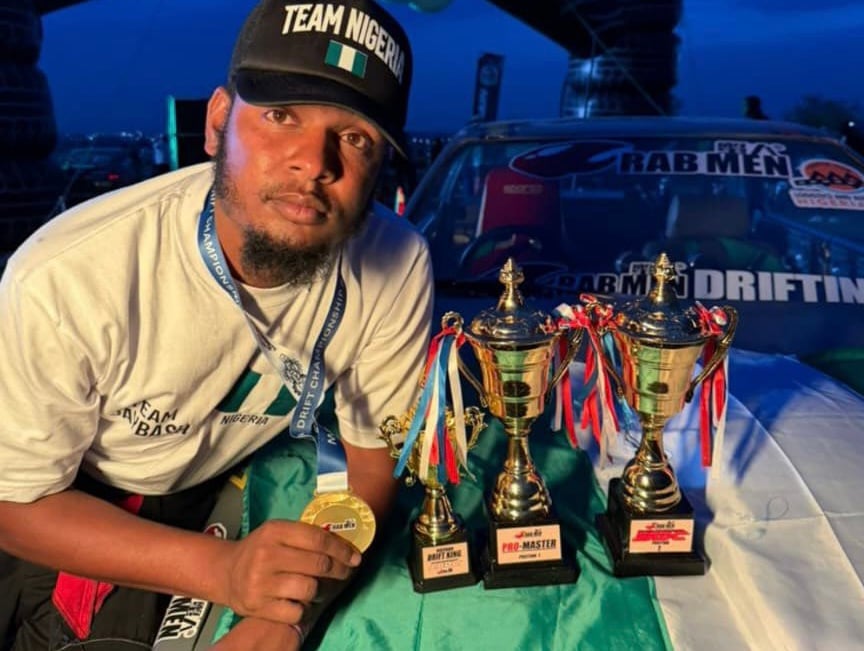
Nigerian award-winning drifter, Jamus Bashar Muhammed, popularly known as Jaybash, has called for stronger safety measures, better infrastructure, and regulatory support to ensure the survival and growth of drift driving in the country.
Speaking on the rising risks associated with the sport, Jaybash described drifting as one of the most dangerous forms of motorsport, requiring precision, quick reflexes, and a deep understanding of vehicle dynamics. However, he expressed concern that in Nigeria, the absence of safety structures, professional training, and legal frameworks has made the sport increasingly hazardous for drivers and spectators.
According to him, one of the major challenges facing the sport is the lack of proper drift circuits or designated tracks, forcing many drifters to use public roads and open spaces for practice.
“Drifting is a technical sport that needs controlled environments,” Jaybash said. “Practicing on public roads is unsafe for both drivers and other road users.”
He emphasised the need for the establishment of dedicated tracks equipped with safety barriers, emergency response systems, and adequate space for high-speed maneuvers. Such facilities, he noted, would significantly reduce the risks associated with the sport and encourage more professional participation.
Jaybash also identified the lack of professional coaching and training programs as another key issue.
He said most Nigerian drifters operate without structured mentorship or access to standard training facilities, which affects both their performance and safety.
Other News
“Proper coaching instills discipline and ensures that drivers understand vehicle maintenance and safety procedures,” he noted.
The drifter further urged the Ministry of Youth and Sports Development and other relevant agencies to develop clear regulations and policies to guide motorsport activities in Nigeria. He explained that a legal framework would enable licensing, event organization, and participation in international competitions, thereby giving Nigerian drifters formal recognition.
Another concern, according to Jaybash, is the limited access to advanced drift cars. He explained that most drifters depend on modified vehicles that may not meet international safety standards due to the high cost and unavailability of specialized vehicles in the country.
“We need more investment and sponsorship from the private sector to make motorsport safer and sustainable,” he said.
He also advocated for the creation of rapid response systems at drift events, including medical teams, firefighting units, and safety marshals. “A well-prepared safety team can make the difference between life and death in an accident,” he added.
Jaybash called on government bodies, corporate organizations, and motorsport enthusiasts to work together in building a safer and more structured environment for the sport. He expressed optimism that with the right infrastructure, laws, and support, Nigeria could develop world-class drifters and host international motorsport events.
“Drifting is exciting and inspiring,” he said. “With the right systems in place, Nigeria can become a major destination for motorsport in Africa.”