Follow Us on Google
From Juliana Taiwo-Obalonye, Abuja
Minister of the Federal Capital Territory (FCT), Nyesom Wike, has accused former Vice President Atiku Abubakar of inconsistency over his position on fuel subsidy, describing him as a “voodoo economist” seeking to change his position to suit political circumstances.
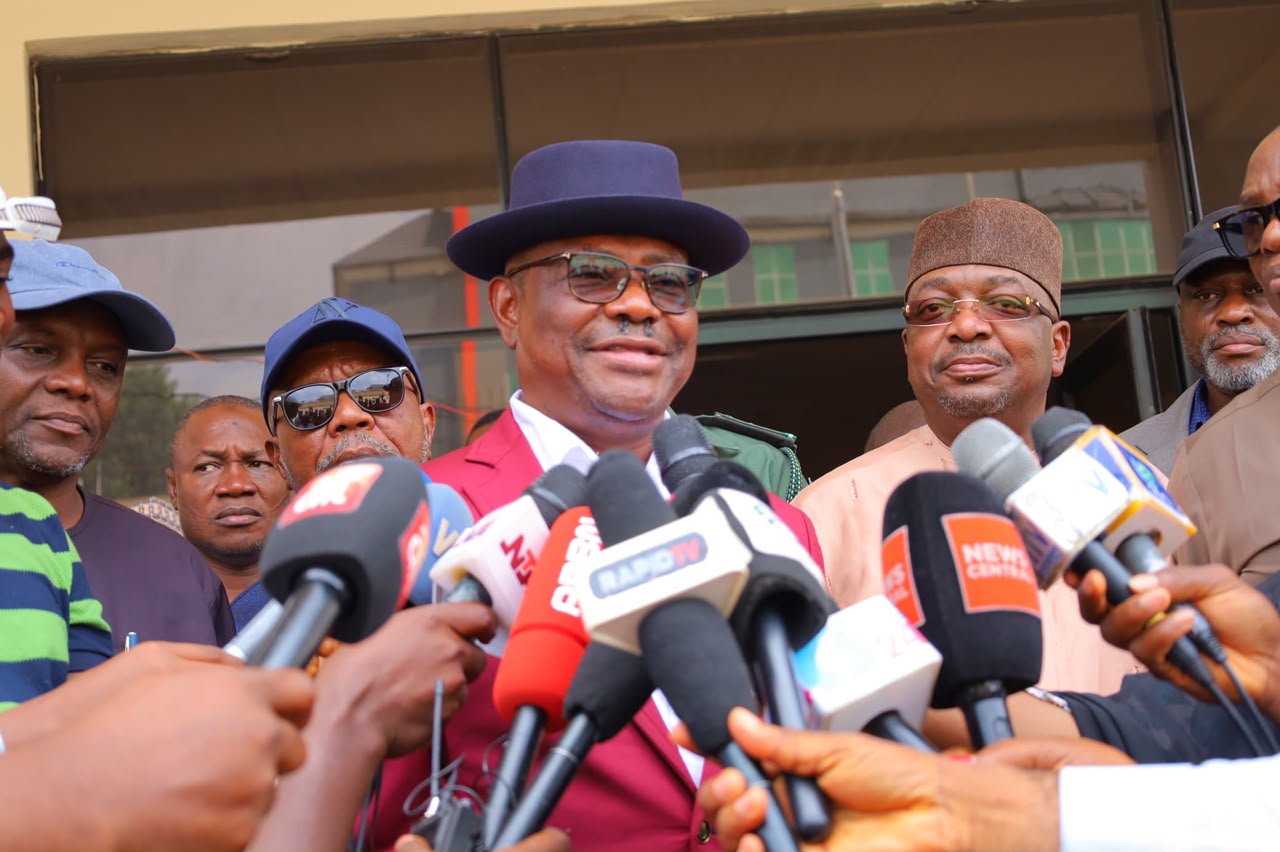
Wike spoke on Thursday in Abuja while inspecting ongoing infrastructure projects in the FCT, where he also defended President Bola Ahmed Tinubu’s decision to remove fuel subsidy.
The minister recalled that Atiku had pledged in 2022 to remove fuel subsidy within his first 100 days in office if elected president, but was now advocating a return to subsidy.
“Now, in 2026, he is not going to remove the fuel subsidy. Is he going back to the fraud, which he had alleged that fuel subsidy was?” Wike asked.
He described the former vice president as “confused” and accused him of adopting positions based on what he believed would appeal to voters.
“Atiku, who is confused, who acts like a voodoo economist, Atiku will say anything just to be president,” he said.
Wike said presidential aspirants should demonstrate consistency in their policy positions, arguing that leadership could not be based on constantly changing positions.
“Leadership is not you coming out, you say one thing now in the morning, in the afternoon you say a different thing, in the night you are talking of a different thing. That is not it,” he said.
The FCT minister also questioned the feasibility of restoring fuel subsidy under the current structure of Nigeria’s petroleum industry.
He said the Petroleum Industry Act had transformed the former Nigerian National Petroleum Corporation into NNPC Limited, a commercially operated company, while the emergence of the Dangote Refinery had further changed the dynamics of the downstream petroleum sector.
“He is living in the past. If not, he will know that with the Petroleum Industry Act, NNPC is now fully commercialised. It has transformed the old NNPC into a limited liability company, NNPC Limited, and no longer the sole importer or producer of fuel,” Wike said.
He further asked how an Atiku administration would operate a subsidy regime in an increasingly commercialised petroleum market.
“Will Atiku, as President—which he never will be—pay subsidy on fuel produced by Dangote Refinery?” he asked.
Wike argued that a return to government-controlled fuel pricing would undermine the direction of the Petroleum Industry Act and create uncertainty for investors.
According to him, fuel subsidies had historically encouraged smuggling, arbitrage and inefficiencies while putting pressure on government revenues.
He challenged Atiku to explain how he would use the savings from subsidy removal if he still supported the policy.
“All I thought he would have argued is, ‘Yes, I still believe in the removal of fuel subsidy, and I think that the savings made would have been utilised in this way or that way,’” Wike said.
Defending Tinubu’s subsidy policy, Wike said the removal had increased revenues available to the three tiers of government and improved their capacity to meet financial obligations.
He said state governments should be able to explain how they had utilised the additional funds received following the policy.
According to him, the increased allocations had also helped governments address salary and pension arrears.
“Nobody talks about non-payment of pension, nobody talks about non-payment of salary. Before, for you to pay salary, you would beg and beg the banks to give you money. But all those things are things of the past,” he said.
On the 2027 presidential election, Wike dismissed the suggestion that Atiku was among the leading opposition contenders, insisting that Tinubu remained the dominant candidate.
“I disagree with you that Atiku is one of the leading candidates,” Wike told journalists. “You have only one leading candidate, and that’s Asiwaju Ahmed Bola Tinubu.”
He also argued that the opposition was not sufficiently united to defeat the All Progressives Congress (APC), maintaining that the opposition was stronger in 2023 than it is currently.
“That’s why I say that 2027 is gone. It’s gone because you don’t have an opposition that want to wrestle power from the government,” he said.
Wike also rejected reports of a significant rise in armed robbery in Abuja, saying security reports available to the FCT Administration did not support such claims.
“I disagree with you that there are more armed robbery cases,” he said.
The minister acknowledged that isolated criminal incidents occurred but said security agencies were responding to them.
He disclosed that the Department of State Services (DSS) had tracked an individual allegedly impersonating security personnel and using fake security materials to harass residents.
“I’m not saying there are no one or two incidents of crime, but to say the armed robbery has increased in Abuja, I don’t agree,” Wike said.
Turning to the infrastructure projects inspected during the visit, the minister expressed satisfaction with the pace and quality of work, saying several major projects were expected to be completed before the end of the year.
He described some of the projects as major interventions capable of transforming the capital city and commended the contractors for the progress recorded.
Wike said construction around the Mpape bypass and Garki axis had also helped reclaim areas previously affected by a gully.
“We are satisfied with what we have seen. We’re very impressed that the promises made to our people are being fulfilled. Again, it’s what the whole agenda is all about,” he said.
The minister also declined responsibility for complaints about the performance of some Area Council chairmen, noting that they were elected directly by residents.
“They are the people who elected them. They should ask them. I am not their—I did not appoint them, they were elected,” Wike said.
He, however, acknowledged that some councils might have areas requiring improvement, noting that he had previously served as a council chairman.
“I was one-time a council chairman,” he said, adding that it would be unfair to conclude that the Area Council administrations were doing nothing.