Follow Us on Google
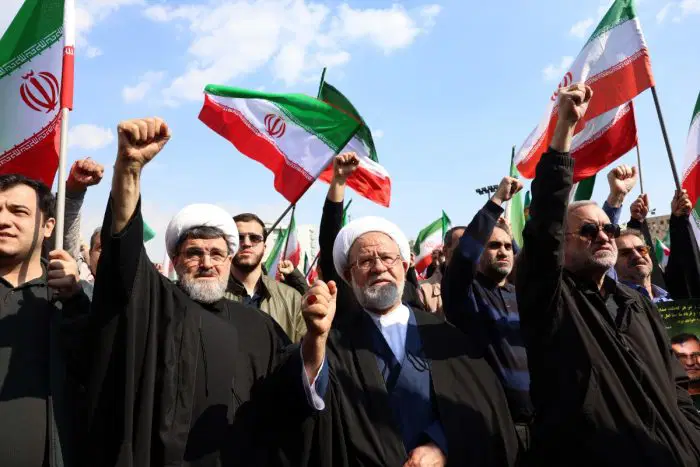
Thousands of Iranians on Thursday took to the streets across major cities to honour the late supreme leader, Ali Khamenei, whose death marked a turning point in the ongoing Middle East conflict.
From Tehran to regional centres such as Urmia and Gorgan, large crowds gathered in coordinated displays of national mourning, many holding portraits of the long-serving leader who presided over Iran’s political and ideological direction for nearly four decades.
The commemorations were timed deliberately. The nationwide tribute began at exactly 9:40am local time the moment Khamenei was killed on February 28 in his Tehran residence during US-Israeli strikes that triggered the current regional war.
The attack, which also claimed the lives of several senior Iranian figures, set off a chain of retaliatory actions that have since drawn in multiple actors across the Gulf.
While the rallies reflected a show of internal solidarity, there remains an undercurrent of uncertainty around leadership visibility.
His successor, Mojtaba Khamenei, has yet to make a public appearance since before the conflict escalated, raising questions within diplomatic and political circles about the consolidation of authority in Tehran.
Other News
Notably, the absence of a formal state funeral underscores the disruption caused by the war.
With security conditions still fluid and military tensions unresolved, Iran has been unable to organise a centralised burial ceremony for its late leader a development that, in itself, reflects the scale of the ongoing crisis.
The rallies, therefore, serve a dual purpose: beyond mourning, they reinforce state continuity at a time of geopolitical strain.
Analysts note that such public demonstrations are as much about signalling internal cohesion as they are about projecting resilience to external adversaries.
As the conflict continues to evolve, Iran’s internal dynamics particularly leadership visibility and public mobilisation will remain critical indicators for observers tracking the broader trajectory of the Middle East war.