Follow Us on Google
By Lawrence Agbo
Iran has told the United Nations it will not submit to what it described as “lawless aggression” by the United States and Israel amid escalating hostilities in the Middle East.
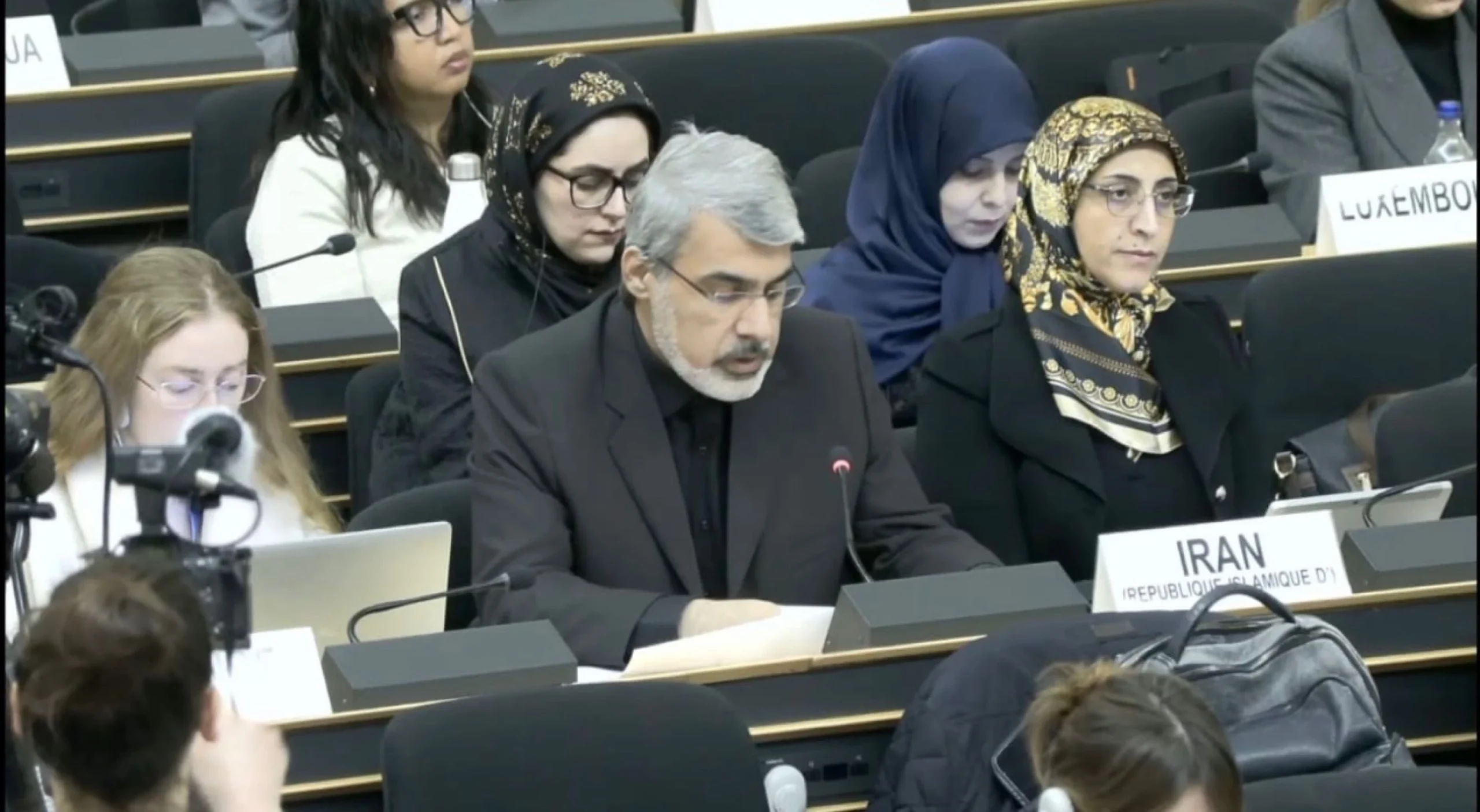
Speaking at the United Nations Human Rights Council in Geneva on Monday, Iran’s ambassador, Ali Bahreini, warned that the lives of nearly 90 million Iranians were in “immediate and grave danger” due to continued military strikes by the United States and Israel.
Bahreini told the council that the most urgent human rights issue facing his country was the threat posed by the ongoing attacks, which he described as reckless military aggression.
“The most urgent and fundamental human rights issue concerning Iran is the imminent threat to the lives of 90 million people,” he said, adding that the strikes were carried out by “some of the most lawless and unscrupulous actors on the international stage.”
The Iranian envoy warned that if the international community remained indifferent to the attacks, other countries could face similar treatment in the future.
The conflict intensified after the United States and Israel launched strikes against targets in Iran on February 28, prompting Tehran to retaliate with attacks on several locations across the Middle East.
During the UN session, Bahreini urged the council to shift attention from criticism of Iran’s domestic human rights record to the consequences of the ongoing war, including damage to cultural heritage and civilian casualties.
Iran has also accused Washington and Israel of carrying out a missile strike on a school in the southern city of Minab, though the United States said it is investigating the incident.
According to Iranian officials, more than 1,300 people have been killed and over 7,000 injured since the strikes began.
“Under such circumstances, what exactly is Iran expected to do?” Bahreini asked, insisting that Iran would not submit to coercion, intimidation or aggression.
The crisis has drawn international reactions, with several countries urging restraint and calling for diplomatic efforts to prevent further escalation in the region.
Other News
Russia called on the United States and Israel to “end their aggressive actions” and denounced them for “seeking to destroy this dissenting country.”
China denounced all attacks on people, expressed “gravely concern” over the strikes against Iran, and called on all sides to “cease military operations immediately and return to dialogue.”
Tehran should not “exploit conflict to inflict further violence on its people,” according to Britain, which called for a “swift return to security and stability.”
“To end the war and for Iran to stop being a threat to its neighbours and the entire international community,” France stated, a long-term diplomatic solution was required.
The UN Human Rights Council’s special rapporteur on rights in Iran and its fact-finding mission were engaged in an interactive dialogue between countries.
The US-Israeli operations “remain unlawful, no matter the assumed or stated objectives,” according to special rapporteur Mai Sato.The ”
She claimed that Tehran’s brutal suppression of the countrywide demonstrations that started on December 28—during which, according to a conservative estimate that could increase, “over 7,000 deaths have been reported by civil society”—followed a “pattern of persecution” that existed long before the rebellion.
At a UN Human Rights Council meeting in Geneva on March 16, 2026, Iran’s ambassador to the UN, Ali Bahreini (C), gives a speech in response to the UN Special Rapporteur’s report on the state of human rights in the Islamic Republic of Iran.
She told the UN reporters’ organization, “No one should have died for expressing grievances with the state.”
Repression in Iran worsened following last year’s US-Israeli attacks, according to Sato, and if “the war ends with a weakened Islamic republic, I can totally see that there will be a very big crackdown.”
She claimed that the war had “exacerbated” the nation’s already “critical human rights situation,” which had gotten worse during the demonstrations.