Follow Us on Google

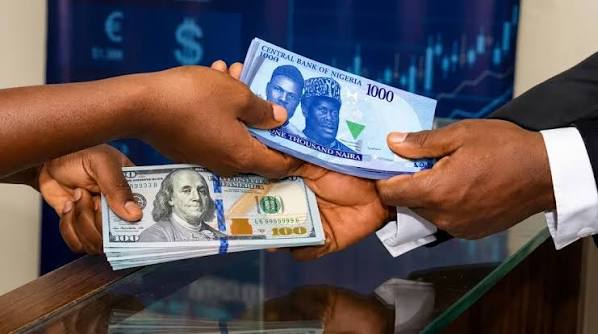
Nigeria’s foreign exchange market recorded transactions worth $4.67 billion in the week ended November 20, 2026, its second-highest weekly turnover this year, as increased spot trading activity boosted overall market transactions.
The latest figure represents a 36.59 per cent increase from the $3.42 billion recorded in the preceding week, according to data from the Financial Markets Dealers Quotations (FMDQ).
The performance highlights increased activity in the foreign exchange market, although forward transactions recorded a significant decline during the period.
Spot transactions, which involve the immediate exchange of currencies, accounted for the bulk of the week’s activity, rising by 43.08 per cent to $4.64 billion from the previous week’s level.
They represented 99.40 per cent of total foreign exchange transactions, indicating that almost all trading activity during the week was concentrated in immediate currency exchanges.
In contrast, forward transactions, which involve agreements to exchange currencies at an agreed rate on a future date, fell by 83.88 per cent to $28.19 million from the preceding week’s figure.
The sharp decline in forward deals notwithstanding, the strong performance of spot transactions lifted overall market turnover to its second-highest weekly level in 2026.
Average daily turnover also increased to $934.50 million from $684.18 million in the previous week, reflecting stronger trading activity across the market.
The latest performance was below the $5.06 billion recorded in the week ended August 21, 2026, but higher than the $4.375 billion recorded in the week ended July 24.
However, the increase in market transactions did not translate into an immediate improvement in the value of the naira, as the currency came under pressure during the week.
At the official Nigerian Foreign Exchange Market (NFEM), the naira depreciated by 2.50 per cent to close at N1,394 per dollar on Friday, November 20, its weakest level in eight months.
The currency had opened the week at N1,360 per dollar on Monday before weakening progressively amid demand pressures.
At the parallel market, the naira also depreciated by 2.33 per cent to N1,458 per dollar.
The weakness extended to the forward market, where the one-month forward rate depreciated by 2.7 per cent to N1,414.99 per dollar.
The three-month forward rate weakened by 2.7 per cent to N1,451.81, while the six-month and one-year forward rates depreciated by 2.1 per cent and two per cent to N1,495.98 and N1,597.57 respectively.
Other News
According to Cordros Securities, demand from foreign portfolio investors outweighed the Central Bank of Nigeria’s (CBN) reported $1.30 billion intervention during the week, contributing to the pressure on the local currency.
Data from the CBN showed that interbank foreign exchange transactions increased significantly towards the end of the week, rising from $68.66 million on Monday to $815.57 million on Friday.
A calculation of the daily interbank figures showed that transactions amounted to approximately $2.55 billion during the five trading sessions.
However, the CBN figures and FMDQ’s $4.67 billion turnover cover different reporting scopes and should not be treated as directly comparable measures.
Commenting on the market outlook, the Chief Executive Officer of Wyoming Capital Partners, Tajudeen Olayinka, identified political uncertainty ahead of the 2027 general elections as one of the factors influencing foreign investors’ decisions.
He said, “Foreign portfolio investors are equally concerned about the possibility of a return to populist economic policies.”
Olayinka explained that uncertainty over the direction of economic policies could discourage foreign investors from committing funds to the Nigerian economy, thereby affecting foreign exchange inflows.
He also noted that foreign investor exits and increased import demand during the festive season could put additional pressure on the market.
Meanwhile, the Dangote Refinery’s public offer, which attracted foreign subscriptions worth nearly $4.5 billion, was identified as a potential source of foreign exchange inflows.
The Head of Research at IRON Capital Partners, Abiodun Ogunniyi, said foreign subscriptions and subsequent currency conversions could contribute to increased activity in the foreign exchange market.
Olayinka, however, stressed the importance of examining transactions across different sectors to determine the actual drivers of the increased turnover.
Meanwhile, Nigeria’s gross external reserves declined by $211.92 million to $54.65 billion as of November 19, 2026.
The development comes as the CBN’s Monetary Policy Committee begins its two-day meeting on Monday, November 23, amid concerns over exchange rate stability, foreign exchange liquidity and inflationary pressures.
Cordros Securities expects demand pressures in the foreign exchange market to persist through the remainder of the year, citing weaker net foreign inflows and investor caution ahead of the 2027 elections.
The investment firm, however, maintained that Nigeria’s external reserve buffers remain sufficient to support continued intervention by the CBN in the foreign exchange market.