Follow Us on Google
•Militants patrol channels, collect illegal levies
•Stakeholders hail NPA’s moves to revive region
By Steve Agbota
For years, Lagos ports have dominated Nigeria’s maritime traffic, handling over 90 per cent of cargo volumes and overshadowing eastern ports. This imbalance has been driven largely by insecurity and rising operational costs, which have weakened the competitiveness of the eastern corridors, discouraged shipping lines, and contributed to a steady decline in vessel traffic across the region.
Shipping lines calling at Nigeria increasingly prioritise Lagos ports as their primary discharge point, relegating other terminals to secondary status. This has left eastern ports in the shadows, despite their strategic proximity to key markets and resource corridors.
Sources indicate that high freight and handling costs have reinforced this trend, with shippers opting for Lagos as the more cost-effective entry point, making it cheaper to land cargo there than at any of the eastern ports.
For instance, while it costs $1,500 to ship goods from China to Lagos, the same consignments going to Calabar costs between $4,000 and $4,500.
Insecurity is also a major driving force.
Daily Sun learnt that the eastern ports are struggling for operations, despite efforts to position the region as a viable alternative to the congested Lagos corridor.
Investigations reveal that vessels heading to ports in the region are often forced to pay unofficial levies locally referred to as “deve” to suspected militant groups before gaining access to port channels.
However, stakeholders said that these payments are inflating operational costs and weakening the competitiveness of the ports.
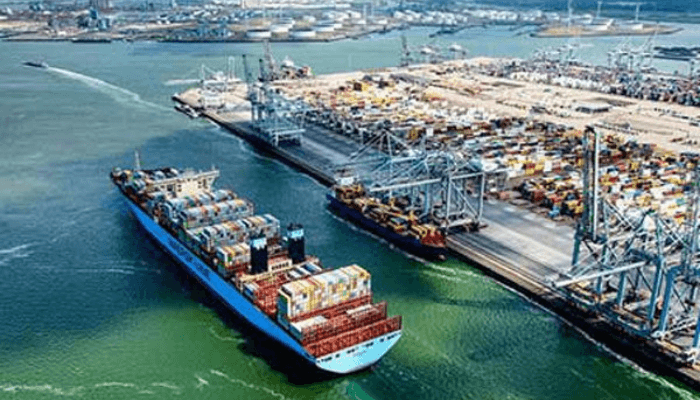
Stakeholders said that the eastern port network, comprising the Onne Port Complex, Rivers Port Complex, Calabar Port, and Delta ports in Warri, was designed to decongest Lagos ports and serve key regions across the country. However, persistent challenges have continued to limit their utilisation.
Speaking on the development, a clearing agent operating in one of these ports, Chibuzor Ofor, said that as a result of freight differential, insecurity, low infrastructural development, extortion by louts, insecurity, road networks and other technical challenges associated with these ports, international shipping firms have placed high-risk rating in the freight charges, a situation, which has made cost of shipments to the ports uncompetitive.
Other News
“The major issue is the insecurity and freight differential. Taking cargo from any part of the world to Lagos is cheaper than taking it to eastern ports. Because of that alone, the importer, even before the cargo leaves, is already there; that is the difference, and every day the thing is widening because the turnaround of a vessel is what matters to the shipper.
“The situation started like a joke and it was compounded by insecurity during the militancy day. Some ships or ship owners said their ship will not sail to the south because of what they read about the south-south. So, the few that were determined to come, claimed that they were paying a lot of money to some people. The shipping lines will claim that they pay money for unofficial security protection to access the ports and for that, the cost of freight to the east was raised,” he said.
However, he commended the current management of Nigerian Ports Authority (NPA) for trying to revive the infrastructure in the eastern ports to make them competitive and viable, saying that security issues and other problems have to be tackled headlong.
The President-General of the Maritime Workers Union of Nigeria (MWUN), Francis Bunu, also confirmed that insecurity has significantly reduced vessel calls to the eastern corridor, saying that shipping companies now factor in unofficial payments when planning their operations. “Let us hold our governors responsible; they have security votes, and what are they doing with it? If the governors of those states come together, they will achieve more and solve the security problem bedeviling the seaports. If Delta and Rivers states come together to tackle this menace, businesses in this region will rather come to the ports than Lagos seaports, and things will be cheaper,” he said.
Beyond security concerns, operators are also grappling with high insurance costs linked to the Gulf of Guinea, which has historically been classified as a high-risk maritime zone. Although piracy incidents have declined in recent years, war risk premiums remain a burden, raising freight costs and discouraging shipping lines from using the eastern routes.
However, a Port Harcourt-based importer, Chinedu Okafor, blamed the situation more on policy and structural issues than insecurity alone, arguing that political will has been lacking in addressing long-standing constraints.
“The problem is not just insecurity; it is also about political decisions. There has not been enough commitment to make these ports competitive. Channels are still shallow, infrastructure is weak, and policies are not encouraging,” he said.
Investigation showed that while past dredging efforts, particularly during the administration of late President Muhammadu Buhari, sought to improve access to ports like Calabar and Warri, significant limitations persist.
Stakeholders note that unless security concerns are decisively addressed alongside infrastructure upgrades and policy reforms, eastern ports will continue to operate below capacity.
Meanwhile, Akinbode Ademide, said freight in the eastern ports is more expensive because shipping companies add extra charges on cargo going to these ports due to insecurity in this region.
“Though we still have issues of indigenes extorting traders and collecting illegal fees around these ports, that does not warrant the high freight rates by these shipping companies. These are the issues the authorities have to look at and resolve if they want the port in east to be viable.
“Insecurity and other technical problems are the reasons why importers are not patronising these ports. Importers are scared of bringing their cargo here. There was a time when you scheduled your vessel to any of these ports, they would tell you that they had to increase the freight rate. These are the issues we are facing here. We are grateful for the few ones bringing their cargo here because it is through them we have little work to do to feed our family,” he added.
He said the government has a lot of work to do in order to open up these ports and make them viable, saying these ports cannot be abandoned to operate below capacity.