Follow Us on Google
By Lukman Olabiyi
On the surface, Blessing and Goodness Johnson paint the picture of a happy Nigerian couple. Married for eight years, they run a thriving business in Lagos and live in a modest duplex in Ogba.
But behind closed doors, their home is quieter than most. There are no echoes of children’s laughter, no toys scattered on the living room floor; just a heavy silence filled with longing.
“We’ve done everything,” Blessing says, her voice breaking. “Prayers, IVF, herbal remedies. People say to be patient, but they don’t understand the pain of waiting.”
The couple is part of a growing number of Nigerian couples battling infertility, a health condition that remains shrouded in stigma and misunderstanding, even as it becomes alarmingly common.
According to the World Health Organization (WHO), one in four couples in developing countries struggles with infertility, an issue particularly prevalent in sub-Saharan Africa. In Nigeria, research suggests infertility rates range from 20 to 25 per cent, especially in urban areas. This means millions of couples face reproductive health challenges, often in silence.
Experts classify infertility in Nigeria as either primary (when a couple has never conceived) or secondary (when a couple has previously conceived but can no longer do so). Among several factors they listed as causes of both types include: untreated infections, unsafe abortions and poor maternal care, environmental pollutants and lifestyle.
According to experts, untreated infections can lead to blocked fallopian tubes in women and low sperm count in men. Unsafe abortions and poor maternal care often result in damage to reproductive organs, environmental pollutants is increasingly linked to hormonal imbalances and reduced sperm quality while lifestyle factors such as rising obesity, stress, smoking, alcohol consumption and delayed childbearing due to career or financial reasons are affecting fertility among younger Nigerians.
In a society where childbearing is not only expected but seen as a marital duty, infertility carries a heavy emotional and social burden, particularly for women. However, growing evidence shows that men are increasingly affected; a trend that experts say demands urgent attention.
At Parah Family Foundation’s annual conferences, several experts highlighted the rising incidence of male infertility in Nigeria causes and ways out.
Professor Adeniyi Adewunmi, a professor of Obstetrics and Gynaecology at Lagos State University, expressed concern over the growing number of men affected. Drawing from clinical experience and research data, he noted that infertility is often wrongly assumed to be solely a female issue.
“Research findings show that more men are now suffering from infertility than ever before. Common causes include smoking, excessive alcohol consumption, drug use, obesity, current or past testicular infections, exposure to environmental toxins, high testicular heat, hormonal disorders, testicular trauma, and ejaculatory or erectile dysfunction,” he said.
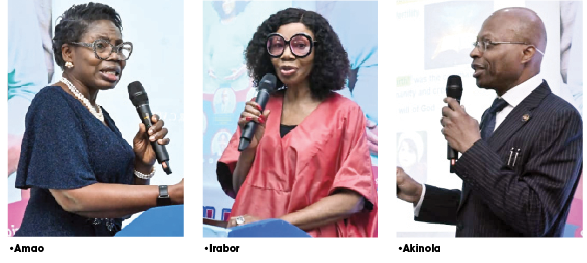
Dr. Olufemi Omololu, from Lagos Island Maternity Hospital, supported Adewunmi’s observations, stressing the need for increased awareness of male infertility.
Dr. Kemi Ailoje, a renowned fertility specialist and CEO of Lifeline Fertility Clinic, said infertility can stem from a variety of factors. In women, it may result from blocked fallopian tubes, fibroids, endometriosis, or hormonal imbalances. In men, it could be due to low sperm count, poor motility or genetic conditions.
She explained:” Infertility is a medical condition, not a curse or punishment. Unfortunately, cultural myths and silence around the issue keep many couples from seeking help early.”
Reinforcing this concern at the 2025 Parah Fertility Conference, the Medical Director of Medison Women Fertility Centre, Dr. Lateef Akinola, stated: “Infertility is no longer rare and it’s not just a women’s issue. We’re seeing more male-factor infertility, with environmental, lifestyle, and medical causes playing major roles.”
Breaking down the causes of infertility, Akinola cited research that attributes: 30 per cent of cases to male factors, 30 per cent to female factors,10 per cent to both partners, 25 per cent to unexplained causes, and five per cent to other factors.
Speaking on the topic “Understanding the root causes of infertility in males and females,” he emphasised the need for stronger collaborations between government and private stakeholders to improve access to fertility treatments.
“Gone are the days when infertility was seen as a woman’s issue. Today, more cases of infertility are being traced to male factors, and it’s time for society to acknowledge this shift,” Akinola said.
He encouraged couples to actively explore the full range of fertility treatments available today, including assisted reproductive technologies like In-Vitro Fertilisation (IVF). According to Akinola, scientific advancements in reproductive medicine have made parenthood possible for countless couples who might otherwise have lost hope.
“There is no difference between a child conceived through IVF and one conceived naturally,” he stated firmly, aiming to dispel the lingering stigma and misconceptions surrounding medically assisted conception. “Both are equally precious, healthy, and a true gift.”
Akinola affirmed that faith and medicine are not mutually exclusive. Instead, when embraced together, they can open up new possibilities for couples yearning to build a family.
Speaking on “Failed Cycle/Recurrent Pregnancy Loss: Causes and Solutions,” Dr. Ailoje emphasised the multifaceted nature of infertility and the importance of adopting a holistic approach to treatment. She encouraged couples to manage stress and anxiety proactively, stressing the role emotional well-being plays in reproductive health. Importantly, she urged awaiting parents not to lose sight of their spiritual foundation during such trying times.
“There’s nothing impossible for God to do,” she affirmed, balancing faith with science as she provided practical insights into modern medical interventions and treatment options available for those struggling with recurrent pregnancy loss.
Expanding the conversation to alternative paths to parenthood, Mrs. Oluwakemi Amao, CEO of Chemistry Health Solution, delivered a comprehensive presentation on surrogacy. Her session, titled: “Understanding the Process, Legalities, Costs, and Emotional Aspects of Surrogacy,” sought to demystify what is often seen as a complex and emotionally charged topic.
She provided clear, in-depth information on the medical procedures involved, the legal frameworks governing surrogacy, associated financial considerations and the emotional dynamics for all parties involved.
Her talk positioned surrogacy not as a last resort, but as a compassionate and viable option for couples facing intricate infertility challenges.
Addressing the psychological toll of infertility, a clinical psychologist, Dr. Leonard Okonkwo, highlighted the crucial need for emotional and mental resilience. In his presentation, he spoke about the feelings of grief, inadequacy, and frustration many couples face, urging them to hold on to hope and to nurture their inner strength.

“Faith and psychological fortitude are essential anchors,” he said, emphasising that support systems, both personal and professional, can make a significant difference in the healing process.
Adding a personal dimension to the discussions, celebrated Nigerian columnist and publisher of Genevieve Magazine, Betty Irabor, graced the event as the special guest. Drawing from her own experience with secondary infertility, she offered a deeply moving testimony that emphasised unity, communication and mutual support between partners.
“Infertility can strain the strongest of relationships, but couples must choose to face it as a team together,” she said.
Just like Blessing and Goodness Johnson, the Agunbiades also shared their emotional journey of longing and hope as awaiting parents. Married for 21 years without a child, the couple opened up about the deep pain and trials they’ve endured on their path to parenthood.
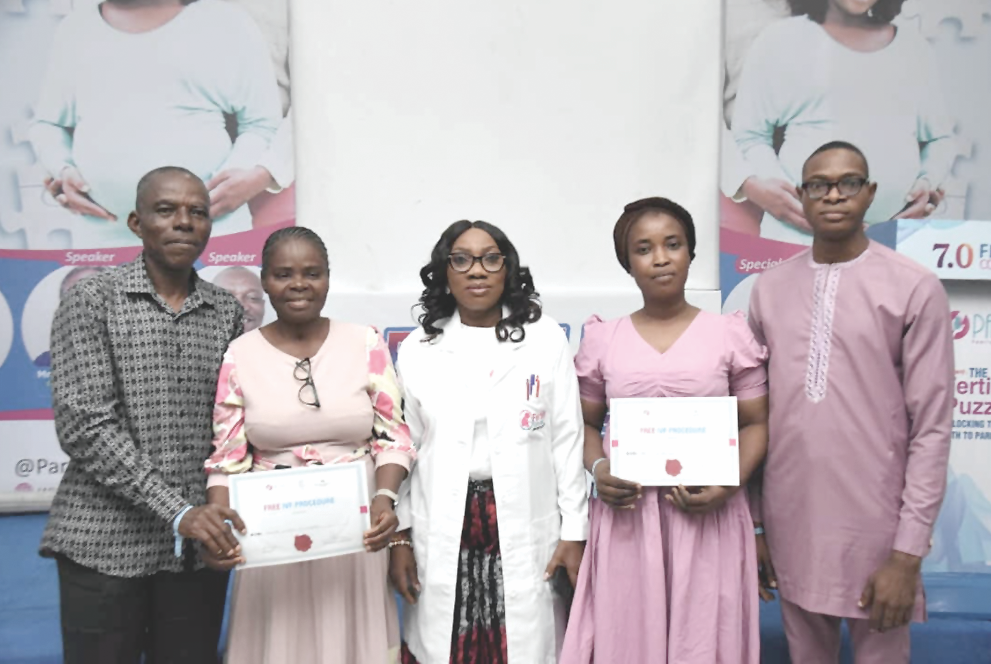
Their testimony came during a heartwarming moment at the conference, where they were announced as winners of the raffle draw, receiving the star prize of a free In-Vitro Fertilisation (IVF) treatment offered by King Specialist Hospital. Overwhelmed with gratitude and emotion, the Agunbiades expressed their unwavering belief that God, in His time, would answer their prayers.
Their story, though unique in its own way, mirrors the heartfelt journey of the Daramolas, a younger couple also present at the conference. While the Agunbiades have waited over two decades and are older in age, the Daramolas, who have only been married for three years, are just beginning their own challenging journey toward conception. They were also among the winners of IVF at the conference.
However, despite the differences in duration and age, both couples are united by a shared longing and a deep faith in God’s promise.
In their message to other couples waiting for the “fruit of the womb,” both families encouraged them not to lose hope. They urged others to remain steadfast in their faith while also taking advantage of every available medical option to fulfil their dream of becoming parents. Their stories stood as powerful reminders that while the journey may be long and difficult, perseverance, faith, and openness to help can bring hope and perhaps, eventually, joy.
The convener of the Parah Family Foundation, Princess Dayo Odukoya, reflecting on the foundation’s seven-year journey, shared the vision and purpose that birthed the initiative.
“This initiative was born out of a deep burden to support couples facing the silent struggle of infertility. Through tears, challenges, and triumphs, we’ve built a sacred community where stigma is broken, voices are heard, and healing takes root,” she said.
Odukoya said the rate of infertility and causes were alarming, such that it required continued awareness to enable couples undergoing the challenge to speak out in time, and seek for solution early in marriage rather than leaving it late.
She sought collaborations with government, agencies, hospitals and individuals to create more platforms where families undergoing infertility could be more comfortable to receive support, guidance and love on their journey to parenthood.
“We call on the government to please pay attention to this category of people in our society and create more avenues to accommodate them in government hospitals, through awareness and preliminary fertility investigation. The month of June has been dedicated to creating awareness, showing love and empathising with those affected. We therefore urge you to do so for any family that is undergoing infertility,” she said.