Follow Us on Google
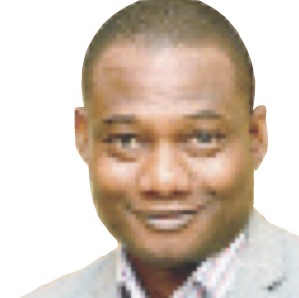
By Josfyn Uba
As a young lad, while growing up in a village in Ondo State, Femi Oye had watched his grandmother used firewood to cook in the kitchen. Over time, the old woman faced a serious respiratory health challenge as a result of indoor air pollution and passed on.
From this personal experience, Oye was determined to find ways to mitigate the impact of the use of fossil fuels and the harmful emissions from traditional cooking methods like firewood and charcoal.
Today, he provides biofuels and clean cooking energy for millions of households in Nigeria.
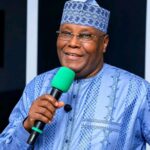
Oye is the Chief Executive Officer of Green Energy and Biofuels, a company that produces biofuels and complementary green cooking stoves (Kike Stoves)
In this interview, he told Sunday Sun why Africans (albeit Nigerians) should embrace clean energy, saying that we need to explore indigenous ways to solve our problems.
Can you give us a sense of this biofuel and Kike stoves?
Biofuel is produced from environmental waste, agricultural waste and biomass waste. So, rather than take sawdust from sawmills, tuck it in and burn it to cook, whereby it gives out carbon dioxide and other hazardous gases, we would take it through a different process, hydrolysis, whereby we can convert it genetically into some classes of sugar, produce the biofuels that we have. So that means it’s cleaner because it’s biodegradable. We can convert that to biofuel but because we don’t have the market to sell biofuels as petrol blend, we use it as a gel. It is thick and doesn’t spill which increases the safety component. Families can use it to cook indoors. People who have respiratory problems can conveniently cook with it because the chemical component that comes out of it is no longer irritating to them. These are some of the benefits of using the Kike biofuels. We have been able to reach over a million households across Africa, including Nigeria. Apart from earning a livelihood, families can cut down on their dependence on fossil fuel, expensive kerosene, charcoal and firewood.
We can relate to the government policy on fuel subsidy removal which has brought financial burden on Nigerians. What are you doing to push this across to more people as an alternative to lessen the burden?
Nigeria is moving in the right direction by cocktailing the issue of fuel subsidy, but it has a direct impact on low-income people because they have to struggle with unbearable economic realities. We know the real value of biofuels which was hitherto seen to be more expensive than conventional fossil fuel. Our effort towards driving more adoption is to collaborate with other government agencies and engage with NGOs as well. We are working with other informal sectors like community groups, pushing the message of the benefits, the importance of biofuels and minimal costs, health benefits and climate benefits as well. Then we talk about last-mile distribution, which means that access is a challenge. Biofuel could be available in Lagos, but will the people up North have access to the biofuel? So, when we talk about equity and equality, we also talk about availability, but is it accessible and at what cost? So, these are economic matters that we continue to work with. So through these partnerships, organisations that work in those regions, reach out to see how they can take care of the cost of transporting those products to them so that the community, low-income people, and the masses will have access to them at the right price. We are making efforts through our outreaches to mobilise communities and work with organisations. Even private sector operators are investing in distribution systems because the cost of distribution is almost 50% of the cost of biofuel. So if the cost of biofuel that the customer buys today is at N60 Naira per litre then we know immediately that N30 Naira out of that is on distribution. So, if we have governments and the private sector coming to collaborate with our kind of organisation then the cost will reduce significantly and it can be used massively because the cost will be far cheaper than what it is today.
Such innovations are not easy in an environment like Nigeria, where you do everything all alone unlike in other climes where assistance comes from the government. What were some of the challenges you faced in bringing this idea to fruition, and how were you able to surmount them?
We live in an environment where there is little to nothing when it comes to reward for innovation. And innovation on its own does not necessarily mean that we are doing something entirely new. Innovation just means that you look at the system, and the environment and see what you can improve. Our ability to improve on what already exists is the replication of who God is and that is part of creation.
You need to first of all assume the mindset of a problem solver. As an innovator, you are internally motivated towards a particular cause. So, for me, the evidence of purpose in life is pursuit. When I see what you pursue, then I can understand what your vision is. And what you care about is what you spend more time on. Therefore, when you are not rewarded, thanked, applauded or celebrated, it doesn’t matter to you because your purpose is what you are doing and that is where your interest lies. What keeps us is our vision, the commitment to that vision, and because the vision did not just emerge. Tenacity, hard work, and passion are your innate tendencies that propel you to solve problems. I genuinely care about Africanism and domesticating innovation to Africa, because I found out that most of the imported solutions we bring to Africa have not helped Africa to advance. It has created more trouble and problems for us. So what I do is reflect on how I can use the ability, the vision and the exposition God has given to me for the betterment of my people here. I also look at what I can do, not what the government can support me with. We are not the ones that will go to the government because sometimes, they kill your ideas and innovation. The government doesn’t reward productivity. They only reward eye service or things that can just benefit a few people. This is not seen in Nigeria alone, that’s the way it is in other climes. Yes, we need government support, but as a problem solver. If the government was needed to create this biofuel, Femi Oye wouldn’t be the one leading it because a lot of smarter, better people would have done it ahead of him. The government has all the money if money is needed. It wasn’t money. Money is not a problem for any solution to come to life but it gets to a time where money will be needed. At that time, it is not the entrepreneur anymore that will be leading that change. It is now proven to be successful then the need for money comes in.
Was there a time you felt like throwing in the towel?
As social entrepreneurs, we are made for tough tissues. The internal motivation of who you become is one of those things that has helped me to overcome those very difficult times and challenges. Up till now, we are still facing enormous challenges. I can cite several instances. About five years ago, we were to build a plant with a production capacity of 30,000 litres per day. So, we needed about $22 million to do this project. It was obvious we couldn’t source that kind of money locally, so we had to talk to some external investors. It was a huge issue. We put our equity of about 30% into that project, over $4 million of our own hard-earned money. These are our shareholders’ money and all we put into a deposit for the plant. But along the line, the company which was building the plant went bankrupt in Italy. It became a litigation issue. All their assets were dissolved and foreclosed. It lasted for more than five years. Up till now, we are still talking about that.
For all that period, it was a time for me to throw in the towel but I can’t and not after all that I have struggled to do. We had challenges even locally as well. We are not able to meet up with the demand even for the sizable plant where we operate. So, our story of struggles and triumphs stemmed from things such as where you have to face bankruptcy, you have to do also with imitations. There are personal struggles as a family man, too. I can only sleep for about two to three hours a day. I am roaming around doing some investigation. Sometimes we can be on water for three days because we are using our apparatus to capture something. After all, we want to increase and improve the yield of our sugar. Apart from all these, the family still needs your attention but you are not there for them. These are similar struggles that every innovator and entrepreneur has to go through. Finally, you also have an environment where the government is not even doing enough. There was a time in one of our plans, the road was so bad. So, we wrote to the government that we needed to grade the road because of our heavy equipment but the local government authority stopped us and for two years, we kept engaging with the government because we needed to do the road.
We were not asking the government to pay us to fix the road. So many of our trucks kept falling and we lost a lot of stock.
Can you tell us some of the influences that shaped you and your experiences while growing up with your grandmother?
I grew up in a village in Ondo State. I was the craziest and stubborn one among my four siblings. I was always inquisitive. I could dismantle any electrical and electronic appliance in the house, even when I didn’t know how to fix it back. I am also a crazy thinker. I would always go in the opposite direction not because the rule given to me was not good enough, but because I like to question things and go against the norm.
My grandmother was the only one that could indulge me. So anything I did, she would always protect me but I was also academically challenged, unlike my mates. I was very good at fixing broken items. Looking back today, I could draw a parallel to it that those growing-up experiences paid off because they have made me who I am. So much so, that I believe in myself, even, when people wouldn’t believe in me. I believe that you can be different and still be accurate. I have something special and a unique talent that I can bring to the world. So, all those attributes, exposures and experiences in staying with my grandmother in the village have sharpened me to what I am now. I strongly believe that without that experience. I wouldn’t have been able to create these solutions as those experiences inspired me. I can resonate with local African women because I have seen my grandma. I understand what the opposite looks like. That’s why an African-made solution is for an African-made problem.
What is your advice to youths with innovative ideas who have become discouraged because of the situation of the country?
My advice is to just encourage them to continue to do what they are doing. It is not easy and it’s not meant to be easy. No one has asked you to do it. You set out to do that. You are always closer to your breakthrough than where you are coming from. Know that the universe is observing and people are looking at you. Most of the time you try to raise money to support your solution, but you will not get it because it wasn’t time. So there is always the right time. What I mean by the right time is that you must have clocked in at least 10,000 hours. That’s about 10 years of doing what you’re doing. That’s the only time you can consider giving up or not. If you have not put in your 10,000 hours, don’t give up. The government might not have all the resources to support it because it’s just the nature of government. Again, remember that the government wasn’t the reason you started it, in the first instance. It is because you care. Also, know that many people are trying to do the same thing that you are doing. So the only time when you know that it’s getting close is when you have logged in the necessary hours and improved over a period of time in what you are doing, against all odds. There are just 1001 reasons why you have to give up but don’t forget that tough times don’t last, but tough people do.
What has life taught you?
I have learned that the future is plural. Future is plural means that there is no ownership. I own nothing and I don’t have to hold on to everything. I have to live my best as if it were my last day. And I also understand that I owe nobody an explanation but myself. The reason I do is because I have almost zero expectations from either my community or people.
My journey has also taught me to be more understanding. There is no real right or wrong way. There is only a way where different people have their own “only ways”. So when I meet people with diverse opinions about life, and maybe launch negative critiques against what I do, I shouldn’t take it personally because it’s their view. I have also learned gratitude for the time that I have the space and be grateful to the people around me. So just do your part, and the forces will come together to help you harmonize to support our dreams and visions.