Follow Us on Google
By Chinenye Anuforo
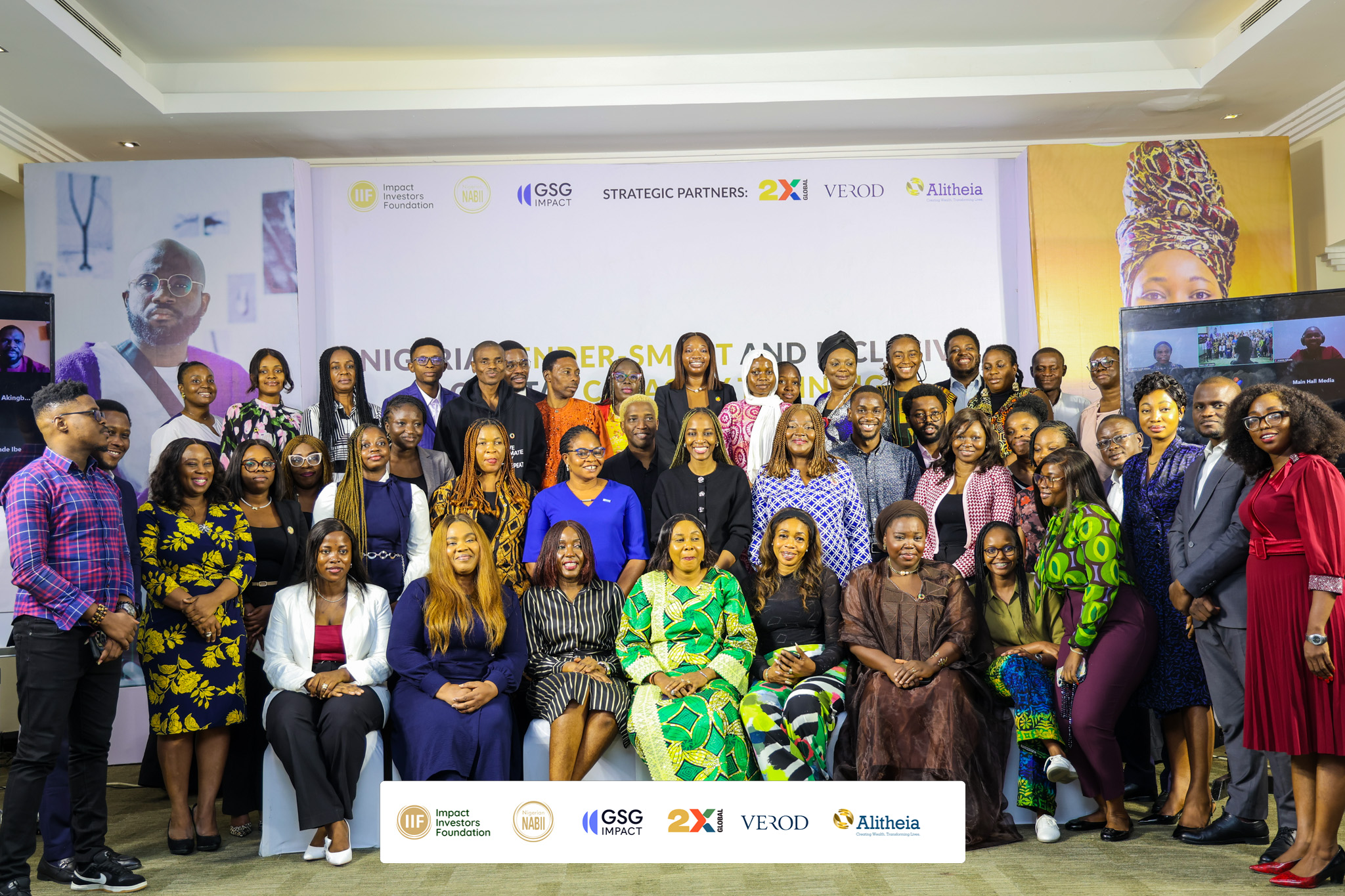
The Impact Investors Foundation (IIF) has moved Nigeria’s gender investment conversation from policy declaration to capital deployment, convening investors, regulators and development partners in Lagos to accelerate implementation of the country’s Gender Equity and Social Inclusion (GESI) roadmap.
The workshop, held at Four Points by Sheraton Lagos, marks a decisive phase in the post-2025 Gender Impact Investment Summit process, where Nigeria formally launched its Gender/GESI Roadmap. While that launch established national intent, stakeholders in Lagos focused squarely on execution redesigning institutional systems to ensure gender considerations are embedded into actual investment decisions.
Chief Executive Officer of IIF, Etemore Glover, described the gathering as a turning point for Nigeria’s impact investing ecosystem. According to him, the country has advanced beyond advocacy and now faces the more complex task of institutional transformation.
He noted that the roadmap must function as an operational framework, guiding how capital is sourced, evaluated and managed. “It is not enough to have a roadmap,” he said, stressing that financial institutions must integrate gender-smart strategies into their governance structures, screening processes and portfolio management systems.
Goodwill messages from global and national stakeholders reinforced the urgency of aligning private capital with inclusive growth.
Elizabeth Boggs Davidsen, Chief Executive Officer of GSG Impact, emphasised the expanding global evidence that gender-diverse enterprises demonstrate resilience and stronger long-term performance.
Other News
The Federal Ministry of Women Affairs, represented by Dr. Abia Udeme Nsikak on behalf of the Permanent Secretary, Mrs. N. A. Esuabana, reiterated the Federal Government’s interest in strengthening collaboration between public policy and private investment to close financing gaps affecting women and marginalised communities.
A technical deep dive led by a Partner from PwC outlined how gender integration must span the full investment lifecycle. Participants examined structured approaches to identifying women-led and gender-diverse enterprises at the deal-sourcing stage, incorporating gender-related risk and opportunity assessments into due diligence, strengthening inclusive governance within portfolio companies and safeguarding impact sustainability at exit.
Experts from 2X Global and Moremi Capital contextualised global gender-lens standards for Nigeria’s market. Discussions focused on adapting international benchmarks such as the 2X Criteria to local realities, demonstrating how capital can intentionally support women in leadership, women-owned enterprises and women across value chains without compromising financial returns.
Beyond theory, the workshop emphasised implementation tools. Using IIF’s GESI Diagnostic Tool, participating institutions assessed internal readiness and developed action plans aimed at strengthening inclusive governance frameworks and refining investment criteria. The objective, stakeholders said, is to make gender-smart investing a standard feature of Nigeria’s capital market rather than a niche strategy.
The presentation of Nigeria’s Inclusive Capital Baseline Survey added a data-driven dimension to the discussions. By providing sex- and disability-disaggregated insights into current investment flows, the survey establishes a measurable benchmark for tracking progress and identifying persistent gaps. Participants agreed that reliable data will be critical in determining whether capital deployment patterns truly shift in favour of inclusion.
Investment and sustainability professionals from Verod Capital shared practical lessons on embedding GESI metrics into governance and risk frameworks, while a case study from Alitheia Capital illustrated how gender-lens investing can generate competitive financial performance alongside measurable social impact.
For Nigeria, Africa’s largest economy, stakeholders argued that the gender financing gap is not merely a social issue but a structural economic constraint. Women-owned and women-led enterprises continue to face limited access to growth capital, restricting job creation, productivity gains and broader economic participation.
By shifting from policy dialogue to operational systems, IIF and its partners are seeking to reposition gender-smart investing as both a market opportunity and a national development strategy. The Lagos workshop signals that the next phase will be judged not by commitments made, but by capital deployed
and by whether Nigeria’s financial institutions embed inclusion into the core of their investment practice.