Follow Us on Google
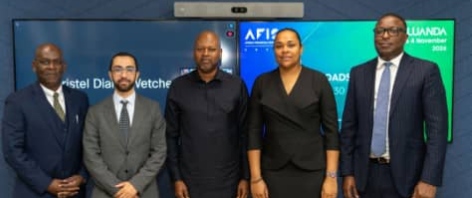
The International Finance Corporation (IFC) and the Africa Financial Summit (AFIS) are set to convene business leaders from across the continent at the sixth AFIS Annual Summit scheduled for November 3 to 4, 2026, in Luanda, Angola.
The summit, which is co-hosted by the World Bank and Jeune Afrique, is expected to attract more than 1,250 senior leaders from Africa’s financial industry, including bankers, insurers, fintech founders, capital market experts, mobile money operators, policymakers and regulators.
The event was announced in Lagos during an IFC media briefing as part of the build-up to the summit.
Speaking at the briefing, Christian Mulamula, Principal Country Head, Nigeria, IFC, said a major issue confronting Nigeria and the continent was how to mobilise long-term capital at the scale required and channel it into businesses, infrastructure and essential services that could drive economic growth and create jobs.
“Now, this is really a question not only for Nigeria, but also for the continent as a whole. Together, your perspectives speak directly to why the road to Luanda begins in Lagos,” he said.
According to him, the Lagos engagement would build towards the AFIS Annual Summit, which is expected to focus on practical solutions for strengthening Africa’s financial ecosystem and increasing the flow of capital into productive sectors.
The summit will be organised around six strategic pillars covering climate transition, digital transformation, financial inclusion and regulatory harmonisation across Africa’s financial sectors.
Also speaking, Hicham Al Marabet, AFIS Director, said the focus of the sixth edition had shifted from simply strengthening Africa’s financial industry to determining how a stronger financial sector could channel more investment and financing into the real economy.
He said this was captured in the theme of the summit: “Making Capital Count: Unlocking growth through African Finance.”
Marabet noted that Africa’s financial sector was performing strongly by several measures, pointing out that the average return on equity in the continent’s banking sector was significantly above the global average, while African institutional investors had more than $2 trillion in assets under management.
He added that the banking sector was well capitalised in several major African economies, including Nigeria, according to recent reports from the Central Bank of Nigeria.
Despite the strength of the financial sector, however, he said there remained a significant gap between available capital and the financing needs of businesses and infrastructure projects.
According to him, the cost of capital and financing remained high, while businesses and infrastructure projects continued to struggle to secure affordable, long-term funding.
He said the central challenge for the summit was therefore to bridge the gap by ensuring that the strength and capacity of Africa’s financial sector translated into greater investment in infrastructure, businesses and other productive activities.
Marabet stressed the need to channel African savings more effectively into African investments, particularly the real economy, infrastructure, agriculture and manufacturing, rather than concentrating them largely in short-term government securities.
He said institutional investors were rational players who would invest in the real economy where the right risk-adjusted returns were available.
Achieving this, he added, would require greater regulatory integration across the continent, involving central banks, insurance regulators and capital-market authorities.
Other News
“We need to make sure that the regulators work together in order to make regulation make sense at a country level, but also at a continental level,” he said.
He also called for greater regulatory passporting and convergence, particularly across African capital markets, to enable companies that attain sufficient scale to access multiple markets more easily.
According to him, the summit would bring together senior public- and private-sector stakeholders, including multilateral development banks, commercial banks, insurance companies, capital-market operators, fintechs, venture-capital firms and other financial institutions.
He said the programme would also feature more interactive sessions involving fintech chief executives, insurance regulators, venture-capital operators, co-investors, non-financial-sector companies, banks and board-level executives.
Marabet said the ultimate objective was to move “from dialogue to implementation.”
He said the success of the summit should not be measured by attendance figures alone, but by tangible outcomes, including policy announcements and transactions concluded.
“It needs to be measured by the number of policy outcomes — policy announcements at national, regional and continental levels — but also by the number of deals that are being signed and announced,” he said.
On his part, Olivier Buyoya, Division Director, Nigeria and Central Africa, IFC, said Nigerian financial institutions had an important role to play in sharing innovation and learning from developments in other African markets.
He said Nigeria could benefit from innovations emerging from countries such as Kenya, Morocco, Egypt and South Africa, while Nigerian financial institutions could also contribute their own experience to the wider African market.
“It’s a two-way street, and we really hope, as we had the privilege to have a strong representation from Nigerian financial market players,” he said.
He said IFC and the World Bank Group are working on structures that can provide greater comfort to financial institutions and capital market players to lend to sectors traditionally considered high risk.
Dafe Oraka, Principal Investment Officer, IFC, described AFIS as an annual platform for shaping Africa’s financial future and supporting job creation.
He said the summit would bring financial leaders together to examine how the sector could build the skills, reach and expertise required to mobilise private capital for job creation and support Africa’s next phase of development.
According to Oraka, the event would create opportunities for stronger regional integration, deeper financial markets and improved investment and connectivity across Africa.
He urged Nigerian financial institutions to use the summit to engage with counterparts, develop solutions and strengthen Africa’s capacity to finance its own development.
Also speaking, Elizabeth Oguegbu, Group Head, Financial Markets & Funding, Access Bank, highlighted the need for greater investment in infrastructure, while pointing to some of the challenges involved in financing such transactions.
She said the issue was often not the nature of a transaction but the capacity to structure it effectively and identify the right partners.
Oguegbu said development finance institutions could provide capital to banks to expand lending to their clients or directly support banks in financing infrastructure projects.
“Capital could be two ways: either the bank needs the capital to expand and support their clients, or the bank needs the DFI support to then fund the infrastructural project, and we’ve had a mix of both,” she said.
She added that there was significant room for commercial banks and development finance institutions to deepen collaboration in financing infrastructure and other productive sectors of the economy.