Follow Us on Google
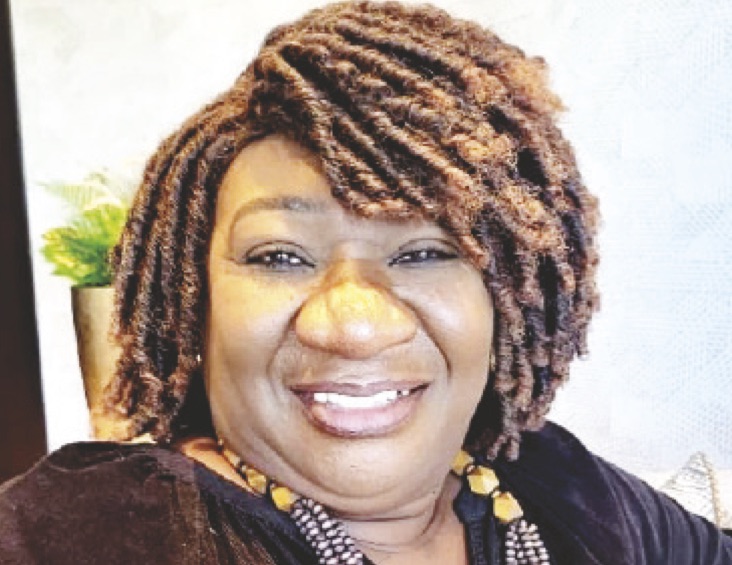
By Christy Anyanwu
Felicia Boshorin is a Nigerian who is making waves in Southwark, London with her charity work.
Her Food Bank is aimed at meeting the needs of the less privileged in her community, who she provides food stuffs to keep body and soul together.
In this interview with Sunday Sun, she took she reflected on the journey of what prompted her to kick-start her organisation and lots more. Excerpts:
Tell us about Spring Community Hub and some of the things you have done?
I founded Spring Community Hub, a charity group based in South London, in 2017 after working at a local food bank and realising the huge scale of need for enabling people to live healthy, fulfilling lives. The Borough where the charity is based is home to some of the world’s best theatres, restaurants and art galleries, but alongside that are families living in deep poverty. I was particularly struck by the number of children going to school hungry, and was determined to do something about it. I knew from the start that I wanted to do things differently. Rather than create dependency, with the same people coming back week after week, I wanted to give the community voice, choice and dignity on how they accessed our support. This meant addressing the root causes, not just the symptoms of poverty – providing things like advice, services, holiday clubs, youth groups, employment support and women’s groups, and involving local people in running our services. Our latest venture is a social supermarket – a community food store – where people pay a small amount for a basket of food with a retail value of at least five times what they pay for it. We have a large Nigerian community in Southwark, as well as people from other parts of Africa and Latin America, and our supermarket offers food which reflects these cultures, such as yam, plantain, and black-eyed beans A real turningpoint for the charity was COVID-19, when we were at the heart of the Borough’s response, with our organisation’s income and operations growing ten-fold almost overnight. Many local people lost their jobs and were in dire need of help. Since then, the UK has experienced cost of living crisis; costs of commodities like electricity and gas skyrocketed and more people than ever came to us asking for support. Last year, we helped more than 3,200 people and were supported by over 120 volunteers. We’re a really united community and the charity is now a key part of its fabric.
Who are the beneficiaries?
Our main beneficiaries are people in Southwark who are living on low incomes. Around 75 per cent of our guests are from diverse ethnic communities and nearly all those who use our services live in poverty. Around 35 per cent of people we support are migrants, many with no recourse to public funds due to uncertain immigration status. Groups which are strongly represented locally are people from Latin American, Black African and Black Caribbean backgrounds. We’ve seen huge growth in our services for children and young people, particularly our holiday clubs. Our local families often find the school holidays a time of stress: during the school term, children from families on low incomes receive free school lunches, and often free breakfasts and evening meals, whereas during the holidays these families have little or no support. We’re addressing this gap by providing free activities and holiday meals as part of daily holiday clubs for children and parents.
Let’s talk about some of the lessons learnt doing this?
I have learnt that most people who find themselves facing financial challenges want a hand up, not a hand out, this is a principle which has informed the way we approach Spring Community’s Hub services. The rise of food banks in this country is a concern, as it risks creating a dependency culture which takes away people’s agency, dignity and choice. From the start, we have, therefore, aimed to empower those who use our service. In addition to meeting their immediate needs, we work together to identify and address the underlying needs which have led to food poverty, be that a need to find better work or a need to improve skills. I have learnt that we should not judge others or how people fall into situations; life can move quickly from ‘just about managing’ to experiencing crisis. There are many preconceived societal norms that we need to challenge, and our Hub provides a safe space, where people see people who look like them, and where they can receive trusted, impartial advice. For example, “Jane” visited our service for assistance with food parcels. She was a journalist forover 20 years and lost her mother 10 years ago. She did not grieve the loss of her mother adequately and after many years started to notice that it was affecting her mental health. Her employers were very supportive initially; however, Jane’s condition deteriorated and she was unable to continue with her work. She lived on her savings for a while and when it ran out she needed to claim state benefits. The process took a very long time and she needed our support with food parcels and other essential items. We helped her get back on her feet with both short-term assistance, and through linking her into the support she needed to improve her mental health and find work.We are humans and we are meant to support each other; when we come together to do our bit to make things work it makes things better. I have been so uplifted to see how our community can come together to support others – something which was very evident during the COVID-19 pandemic.There are a lot of good people out there. We just need to connect and opportunities will come from there.
What were some of the initial challenges?
A key challenge was convincing others to see the need for support within our community and persuade them that we should come together for the cause. Some people don’t appreciate the depth of the challenges people face, as they are not in that situation and cannot understand how someone would find themselves in that situation. Another challenge was to identify suitable partners, venues, donations, food, and volunteers to distribute food, and to find skilled volunteers for our advice service, to help turn people’s situation around. If you don’t have the right resources, you will find the same people coming back over again and not experiencing real change; this is not sustainable as a service.Thirdly, as the founder and CEO of a small charity there are never enough hours in the day, and there’s always more you could be doing. I don’t think I realised when I started just what a huge task I was taking on! I would advise anyone thinking about starting a charity to prioritise looking after yourself and adequately resourcing yourself from the start.
Tell us about your experience in leadership in the past three decades and mentoring others?
I had over 30 years’ experience in leadership with community, commercial and social care-settings before founding Spring Community Hub, and I’ve been able to draw on much of this to accelerate the charity’s progress. Just as importantly, I’ve also worked on the community side of things in paid and voluntary roles – including operational leadership roles at another food bank – working one-to-one with service users. I’m, therefore, very familiar with the different circumstances that have brought them to our services.This has informed our approach of taking time to assess the needs of each individual on a bespoke basis in order to develop a support plan that’s appropriate to each client, and sign-posting them to further support either internally or externally so that we can help them address the deeper needs at hand, and not just giving them food. I am also the Chair of Trustees of Havering Black and Minority Ethnic Forum, the Vice-Chair of Trustees of Community Southwark, a Trustee and Director of youth mental health charity, You & Me Counselling, and a Trustee of IFAN, the UK Network of Independent Food Aid providers. Not only am I able to bring my experience and insights to these organisations, but they also provide me a spring with networks, ideas, and approaches which we can use to improve on what we do.
Did you have mentors at the beginning? How did they help to inspire you?
The food bank I previously worked with was part of the Trussell Trust Network, a membership organisation for food banks across the UK, and they had access to manuals and practical support which helped me to understand and connect with others. I received mentoring via the Church and Christian leaders/networks, which helped to inspire and focus me on my vision, talents, leadership and skills. I was able to join networks and develop my experience and create an outlet to grow. Through this, I was also directed to manuals, books, and resources which supported me further and kept me inspired.
As a Nigerian what are some of the lessons learnt over the years with regards to living in a foreign land?
I believe that we are given opportunities as individuals to fulfil our assignments and our environment is part of that. I left Nigeria as a young child. I believe that my journey to coming to the UK has equipped me with the skills and knowledge I have needed for this work. I work best when there is structure, integrity and transparency, underpinned by clear systems; I have learnt the importance of this moving to the UK and in the process of my journey. I also love Nigeria’s more carefree approach and have learnt to bring the things I love about Nigeria and my culture and combined them with assets the UK can offer to create something beautiful. What are some of the changes that you would like to see in NigeriaI would like to see structural changes, such as access to fair education, healthcare, employment, services and utilities etc. Nigeria has so many educated and talented people, and all over the world Nigerians are doing such great things and setting the pace. It is heartbreaking to see – particularly through my work with charities and food banks – Nigerians risking their lives to escape from Nigeria because of the circumstances they are in. Within Spring Community Hub, the largest single group that accesses our service are Nigerians; we would like a situation where they don’t need to escape to the UK, only to find themselves in these difficult conditions.
Does your growing up have anything to do with your flair for what you do today in the UK?
When I was younger, I wanted to change the world, and I saw myself doing something I liked. My parents were originally from Bayelsa (Ijaw) and I grew up until the age of 10 in Lagos, Nigeria. When I came to London, I first lived and went to school in Lambeth, South London. My father was a politician in Nigeria who had been studying in London; in the UK, he worked with British Rail doing different roles. In Nigeria, my mother was a stay-at-home mother, whilst in theUK she worked in many roles in the NHS, including as a Ward Assistant and Auxiliary Nurse. My father went back to Nigeria to join in the fight for the forming and recognition of Bayelsa State, which happened before he died. All my siblings are now in the UK and Australia. I can see how this has been part of my journey and influenced many of the things I have done, especially the fight against oppression and injustice and the desire to see equality, equity and systemic change. There are visible resources, yet we have people experiencing extreme poverty and unable to access their most basic needs in both Nigeria and the UK. I have learned that poverty is a political choice and we need to campaign for systemic change which ends the need for charities like the one I have founded.