Follow Us on Google
By Enyeribe Ejiogu
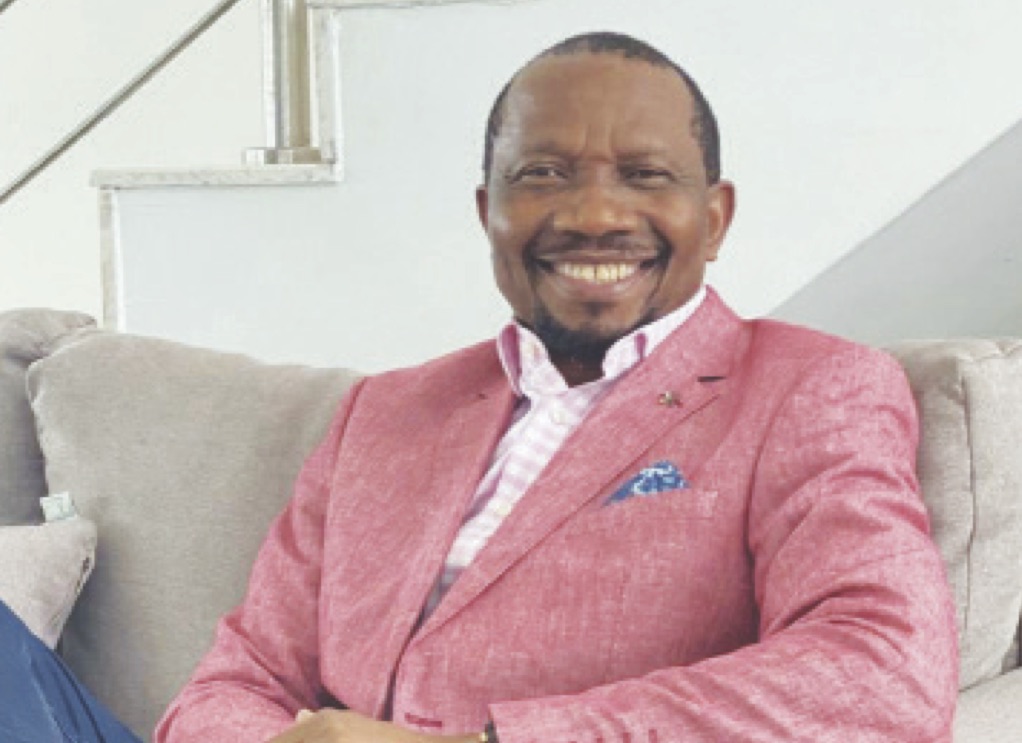
Kolawole Oyeyemi, founder and CEO of Axiom Intel Limited, is a commercial strategist once described by George E. Thorpe as a “well celebrated industry icon standing on ethics.” This was in the foreword Thorpe wrote for Oyeyemi’s book, ‘Kill or Get Killed,’ a marketing book now being used for post graduate studies in universities.

Oyeyemi is an alumnus of Obafemi Awolowo University, Ile-Ife, Osun.
In the greater part of his 23-year corporate career, Oyeyemi was involved in Pentecostal pastoral ministry. He is the author of several books, including Kill or Get Killed: The Marketing Killer Instinct, and the Founder of Ignite Africa. In this interview, he shares insights of his marketing success stories.
How did you start your journey in marketing communications?
I began my career in broadcasting at Radio Kano FM, before moving down south for postgraduate studies and then got into public relations at The Quadrant Company, when it was new. From there I went into full service advertising at Sunrise Marketing Communications and later crossed over to Cadbury Nigeria as Advertising Manager, where I was in charge of advertising and marketing services. After two to three years, I crossed over to core brand management as brand manager for Knorr seasoning cubes and some other brands that were not so big. In that role God helped me. I was able to do some exciting stuff. Under two years, I got awards from the company. Before I left, I was able to push my brand to achieve the highest volume, highest value and highest equity of its 20 years lifetime back then.
So, it was somewhat a memorable brand campaign?
Yes. The year I left, I actually had the highest volume sales, highest value for the brand and highest equity for the brand. And then that was when I felt that I had enough of the fast moving consumer goods.
How did Cadbury’s Knorr make a headway against Nestle’s Maggi, which was the main brand then?
Yes, Maggi was still number one in terms of volume sales. But in terms of value, Knorr commanded a higher value in terms of pricing than Maggi. And within the Cadbury portfolio then, Knorr was also the highest value brand in terms of pricing. In terms of volume and contribution Bournvita was number one, followed by TomTom and then Knorr. But in terms of value per cartoon it was Knorr. What we did then was to spin things on the head as it were. I remember one of the highlights of that period was that we used to do consumer promotions.
We used to do what we call twist-wrap promotion, where people would submit the wrapper of the cube itself as entries. That was the way consumer promotions were done. But in my year as Brand Manager, I changed it and this drove our volume. I said that I wanted the consumers to submit the plastic bag that contained the cubes, instead of just asking for a number of twist-wrappers as an entry. My colleagues thought I was crazy. They wondered how the buyers would store their cubes if they submitted the bags as their entries. I said that if the stakes were high enough and the prizes were big and attractive enough, people would be willing to do something crazy. Consumers responded positively to the promotion. It was the most successful promo. And the brand sold its highest volume to the point where the factory couldn’t produce any additional cube. And of course both the value and the equity grew. It was a very beautiful campaign. For achieving that level of marketing success for the brand, I got very exciting commendations. My appraisal was the best of the year. Then I put in my resignation letter.
What lesson did you learn from that campaign about human perception and response to marketing campaigns?
The major lesson I learnt is never say never. You should be daring, you should be bold. Don’t think that because somebody has not travelled a pathway, therefore that pathway is not a possible pathway. Be a pioneer in your thinking. If you don’t think as an innovator and a pioneer, you will just travel the same path everybody travels. And then you will not make a difference. I see myself as a legacy thinker. I like to leave things different and better from the way I met them. I like to change things and do so in the most exciting way. I am such that when I leave, you know that somebody passed through that place. I have never been one to just walk by and then nobody would know that I passed-by. That kind of thinking helped me. I’m wired that way. So that helped me in managing Knorr cubes.
After you resigned from Cadbury, where did your marketing ship berth?
I went to MTN Mobile Communications Limited. Going to MTN also helped me. We did a lot of exciting things in MTN in the early days. We took the brand from zero to a mega brand. Because we also had an organisation that said if you can think it, then do it. The top leadership was willing to risk a lot of things with us young people. So, we took on the challenge and we did some fabulous things. I had some very great people that I worked with. My boss then is still my friend till tomorrow morning. We did some exciting stuff.
Please recall some of those things you did – for the current generation to learn from your experience.
Some of the things that happened then were some of the great campaigns. One of the highlights that I was particularly involved in driving was Mama Na Boy. My boss led that campaign. We had Old Jerry campaign. Those are two of them amongst many others.
We ran a promo in which we offered a plane (an aircraft) as the grand prize. Again people thought I was mad to think of such a thing. They said, “How could you….this, that and that.” But two things stood in our favour. MTN Group had done something similar in another country. So, I felt we could do it in Nigeria too. People didn’t believe it was possible. They thought it was crazy, that it was a lie. It was handled directly in my department, under my supervision. Naturally, I wouldn’t be part of any fraud. We ran the promotion successfully. But the person that won the grand prize didn’t take the aircraft. Instead she got N68 million which was the cash value of the plane.
That promotion was for me a major highlight of that period. Another highlight was when we learned about the number portability issue. Historically, within the network industry, the largest company suffers because subscribers port from them to other networks. We decided to change that. I worked with one of the best brands then. I had a good team made up of people within the company and from our agency. So, we decided to do something crazy. Two things informed what we did then. There was a younger telecom brand that was being very unruly to us. And they were using style to insult us in their TV commercials.
Some of the people involved were people I trained. And I was like, what are you guys up to? How are you doing what you’re doing? And they felt like it was okay. If it was okay in their sight, then I felt that we should teach them a hard lesson. That was the first reason. The second reason for our planned move was to turn the table. Usually, the largest telco will lose subscribers in the number portability regime. So, we decided to be the aggressor, not a defender. So those two things drove what we did. In executing our intention, what we did was to look for a major model that they were using. He was in their popular commercial.
We got to know that he wasn’t on any contract with them. We ascertained that by having a lawyer do a thorough check. Once we were sure that he was free, I said, ‘Okay, let’s do a deal with him.’ We tied him down for a good sum of money. From that point, we built a fantastic story that turned around to become “I Don Port oo” campaign. Through it we explained the porting of numbers. We made Afeez Oyetoro, popularly known as Saka the hero of the campaign. Saka used to be popular face of their advertising campaign. In our advertising message he said that he had ported from the former telco he worked for to MTN. We shot the commercial in a way that made his clothes turn from green to yellow, to signify porting from the other telco (with a prominent green colour) to MTN’s yellow colour.
The colour change in the commercial further reinforced the import of the change he made. That was a bad blow to a lot of competitors within that period, because they didn’t see it coming. It took them all by surprise. We were supposed to be defending our subscriber base from their attacks, but we became the aggressor encouraging their subscribers to port to MTN. And it was quite an exciting period because it took on a life of its own. From that commercial, people adopted the Saka porting dance. It took on a viral effect. It generated billions of naira worth of airtime and airplay for us, free of charge. People were doing it in their own way; you just look at the library. So for me, those were two of what I call the highlights of my career. Apart from that, in terms of our numbers, we did excellently. The brand became a global brand. We won the Global Brand Award under my watch too. So for me, those were exciting moments for me.
At that time, what was your designation?
I was General Manager, Consumer Marketing, and in charge of the Consumer Marketing business. After that I moved on to sales as General Manager, Business Development. Again, we did some exciting stuff there. And then I moved to become General Manager, Customer Experience, where we did more exciting things.
What exactly do you mean by customer experience?
Customer Experience is unlike customer relations or customer services, which is what most organisations do. Customer experience focuses on the design of the experience of the customer. It’s not just about developing products, fixing prices, establishing distribution networks or opening shops. Rather, it’s about designing every stage of the contact with the consumer. From the moment you discover my product to the usage of the product. It starts from the inquiries the consumer makes about the product, how to access the product, to the possible complaints about the product and how to address them. In Customer Experience we map the entire journey of the customer. And then we design what those journeys should be. So if you’ve never met me before as a brand, how did you meet me? We design that so it doesn’t happen accidentally or off the side. It’s designed. Now the customer may not know it’s designed.
But we know at the backend that we designed it. And we also designed the steps. If you want to sign on to my product, it doesn’t take more than two or three steps to get it done. It’s just like when you want to sign on to a Wi-Fi broadband service and you’re just going round and round. Because nobody sat down to actually design that journey. The customer is going to part with his money. So make it easy on him. Make it an exciting journey for him.
Unfortunately, most people don’t do that. They just create. And then it becomes tedious for the customer. He’s struggling to say, how do I understand this? How do I get this? I mean, somebody wants to sign for a service but one or two weeks after he is still struggling to get through it because nobody sat down to actually design the experience. So when we talk about customer experience, it’s about designing the experience, more like prototyping the experience and then delivering that experience, monitoring and measuring what you set as objectives from day one. And then to make sure that it continues almost in an automated dimension.
But you cannot do all of that if you have not first created a vision of what kind of experience you want people to have about your brand. When people come in contact with your brand, how do you want them to walk away? Will it be in a nice or nasty way? It can be either of the two. But if you don’t do it deliberately, it will happen accidentally. Now, when it happens accidentally, there’s no continuity. There’s no consistency. And what you see is when a service, even if it’s good, it’s like you go to a restaurant. You eat there today and it was fantastic.
Other News
Wow, you want to go back there, right? When you go back there next time, it was awful. It’s because nobody designed that process. So, in customer experience you want to let it happen consistently in a measurable fashion so that the customer is sure of what to get any time he comes in contact with that brand. And even when there’s a problem, in a well-structured customer experience environment, a problem is actually an opportunity. Where a customer is mad in an environment where customer experience is mad, I know what to do.
By the time I’m through with the customer, he/she would become a champion, a hero of the brand, and the one that will tell everyone and say, ‘Wow, that company is fantastic.” Why? Because I’ve already designed that in case of a problem, this is the way we’ll handle the problem. So it’s not going to be a surprise to us if you complain. We know there’s a set designed to take care of your pains. That’s what customer experience is all about. A lot of people confuse it with customer relations. Customer relations is what I call disaster recovery. You’ve had a bad experience. It’s not about you’re reporting and they’re now running around on how to fix it. No, Customer experience entails preventing that thing from happening. So, you synergise with both the backend staff and the frontend staff. So that at no point in time do you have a friction at the frontend and the backend is not aware. A situation where the frontend says, “Oh, there’s a leak” but the backend says, “We’re not aware. We don’t know what you’re talking about.” So customer experience ensures that both the frontend and backend work together smoothly, seamlessly to give the customer a fantastic experience. It’s an intensive discipline. It’s a very intentional, very deliberate design of the experience of the customer. Unfortunately, in this part of the world, what many people understand is just customer services.
You seem to be very excited about MTN. Why?
MTN is a highly regulated environment. There are systems and processes. But the systems and processes are fantastic because they help to make a lot of things predictable.
And one of the biggest things is that if you have a large organisation, you want systems that are predictable. You know, like you enter, you know what to expect. You know what to say. Otherwise, you’re going to have chaos. In larger companies, it’s going to be chaotic. But when you have systems and processes that work, things happen. So, MTN is that kind of structure. My colleagues and I did other things that were crazy.
Like what?
For instance, when I started, we produced a 13-track album. It had never happened in the history of any brand in Nigeria. Also, launched it like an artiste. Okay. It was a company. All the tracks were fantastic. There were different genres of music in the album. We had hip-hop, reggae and other genres. It was beautiful. I gave them all out free of charge to Nigerians to play in their cars, at home and anywhere else.
The company came at a time when everybody was feeling that the Nigerian democracy was going to fail. So going to invest in such an environment took some courage. The company gave us an open, plain, canvas to draw whatever we wanted. And we went to town and did some fantastic, crazy things. I came from a conservative British company with all kinds of strictures. If you wanted to get approval for a marketing campaign, you had to go through certain processes. Anyway, I broke some of those rules, and that actually helped me to get the kind of landmark that I needed to achievement at the time. I still remember what my boss at MTN said to me one day. He said to me: “Kola, just do it, I trust you. I know what you can do. I knew before I hired you. Just do it.” So I didn’t have to worry my head about what somebody would say. I was accountable and I was responsible for what I was doing. I was flying. And that, for me, was the most amazing thing that MTN offered me. The company gave me the platform to dare. To do the impossible, to explore some things that people would be scared about. Very few organizations would give you that platform. I don’t know whether that ethos is still there today, but for me, it was there. And all the divisions where I worked, people did daring stuff. Sometimes you would get into trouble, and some people would come back at you and say, why did you do that? But one of the things I also believe is that you don’t make omelette without breaking eggs. So I broke a couple of eggs to get things done. I broke eggs, not in the context of committing crimes. I mean, I did things in the way that people didn’t expect one to do. In essence, I broke certain protocols that were hindering progress and achievement of goals. If a superior came and asked why I did it, I could confidently say, ‘I did it because of this. I didn’t do anything unethical or immoral. Rules are meant to enable progress. But when rules become a bottleneck, remove the damn bottleneck and get the job done. For me, that was something that I enjoyed in MTN. People will frown at you sometimes, but you can show them, and say, ‘Look, if I didn’t do this, it was a consequence. But I did it this way.’ And then some people will realise, ‘Okay, yeah, I think he was right.’ I did that and that became a precedent. Yeah. Well, some of them might not want to follow, but then our guts are different.
So, you decided that you wanted to be different in your approach to things?
Yes, had to be. I wanted to be able to advance. That’s the hallmark of my life.
So based on that, what is your definition of strategy?
People can give you intellectual proposals and strategies, but I believe that the objective is your ‘What’, while your strategy is your How? Your objective is your what – in the sense of what do I want to achieve? Your strategy is how you want to achieve.
My vision and my objective – that is where I am going to can be my what. Then the question is how do I get there? That’s my how. The objective might be one, two or three things. Your how can be multiple options or what you call multiple choices. And then you’ve got to evaluate each of your choices.
Which one is the most productive and efficient, and will cost me less in terms of human and material resources? All those elements come to play. So you have to evaluate the ‘hows’ – you won’t have just one. You have multiple ‘hows’. It’s for you to evaluate each of the hows, and determine which one will get you to your objective in the best time, at the least cost and deliver the most? For me, that’s my simple explanation—what I call simple practical explanation of strategy.
Now, there are different schools of thought on strategy but simplifying is a big thing for me because it helps you remove all the clutters around your head and just look at how to arrive at our destination. What are our multiple options? How do we evaluate each option? How do we make them work? And then on the back of that is the topic, which is the rubber meets the road. There are a lot of people who have fancy slides to talk about strategy, but when it comes to execution, it doesn’t matter.
Did you document your marketing experience in the form of a book, so that other people can read?
Absolutely! God helped me to write a marketing book. The first of its kind by a Black man, as it were. It was catalogued in the US Library of Congress and it has been used by two universities for the Masters degree programme. It is titled, “Kill or Get Killed: The Marketing Killer Instinct. In that book, I catalogued some of these things, including the story of Saka and mobile number porting.
So, from a marketing and communications perspective, what are the elements of strategy?
I would say that strategy is a product. Some people will have a product and then they will say, what’s the strategy? But for business, in fact, one of my seniors in the business used to say that product is a tactic, brand is a tactic of business. What I mean by that, I call it strategy of business because it is. As a business, if my objective is to deliver N1 trillion revenue, the brand becomes my how to deliver that amount of revenue.
At that level, a brand then becomes a strategy for me. Call it tactical, whatever you want to be there. Or like a case where I have a brand and I’m looking for the strategy to market the brand. So you can have them at different levels, depending on where you’re operating from. So if I’m operating from a business, and I’m looking to generate N1 trillion revenue in a year, I will ask myself: which products or brands will help me deliver the amount? They become my strategies.
So, I can say I’m going to operate three brands that will give me this money, I get this revenue from this one, that revenue from that. The three of them will aggregate to produce my target revenue. So the brands at that point become my strategy or my tactic to achieve my revenue objective.
And that’s where companies will launch a brand, raise a brand or kill a brand to support the cash cow brand. If I make it very well, I can get my money. Or this one is going to be my star. So you begin to play around with your portfolio to see how to hit your target. At that level, the brand becomes just a strategy or tactic for a business. That’s level one.
Level two is where we’re looking at the brand. How do we take this brand to the market? What’s our go-to-market strategy? Then you’re coming to the how of taking that product to the market. So you have strategies at two levels. There’s a business-level strategy and there’s a brand management-level strategy. When you further go down from there, you can come down to the level of a communication strategy. So you have business strategy, brand management strategy and communication strategy. So there are layers of it, but each one of them answers the same question of how do I achieve marketing. How do I do it? I have brand A, B, C and D to deliver that for me. I have brand A. How do I take it to market? This is my strategy, my how to take it to the market. Now I have this communication for brand A or I need to communicate this to brand A or market it. How do I do it? What kind of communication strategy do I use to get it done? Even at the level of execution, you can have a strategy. So strategies are not linear. They can be multilayered depending on what your big objectives are.
At what point then did you decide to retire?
A lot of changes happened in my life. I got to a point in my life where a lot of things were changing and then there was also a change of pattern in the organisation, a change of direction. At that point, I decided to go find something else to do.
What did you decide to do?
I set up my company, Axiom Intel Limited, a commercial strategy company. It is a consultancy firm that provides commercial strategy services to organisations. We help our clients to define what they need to do. From the business strategy level, we help you to define brand strategy. We also do sales strategy, encompassing distribution strategy and customer experience. In essence, we run the entire gamut of commercial strategy.
We also play around with some technology. There are a couple of things we do in that area. And of course, I am a teacher. We have worked for several companies in the tech space, one of the telcos, banks and a microfinance bank.