Follow Us on Google
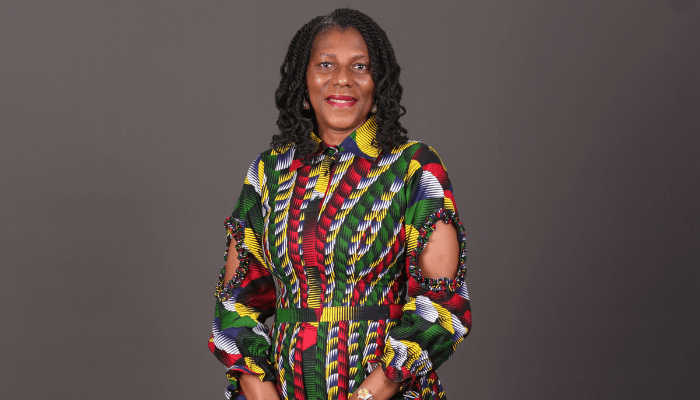
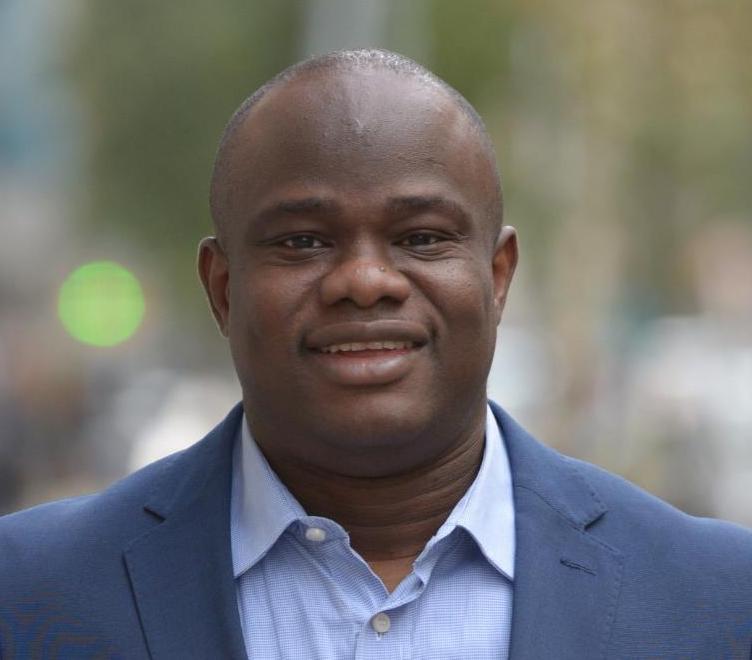
•Anammah, Board Chair, NB Plc
By Uche Usim
The economic turmoil of 2023 and 2024 tested the strength of many businesses in Nigeria and overseas.
Nigeria Breweries Plc had its fair share of the challenge but for the company’s Board Chair, Juliet Anammah, it was a time to demonstrate resilience, ingenuity and recalibration of operational strategies.
In this interview, she shares how the company not only survived the storm but emerged stronger, drawing on innovation, adaptability and a commitment to its core values.
Anammah reflects on the tough decisions, key strategies and collaborative efforts that guided Nigeria Breweries through one of the most challenging periods in recent economic history.
She assured that the company, which has been in business for over 70 years in Nigeria, will continue to invest in the country.
Recovery plan
Yes, we had to develop a business recovery plan and in the course of that, devaluation has happened and inflation is high. These factors are impacting interest rates. It is also impacting our cost of raw materials; it’s impacting on the cost of our FX.., but what else can we do? These are external things which are outside of the company’s control. But there are certain internal levers that we can control. We can look at our cost structure and figure out, ‘what are the things that are extremely important, and what are the things that we can use cost effectiveness to define.
What are other areas where we can say okay from the capacity perspective, let’s reduce capacity here and concentrate in other areas. Those are the kinds of decisions we had to make.
And then, most importantly was launching the Rights Issue which was accepted by shareholders. We’re so grateful that has happened. Because what that did for us is that, by the end of 2024, we were then able to significantly reduce our loan portfolio, and you can see that in our first quarter financial result in 2025.
For us, we believe the future remains volatile. However, what we don’t know is what the environment will be in the next few months. Trump may get up and decide that he wants to raise the tariffs. We just don’t know these dynamics.
But what we do know are the things that we know how to do. We know how to brew drinks. We know how to make beverages, malt and all that and we know how to satisfy our customers. We know how to build brands that will satisfy our customers. These are things that are paramount to our strategy.
We are grateful to our shareholders because they understand the trajectory. They can see the fundamentals of the business improving over time. And with their support, we envisage that this year will be hopefully much better than the previous year.
Factors responsible for the impressive performance in Q1
In Q1, we increased volume. So, in terms of top line revenue, sales volume and value play major roles.
I equally want to say that tight management of raw materials cost also helped us if we look at it from the cost of goods sold perspective. In terms of Cost efficiencies, we were very tight on cost management. Like I said in my prior opening, that we had identified certain assets, and promised ourselves that some of these assets will be held steady without powering them up.
Take for instance, it’s almost like you have two, three generators. In fact, we use that just for a simple explanation, some will say I’ll not power this one because it requires diesel to run it, it will require manpower to maintain it. The same thing happens also with total assets, like factories and production lines and so on. So, reducing those lines also help in cost management. All in all, it reflected in our operating profit for the year.
Last year, I was saying to people, (I’ve been in this market for over 30 years) for the first time in my life, working with consumer companies, the finance line made up of interest rate plus losses as a result of FX was the biggest line item on the Profit and Loss account statement.
Usually, the biggest line item on the P&L is operating expenditure. Once you pass the cost of goods sold, which is the cost of raw materials, plus converting them using your factory production lines, the next big item on the P&L is your operating expenditure. You shouldn’t have your finance expenses running into just the losses from devaluation.
In some companies in our sector, it takes 17% or 29% of your revenue. Those were extremely high numbers.
So, the clean-out really helps to drop both interest expenditure as well as losses coming from losses from devaluation of our FX. So, that’s really the story, but we will also leverage a lot of work that the team are doing. It’s almost like every single person in the organization was on top of it, that is, firing from six cylinders at the same time.
What has worked for us as we recover from Q4 last year going into Q1 this year will be sustained. The only thing I don’t know is what the geopolitical environment will be like. Another thing, I don’t know is, what the impact of oil prices will be on the FX situation in the country.
The 2025 budget is based on N1,500 to a dollar; it is based on 2 million barrels of crude oil, right? It’s a N54 trillion budget that we have. But I don’t know what the result will be in the next three to six months.
However, what that means is that whatever results, we will have to take potentially new decisions to adjust. But our mind and our focus as a company, as management and board, is really ensuring that we sustain development effort. We need to bear in mind that Q2, typically in our industry, is most times on the low side. So, if you check the trajectory of all the companies in our sector, Q2 is a softer quarter than the others because of the rainy season.
Here in Nigeria, People go to bars to drink. It’s not like in other markets where, you know, in the US market, on weekend, people buy like a six pack of drinks and drink at home. So, our people go to viewing centers, we go to bars, and they sit down with their friends. That’s where drinking happens. But during the rainy season, that really reduces.
Investments in solar energy
We’re making a lot of investment in solar, hydro and in getting an off-grid connection. Of course, from our breweries in Kaduna, we kicked off the solar power plants, which we are expanding. In terms of hydropower,By 2026, in the Kudenda Breweries, we would have been 100%. We’re are diversifying energy sources based on the available source we have in our breweries, either solar or hydro.
Company’s strategy that has attracted success across all regions
Interestingly, when I was a consultant, Nigerian Breweries was one of my clients. So, I have a long history with the company. If there’s one particular area going well for us, it is in understanding consumer dynamics. What’s the difference between a consumer across different part of the country? And from a branding perspective, understanding each brand is most relevant to consumers. There’s a lot of work in marketing that goes into that.
There’s a lot of work in terms of consumer expectation that goes into that. So, you will find that in different parts of the country, there are different brands that we have, probably more prevalent depending on the consumer preferences. And preferences differ in terms of what people find in the brand that they engage and they recognize as part of their personal or cultural values. So, Nigerians always takes a lot of that into consideration. So, you might find our products across different parts of the country, whether you are going to the North or the East or the South or the West. But there are nuances in terms of what people want; the cultural affinity that people have, to set the brands apart while also recognizing how we present those brands, how we market these brands in the different parts of the country. I would say it’s been successful so far and it will remain successful. So, it’s not like something we developed yesterday. It’s been part and parcel of the company’s strategy.
Any chance for dividend payment since 2023 and 2024 were rough years?
We agree that indeed 2023, 2024 was a difficult year because we couldn’t pay dividends to our shareholders. At the Annual General Meeting held a few days ago, conversations around that were discussed with shareholders. They saw the fundamentals of the company. They are fully in support of the recovery plans we have and we’re super grateful to our shareholders for that.
In terms of keeping up with the momentum, I don’t know what the end of the year will bring. But we remain positive and very optimistic, and we will, of course, execute on the strategy that we have currently.
Are there any adjustments we need to make over the year as things unfold? We will definitely make these adjustments, but with the intent that we also want to deliver a very strong 2025, not just the Q1, but the full year results.
Will there be capital raising to sustain the growth and for expansion?
We look at it more or less from the perspective of ‘let’s even stabilize. We are coming out of two difficult years- 2023 or 2024. So, this year is a recovery year for us. We made an investment last year. As you may be aware, we acquired Distell Wines, and that’s because we also wanted to make sure that we have a better strategy. And investing in a local wine producing company was part of the strategy. And this was something we also presented to the shareholders at the AGM. So, it is already a capital investment that we made last year.
We will digest all of that and be sure that all of that plays out positively in our financials. If the market suddenly expands significantly, let’s say -inflation rate drops to 10%, we’re speeding along at 3 million barrels of oil per day, and there’s so much money in the system, consumer purchasing power returns aggressively, and consumers want to buy more goods and services. Because, you know, consumer purchasing power have depressed for the past two years. So, if you see a significant upside in the economy, nothing stops us from coming back to shareholders and saying, ‘You know what, with the way this thing is going, we need more capital; we need to deploy more capital; we need more plants. We can restart the plants that we have put on hold, and then we can also probably expand more factories. Or we can have innovation lines just like we have a full portfolio of different products, full of line extensions, new brands that are in our portfolio, of which some of them, we’re keeping at bay, just depending on how the economy is. So, there are multiple areas in which we can aggressively take advantage of any expansion in the economy, but taking on an expansion that is proactive and doesn’t quite reflect the operating environment is not a good bet.
Are you considering going light on your assets so as to shed some legacy cost?
So, what I would say, in a Nigerian perspective, is asset light assumes that you have no capital assets, no office, everything is running digitally and all of that. For a Nigerian company, what you need is asset right i.e the right portfolio of assets. We are a consumer goods company, we produce products. So, we have to have factory assets which is very important. We need to have assets that move our products, either owned assets, owned by us or assets owned by third parties with our circle of control or circle of interest. Those are critical assets, whether they’re owned by us or by our distributors. We don’t just need to have plants. We also need to have bottling and packaging materials. Those are also assets. The returnable bottles in each pack of drinks, those are also assets.
The important thing is, what are the most critical assets that you need, and how do you make sure that you have just what you need without excessive investment in assets? So, what’s the capacity utilization of our factories? Those are the things that are critical to look at from an asset light or asset rights perspective. What’s capacity utilization of our factories? What’s capacity utilization of the different lines that we have? If you suddenly have lines that you’re running at 50% capacity, you have to be asking yourself, what do you have? Why do you have 50% capacity? So those are not assets.
We are likely to start selling off, because it is no longer cost effective. When you’re cost effective, you’re cutting fat.
but if you start cutting the assets that you need to produce, which is the life of your business, then you’re cutting into the flesh. And that’s not a very wise decision.
What are your key strategies to engage stakeholders?
As you are aware, the media is a very important stakeholder. So, what we’re doing now is also stakeholder engagement.
And I find that regardless of the type of stakeholder management, whether it is your shareholders, or it is the public, or it is the consumers, or it is your suppliers, or it is communities where your company operates, what matters most is clear, precise communication.
If you ask me what decisions we’re going to take if the exchange suddenly turns 2000 or 2500 to a dollar? Those are macro situations that I cannot envisage now. I have to model the impact of that on so many factors and levers that are part of our business. Raw material is one of them.
So, stakeholder expectations come down to stakeholder communications. At the end of it , it is how you manage stakeholders, and how you express very clearly your concepts terms. If things change, and you come back and you see, things have changed, and this is what we’re now doing, it’s clear. That’s my approach to it, and I think that’s really how we managed our stakeholders.
What are the plans to manage forex losses?
Nigerian Breweries has always had backward integration as part of our strategy. A lot of our products are sorghum based. We buy sorghum from our local environment. But there’s still some of our product lines in which the raw materials are imported. So, we are not completely immune to FX exposure. What we continue to do is to look at the different sources. It wasn’t just the FX situation in Nigeria, it was also the war in Ukraine.
So, there are a lot of geopolitical pressures when it allows sources of different types of raw materials. Sometimes your existing sources were no longer available, or they were no longer available at the right prices, and we have to keep figuring out each other’s areas to be sourced.
We are investing a lot in farmer cooperatives to encourage production of sorghum. We even started a small project to see if barley can be produced locally. If barley can be produced locally, we will not seek foreign sources.