Follow Us on Google
•Analysts say hostilities already causing economic woes, rise in fuel prices, inflation
By Cosmas Omegoh
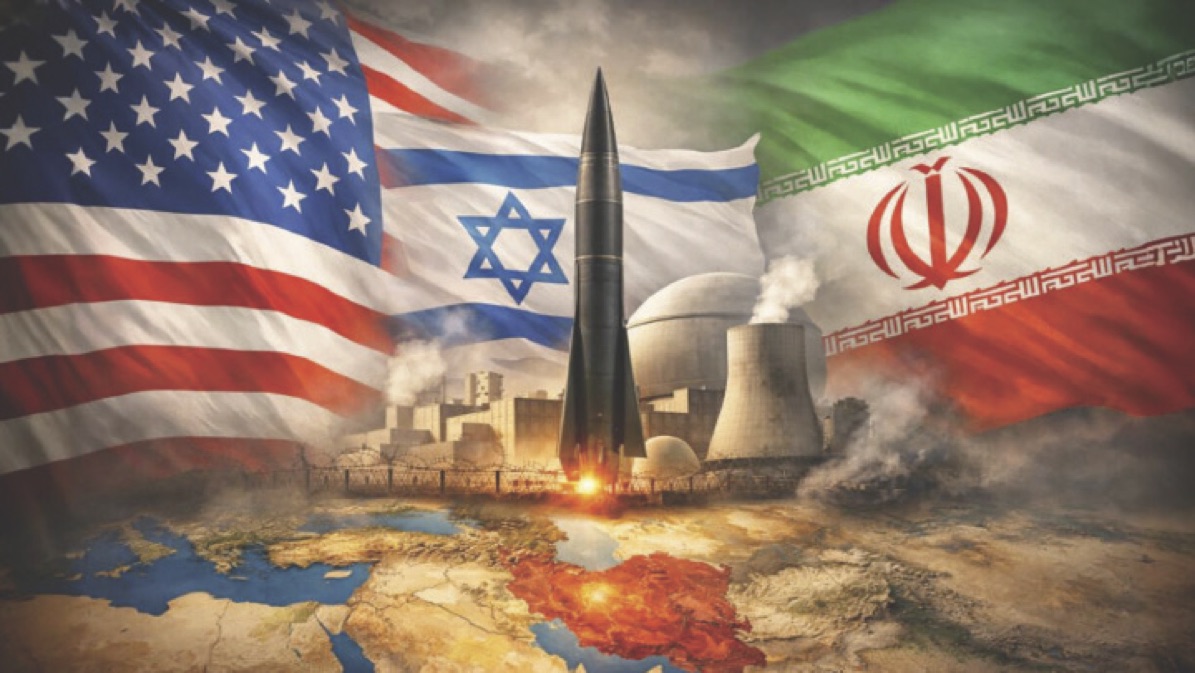
War rages in the Middle East, forcing the entire Gulf to be engulfed by fire. The hostilities are characteristically intense; people are trembling with fear and unsure of what the next hour brings. Business, commerce and many other human activities outside the realm of war are on hold. Death and disaster stare everyone in the face as deadly munitions keep hitting harder, triggering the fury that leaves the region quaking with tremendous terror.
In Nigeria, the people are also soaking the pressure of the war though being fought in lands far flung. This, thus, further underscores the broader assertion that the world has long shrunk to a mere village.
In the heat of the Middle East debacle, Nigerians have been speaking on how the heat is having an impact on them.
A development economist, Dr Lawrence Nwaodu, foresees that Nigeria, being a non-productive, consumption-driven, import-heavy economy with a heavy religious and cultural bias, will be on the receiving side.
He said: “We are already witnessing increase in the price of petrol, not minding that we are a major petroleum-producing nation. This is our reality today, due to our structural defects. When petrol prices shoot up, the inflation goes up too.
“We are already witnessing demonstrations and protests in the entire northern Nigeria, including Abuja, and amongst some high profile and influential individuals, which may likely impact the nation in one way or the other.”
He reckoned that what is going on in the Middle East would likely have more telling consequences at the international geopolitical space as the campaign rages, assuring that their impacts would be hugely felt.
Rise in petrol prices
In the energy sector, Nigeria is reeling at the moment as the war in the Middle East expands its size and scope.
It was noted that on March 3, global oil and gas prices soared as Iran forced closure of the Strait of Hormuz, the route through a good deal of oil export from the Gulf passes.
Iran had begun attacking ships going to neighbouring Gulf states to lift oil, thus forcing a halt in oil trade in the region.
Gulf states too, have had to shut their refineries and gas facilities following Iranian drone attacks.
Consequently, international crude oil prices jumped up with Brent crude rising by 3.3 per cent to $84 per barrel on Monday as hostilities teed off. Nigeria’s Bonny Light, which traded between $71–$73 in late February, is believed to have risen to $81.74 per barrel early in the week.
The implication for Nigerians is that petrol pump prices went up.
According to sources, Dangote Refinery had to increase its fuel prices by N100, from N774 per litre to N874.
The refinery claimed that it sources its crude from the international market and therefore, what upstages world trade also affects it since it is not immune to the vagaries of international trade.
With the increase in international crude prices, pump prices across the country too went up. Motorists reported buying fuel at various prices.
“I bought fuel at N885 at a station in Aja, Lagos while on my way to work,” said Kola, an accountant working on Victoria Island. Similarly, Mr Ebube Udeozo, who lives in Festac Town said he bought fuel at N890 at his location.
But while Nigerians struggled with the increases, an economist, Paul Alaje, who spoke on Monday in a monitored programme on a national television network, dropped a stirring bad news that that Nigerians might be buying fuel at ₦1,000 per litre should the war in Iran continue.
Mr Alaje further warned of other consequences to follow, particularly inflation.
“While crude oil goes up, we all need to check the impact on our economy. The first thing you see is high inflation, because as crude oil goes up, the cost of PMS, diesel, and Jet-A1 will also follow.
“As that is going on, about nine per cent has already attracted more cost for PMS in Nigeria, and by the end of April, we project that if the war is not properly managed, it might get to ₦1,000 plus for PMS in Nigeria.
“If PMS is ₦1,000, you can imagine what diesel will be; you can imagine what flight tickets will be. It will affect the poor, the middle class, and, of course, the rich,” he warned.
Our correspondent gathered that following the energy crisis that is unfolding, Nigerians might very soon also pay higher prices for gas.
Aviation, tourism sectors reel
Meanwhile, the aviation and tourism sectors are taking their own hit as combat activities in the Gulf progresses.
The United Arab Emirates, believed to have the busiest global airport at the moment had immediately closed its Dubai and the Al Matkoum international airports, triggering cancellation of over 280 daily flights, some of which were coming to Nigeria.
Consequently, UAE’s Emirate Airline which operates at least three weekly windows in Lagos alone, was forced to suspend its flights indefinitely to avoid Iranian missiles.
Similarly, Qatar also closed its airport in Doha, with Qatar Airline suspending its operations not only into Nigeria but across the world, resulting in cancellation of hundreds of flights.
Other News
It was gathered that Nigerians, who were in those countries waiting to board their flights home before the suspension, had been lodged in hotels at the expense of the governments pending when hostilities would ease.
Those who for one reason or the other are travelling to the Gulf or transiting through the region have had their flights cancelled.
As a major aviation hub, many airlines stop over in Dubai to refuel, but that is no more for now. Alternatively, only a few airlines now go to the Indian sub-continent to the Far East. So they fly a longer route and at a huge expense.
Confirming that Qatar and Emirates airlines are off the skies following the Middle East crisis, Adebola Adelakan, who lives on the international air route in Isolo area of the city said in days now, he had not seen both airlines overflying his home.
“From my compound, you can see Qatar and Emirate airliners as they lift from the Murtala Mohammed International Airport. Now, we no longer see them. That means that the Middle East crisis is real,” he said.
A tour and tourism operator in Lagos who spoke on condition of anonymity admitted that his agency had not sold any tickets to any passenger going to the Middle East since the war in Iran began.
“As you are aware, Emirate and Qatar have suspended their operations. No one is going there for now because of the war. So nothing is happening. Even those who were cut up in the web of the crisis are still trapped.
“Flights are not leaving those countries unless by special arrangement which I’m sure many Nigerians cannot afford.”
He admitted that some travellers going to India for medical tourism on any of the suspended airlines now have to wait.
Meanwhile the Nigerian Christian Pilgrim Commission (NCPC), early in the weeks, announced suspension of Christian pilgrimages to Israel.
In a statement, NCPC’s Executive Secretary, Stephen Adegbite, said: “The recent developments in the Middle East, including the imposition of a state of emergency in Israel, have led to the putting on hold of all pilgrimage exercises.”
Meanwhile, following flight cancellations, Nigerians travelling for the Lesser Hajj this season to Saudi Arabia will have to wait following safety concerns.
It is estimated that over 100 million worshipers would have been in attendance.
The political side
Meanwhile, tension has continued to mount across the country with some Nigerians demonstrating in solidarity with Iran on whose land much of the war is being fought.
Early in the week, tempers flared across Katsina, Gombe, Sokoto, Yobe, Niger and Kaduna states and Abuja following Shiites demonstrations. The group is aligned to the Islamic sect sympathetic to Iran.
Even in Lagos in the south, there were demonstrations in the Maryland area of the city with protesters condemning the foreign intervention and particularly the killing of Iran’s Supreme Leader, Ayatollah Khamenei.
Opinions remain divided over these demonstrations, with some accusing the demonstrators of hypocrisy while some see it as solidarity with the suffering people of Iran.
Situation in Middle East
Meanwhile, bombs have continued to rain in the Gulf, leaving the region quaking with terror.
Virtually Iran, Iraq, Bahrain, Oman, Kuwait, United Arab Emirate, and Saudi Arabia are seeing an unprecedented crisis. Cannons mounted on destroyer vessels are booming; guns are cracking. Monstrous, laser-guided missiles of various shapes and sizes are streaking through the skies, with surgical precision relentlessly searching for specific targets. The skies are ruled by war planes whizzing through the clouds at dizzying speeds, dropping deadly munitions that are leaving the region reverberating. The entire zone is reeling at the sound of exploding deadly armaments.
In Israel, a principal actor in the crisis, fear and apprehension hang overhead. Alarms go off hourly, warning of the approach of a barrage of missiles from Iran about 2,000kms away. The missiles are harbingers of death whose pace Israel’s acclaimed David’s sling and Iron Doom interceptors are struggling to keep out. The aerial visitors keep wreaking havoc every inch of the way, forcing the citizens into protective bunkers.
Even Cyprus deep in the Mediterranean Sea has taken its own hit. Missiles targeting British interest had reached the island country – a testament that Iran is doubling down on its resolve to fight to the bitter end.
Inside Iran, the epicentre of the crisis, the death profile of the military and civilian population is on daily ascendancy, having long exceeded the 1,000 mark. Almost the entire echelon of Iran’s theocratic leadership is gone.
The spiritual head of the country for over three decades: Ayatollah Ali Khamenei is no more, killed in an attack that targeted him and the entire Iranian leadership and top military brass. The rest of the Iranian leadership is in crisis; none of the members is sure of surviving the next hour as both Israel and the United States go on the rampage. The country is in turmoil and clearly so.
Analysts say as hostilities progress, Iran seemed to be fighting for pride – although at a huge price – having been wounded on all sides. And that is why it keeps firing missiles at its neighbours, including Turkey – seemingly in protest for what it terms betrayal and siding with the enemy, the USA.
With American interests spread all over Saudi Arabia, Oman, Bahrain, UAE, Kuwait and Qatar, Iran keeps launching missiles at them in what watchers said was aimed at forcing America to back down.
Therefore, for the entire Gulf countries, the fear of Iranian missiles in their territories keeps heightening. Thus, they are virtually on lockdown: their trade, commerce, production and aviation are grounded. The people and their government fear for their lives and the infrastructure they had taken ages to build.
Thus far, Iran has expanded the scope of the conflict to the economic sphere by deliberately forcing closure of the Strait of Hormuz – a narrow waterway through which a large proportion of world oil exports go through. That is a major blow to the Gulf states whose oil export has been put on hold.
Analysts believe that Iran reasons that by disrupting economic order in the Gulf which the entire world depends on – oil – the global community might be forced to listen to it.