Follow Us on Google
From Scholastica Onyeka, Makurdi; Noah Ebije, Kaduna; Ighomuaye Lucky, Benin; Joe Effiong, Uyo and Tony John, Port Harcourt
Nigerians have been complaining about the cost of governance within the federal system and the states, with many people expressing concern at the number of ministers in President Tinubu’s cabinet.
In this report, some Nigerians offer suggestions on how the cost of governance could be reduced in the country.
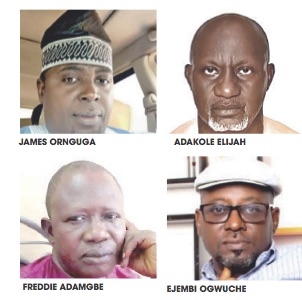
Cost of governance not a major problem – James Ornguga, politician
I feel the country is rich enough to take care of whatever cost of governance that is required. What we need is good policies that will benefit the masses. I don’t think money is the problem. The country is very rich. We have enough resources at our disposal; it is just the application of the resources that is the problem. I don’t think the cost of governance is a major problem. With the removal of subsidy, we have so much money that is coming to the state and local governments and the federal government also has so much money at its disposal. So it is all about what the leadership will do to positively affect the lives of the masses.
We should introduce a part-time system of government – Dr Friday Adakole Elijah, communication expert
For us to reduce the cost of governance in Nigeria, there is an urgent need to introduce a part-time system of government. This could be done in such a way that no government functionary will be placed on salary. It should be on sitting allowance basis. Governance should be by patriotism. There should be no form of monetary incentive for anyone. Motivation should be in kind alone.
Tackle corruption to reduce cost of governance – Freddie Adamgbe, civil servant
Tackle corruption and you will reduce the cost of governance. The cost of governance is laced with excess level corruption and once we tackle it, everything will take care of itself. Everything we are going through in this country is because of corruption. Corruption is the bane of development in this country. Every budget is padded and inflated. Once we tackle corruption, every sector will take shape and the cost of governance will fall.
Merge ministries, parastatals, create small governments – Ejembi Ogwuche, politician
The prevailing high cost of governance in Nigeria which is attributable to many factors is affecting the nation negatively and needs to be urgently reduced. The government needs to prune down the number of appointees and ministers of government. Some ministries and parastatals need to be merged because they perform functions that are not distinguishable from each other.
The cost of governance is exceptionally high in Nigeria, especially the wages that are paid to workers that have virtually no schedule of duty and are largely unproductive. We need small government that are effective unlike these large governments with retinues of officials that benefit a small number of the elite group who demonstrate too little concern for the welfare of the Nigerian people.
Lawmaking should be part-time – Madiba Ibrahim Lapinni, author, activist
The cost of governance is no doubt very high in Nigeria. The implication is that money that ought to be used for development is being mismanaged in the process. The high cost of governance is also linked to the increased rates of insecurity and underdevelopment in Nigeria. Hence, the need to cut down the cost of governance by implementing the Orosanya report that streamline some MDAs with similar function which amounts to duplication of duty. Government should make the function of lawmaking a party time activity, reduce the vehicles in the convoy of public officials, use legislation to plug all financial loopholes in the system, and ensure a robust financial accounting system that are electronically operated.”
Large retinue of aides should be reduced – Elder John Fwah, Kaduna community leader
The call to reduce or trim the cost of governance in this country dates back many years ago. It’s a statement of fact that those in governance deliberately turn a deaf ear to the issue as they rely on the mantra, ‘that’s how we met the practice.’ The reduction of cost of governance which eats deep into budgets is a must if the governments are sincere. For instance, the large retinue of senior and special assistants, aides and other political offices should be reduced to very minimal level. Another extra baggage that should be cut down drastically is the security agents, police, NSCDC, etc. The Nigeria police recently said it will withdraw police officers attached to government and private individuals, an action yet to be seen or felt.
Political offices should be made less attractive – Emmanuel Ebony, graphic designer
High cost of governance can be reduced by implementing judicious spending of public funds, merging ministries, departments and agencies that perform similar functions, making political offices less attractive as well as providing adequate infrastructure to the citizenry.
If these are implemented, I believe the high cost of governance will be reduced and it would also have positive impacts on the lives of citizenry and boost investment in the country.
Let’s return to parliamentary system of government – Lucky Efese, journalist
It’s a very critical issue in the Nigeria system. First and foremost, we have to go back to the parliamentary system of government, because if you look at the cost of administrating presidential system of government, which we are operating, it is very expensive. Until we go back to parliamentary system of government, we cannot make any headway. But in doing this, we have to pass through the constitutional review to go back to parliamentary system of government to reduce cost of governance in Nigeria. Without that, it will not work.
Reduce emoluments of political office holders – Alex Adele, human rights activist
Actually the cost of governance in Nigeria is very high. But one of the things that should be done is to make governance less attractive whereby those who are going there will know that they are going there to work and not for the money that is attached to positions. If you hear the emoluments that are attached to these offices, you will be amazed and that is why they will always want to do anything possible to be there.
You can imagine someone that becomes a councillor today, by next week, he is now riding an executive car. So, that person will do everything possible to be there. One of the things to do to cut down the cost of governance is to reduce to the barest minimum the emoluments that are accrued to those offices.
Lawmakers should get only sitting allowances – Felix Aizamosa, journalist
The cost of governance in Nigeria is very high and that is why there is corruption in the country. If you are campaigning, because of unemployment and poverty, if you don’t spend money, you can’t get anything. So, apart from that, there are Special Advisers, Special Assistants, a Speaker in the House of Assembly has more than 30 aides. The Deputy also has Special Advisers and about three Special Assistants. When you spread it, it becomes too much for the country to bear because the money is too high. The way forward is that we should adopt the parliamentary system of government, where you pay for only sitting allowance and it will not be attractive. Only technocrats will want to vie for positions, so that they can give us the best. But now, politics is a bag of money and if you get money you are there and if you don’t have money, forget about it.
Let’s adopt a unicameral legislature – Israel Ntia, cleric
The cost of governance is a misfortune in Nigeria and to Nigerians. If reduced, the government can improve on the quality and standard of social amenities, infrastructure and other welfare packages to the citizens, as well as improve the economy. We should practise unicameral legislature. Imagine the budget of the National Assembly alone. It surpasses the annual budget of some African countries. Secondly, the size of the executive council is too large. Let’s drop the office of the Minister of State. It’s nothing but a waste of funds maintaining those ministers and their aides.
Proper engagement of the youth will reduce cost – Mercy Etisong, businesswoman
In order to reduce the high cost of governance, we should go back to agriculture so as to engage more youths and take their minds off the assumed free money doled out in political circles.
There should be a statutory number of aides for any chief executive, be they president, governors local government chairmen, state and National Assembly members.
Reduce cost of electioneering and stop second term – Udeme Effiong, SME manager
Governance can never be cheap unless its root, which is electioneering, is constitutionally made less expensive and cumbersome, because those eventually elected would want not only to recover their investment by whatever means, but would also make bogus appointments to settle those who did campaign legwork. Secondly, second term should be done away with so that the need to grab, steal money or award phony contracts could be minimised.
Political office holders must avoid foreign unnecessary trips – Charles Jaja, activist
One had thought that the current administration of President Bola Tinubu would have listened to genuine reasons and calls for the reduction of cost of governance so as to enable the government to deploy the already staggering and lean resources to areas of greatest need at the moment. The activation of new ministries and appointments of more ministers into the Federal Executive Council (FEC) will further increase the purchase of luxury goods and services and jumbo salaries paid to these ministers and their aides. Political office holders must avoid unnecessary trips to other countries for meetings that can ordinarily take place here in Nigeria. The president must stop top government officials from over-bloating of figures and variations of contract sums at will, eradicate ghost workers from payroll and stop the sponsorship of pilgrimage to Mecca or Jerusalem, while looking inward towards growing our economy.
We need to reduce the level of corruption – Omubo Harry, elder statesman
It is not the structure that is the problem. It is the implementation of this presidential system of government that is the problem. It is a problem because of the level of corruption and power drunkenness. And people tend to forget about the purpose of office. We need to reduce the level of corruption and embezzlement and the power given to governors.
There’s need to ensure strict public financial management reforms – Mr. Livingstone Wechie, public affairs analyst
The issue of cutting down the cost of governance must be applied or implemented as a deliberate government policy if there must be headway for sustainable development. It has been more of a lip-service and treated with contempt, yet it seats on the head of governance prospects like a ticking time bomb over our economy. The convoys and ostentatious lifestyle of public and political office holders indicate unwillingness to cut the cost of governance. This plays back in their lack of empathy in policy making that with impact on the citizens. The unnecessary duplication in government agencies, unjustified purchases of luxury goods and services, and the jumbo pay paid to political officeholders to sponsor their extravagant lifestyles, remuneration for multiple political aides etc, should stop. Above all, the practice of public officers running public funds like private funds without checks must be stopped.
Some of the ways this administration can reduce the high cost of governance is by ensuring strict public financial management reforms, such as the Fiscal Responsibility Act, the Medium Term Expenditure Framework, and the Treasury Single Account, at both the federal and state levels, as well as the merging of agencies are key antidotes to cutting the cost of governance.