Follow Us on Google
By Kabiru Usman
Across Nigeria and many parts of Africa, unreliable electricity continues to constrain economic productivity and daily life. Persistent outages, voltage fluctuations, and dependence on diesel generators have created operational uncertainty for households, small businesses, and community institutions. In several African markets where grid expansion has lagged behind demand, decentralized renewable solutions have increasingly become part of the infrastructure response.
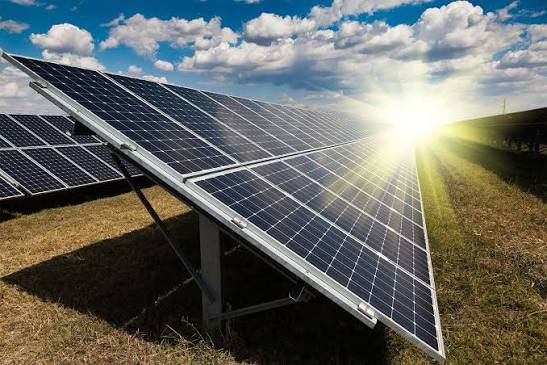
While national reforms continue across the continent, a parallel shift is taking place at the project level. Engineers working in Africa’s emerging renewable sector are applying structured photovoltaic system design to stabilize energy supply in environments where centralized infrastructure remains inconsistent.
Among those contributing to this transition is Adesola Adelakun, whose early work in photovoltaic engineering focused on load-based system design and supervised decentralized installations within West Africa. Rather than deploying standardized solar kits, his approach began with detailed energy audits. Consumption data from institutional facilities was analyzed to determine peak load demand, daily usage cycles, and operational growth patterns. This demand profiling informed system sizing decisions, inverter configuration, and panel layout planning.
Using simulation tools to model irradiance levels common across sub-Saharan climates, projected energy yield was matched against real consumption behavior. The objective was calibrated performance aligned with institutional requirements rather than oversizing installations.
One such project involved the design and supervision of a decentralized photovoltaic system for a community-based facility. The system was structured to support lighting, refrigeration, and operational equipment, reducing dependence on diesel backup and mitigating disruptions associated with weak-grid conditions seen in several African regions.Component selection emphasized durability and maintainability, recognizing that installations across many African operating environments must function reliably without constant technical oversight. Electrical layouts were developed to reflect safety standards while accommodating structural and environmental constraints.
By grounding system deployment in feasibility analysis and load-driven configuration, these installations provided predictable daytime power supply and improved operational continuity. For institutions operating in infrastructure-constrained parts of Africa, such stability can directly support service delivery and organizational resilience. As Africa continues to urbanize and digitize, structured renewable design is becoming increasingly central to localized energy resilience. The continent’s transition toward distributed solar infrastructure depends not only on panel deployment but also on disciplined engineering evaluation and performance modeling.
Through early contributions to institutional photovoltaic design and supervised decentralized installations in Africa, Adelakun’s work reflects the role of applied engineering analysis in strengthening localized energy systems.