Follow Us on Google
By Lukman Olabiyi
One of the most critical pillars of modern urban infrastructure is street lighting. Beyond its aesthetic appeal, a well-illuminated city strengthens public safety, stimulates economic activity, improves road transportation and enhances the overall wellbeing of residents.
Across developed cities, street lighting serves as a preventive tool against road accidents and crime while fostering social interaction and community cohesion.
For years, however, many Lagos residents lamented the darkness that engulfed several roads and neighbourhoods, warning that poorly lit streets created fertile ground for criminal activities and traffic hazards.
At one point, the Lagos State House of Assembly openly reprimanded the executive arm over the condition of roads and highways, urging decisive action.
That turning point came on December 3, 2024, when Governor Babajide Sanwo-Olu signed the Lagos State Electricity Bill 2024 into law, a landmark step toward establishing a more reliable and sustainable power ecosystem.
Speaking at the signing, the governor emphasised that the legislation was designed with Lagosians at heart.
“We want, at the end of the day, Lagosians to be the full beneficiaries. We all want to see affordable and accessible lights all around our state. We want to light up Lagos so citizens can feel safer and enjoy the benefits of a true 21st-century economy.”
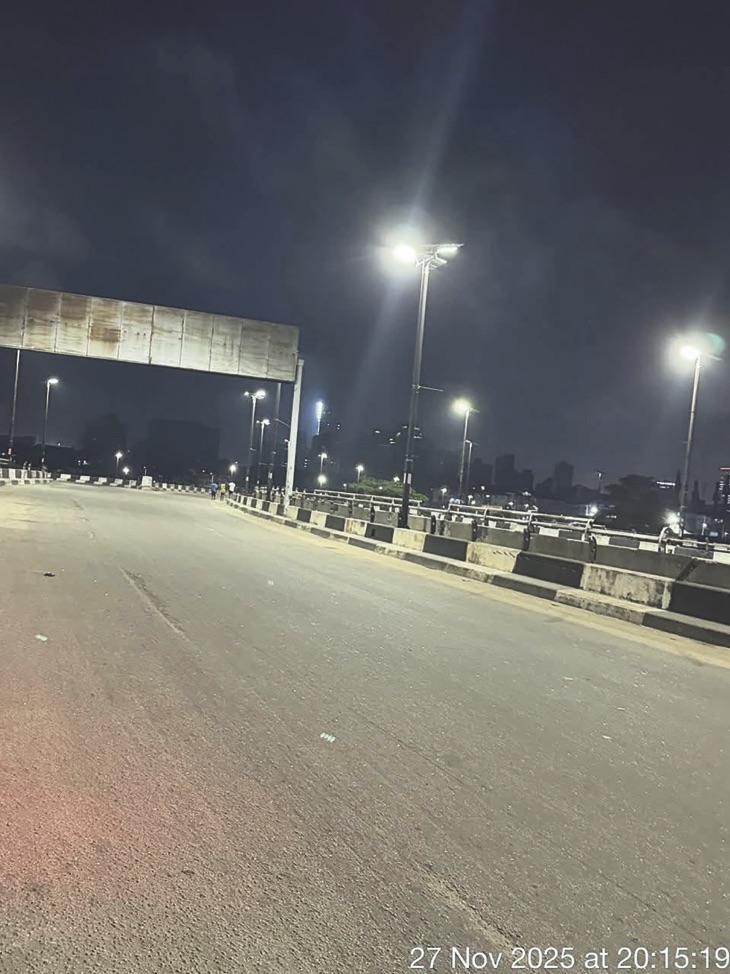
Determined to address longstanding concerns, the administration adopted smart and LED technology to replace the ageing orange-glow streetlights while upgrading existing infrastructure. The initiative includes fresh installations, retrofitting, and the systematic decommissioning of obsolete fittings across major routes.
Unlike previous approaches that relied heavily on diesel and gas-powered systems, which proved financially unsustainable, the state pivoted to solar-powered lighting, aligning with global clean-energy trends while reducing operational costs.
According to the Commissioner for Information and Strategy, Gbenga Omotoso, the project is deliberately structured as a continuous state-wide exercise.
“What you are seeing today on the streets is Governor Babajide Sanwo-Olu’s answer to the question of dark roads. Many streets are now well lit, but the job is not finished. In the first phase, we are fixing 20,000 lamps, while the second phase covers about 22,000. The implications include reduced crime, improved safety and stronger security.”
Omotoso added that the decision to go solar was both economic and environmental.
“When Mr. Sanwo-Olu came in, it was not reasonable to spend about N600 million monthly powering generators. The world is moving toward clean energy, and Lagos cannot be left behind.”
Improved illumination is already reshaping night-time mobility across Lagos. Studies show that well-lit intersections can reduce night-time crashes by up to 40 per cent, while pedestrian accidents may drop by nearly half when visibility improves.
Major corridors now benefiting from the initiative include Iddo, Eko Bridge, Ikorodu Road, Jibowu, Fadeyi, Maryland, Ojota, Marina Bridge, Western Avenue, Gbagada-Oshodi Expressway, Murtala Muhammed International Airport Road, Alausa, Lekki-Ikoyi Link Bridge, and the Lekki-Epe Expressway, among others.
For commercial drivers like Sodiq Omotayo, who plies the Ikorodu–Lagos Island route daily, the difference is unmistakable.
“In the past, night journeys were filled with fear because of dark spots. But since these solar lights were installed, driving at night has become easier — you can clearly see what lies ahead,” he said.
The enhanced visibility is not only improving driver confidence but also strengthening the efficiency of Lagos’ transportation network, enabling safer and more predictable travel after dusk.
Other News
Beyond safety, the initiative is quietly powering Lagos’ night-time economy. Traders, transport operators, and small business owners are extending operating hours, benefiting from increased foot traffic and improved security perception.
Morenike Ladega, a trader at Ikorodu Bus Stop, described the installations as transformational.
“Market people here can best explain what the governor has done. Our sales have improved greatly. Before now, we relied on lanterns, but now the streets are properly lit.”
Urban development experts note that consistent lighting often elevates property values and attracts investment, as well-lit environments are widely perceived as more secure and desirable.
Security analysts have long argued that darkness enables opportunistic crimes. By illuminating highways, bridges, and inner roads, Lagos is closing those gaps while complementing other elements of the state’s security framework.
The psychological effect is equally important: residents feel safer walking, commuting and conducting business at night — a hallmark of globally competitive cities.
The benefits are also reaching local communities. Executive Chairman of Mushin Local Government, Hon. Tunbosun Haruna Aruwe, commended the governor for extending the project to key areas within the council.
“Places like Ishaga Road, Empire axis, Agege Motor Road, and Cappa have been transformed through the ongoing ‘Light Up Lagos Initiative.’ On behalf of the good people of Mushin, we say a big thank you and like Oliver Twist, we ask for more.”
Governor Sanwo-Olu’s Light Up Lagos initiative has continued to attract widespread commendation from residents and stakeholders, who describe the project as a transformative step toward improving safety, boosting economic activities, and enhancing the overall quality of life across the state.
A journalist with Silverbird Television, Taiwo Akere, praised the initiative, noting that the installation of modern streetlights across major roads and inner communities reflects a proactive and forward-thinking approach to governance.
According to him, adequate lighting not only improves night-time visibility for motorists and pedestrians but also serves as a strong deterrent to criminal activities.
He added that the project demonstrates the administration’s commitment to building a safer and more functional megacity where residents can move about with greater confidence after dark.
Similarly, Elder Kayode Olopade, a resident of Ikorodu, applauded the governor for prioritising infrastructure that directly impacts the daily lives of citizens. He observed that well-lit streets have already begun to stimulate commercial activities in his area, allowing small businesses to operate for longer hours while fostering a stronger sense of security within the community.
Olopade described the initiative as timely and people-oriented, urging the government to sustain the momentum and extend the project to more neighbourhoods across Lagos.
Many residents believe the Light Up Lagos initiative underscores Governor Sanwo-Olu’s dedication to sustainable urban development and responsive leadership, positioning Lagos closer to the standards of globally competitive cities.
As installations continue, the government has assured residents that areas yet to benefit will soon be captured under the expanding project.
Urban planners suggest that sustaining the momentum will be crucial. Extending illumination beyond major highways into inner streets could further unlock economic opportunities, deepen security, and accelerate Lagos’ emergence as a resilient megacity.
If fully realised, the Light Up Lagos initiative may prove more than an infrastructure upgrade, it could become a defining element in the story of a city rising toward a brighter, safer, and more prosperous future