Follow Us on Google
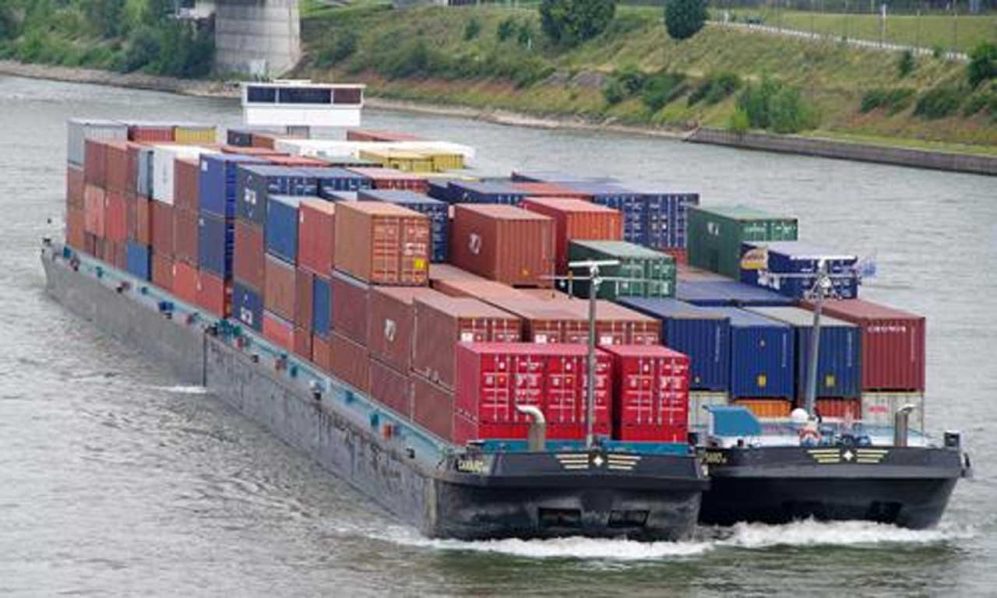
The increasing frequency of containers falling into Nigeria’s inland waterways during barge operations has emerged as a major safety and economic concern, threatening lives, cargo, and the investments of compliant importers.
Despite the strategic importance of inland water transport in easing port congestion and facilitating cargo movement across the country, recurring barge accidents continue to expose glaring safety deficiencies within the sector.
While barge transportation remains a vital pillar of Nigeria’s maritime logistics chain and a key driver of indigenous participation in the blue economy, industry stakeholders say inadequate enforcement of safety standards, operational deficiencies, including the use of unseaworthy barges, and poor adherence to standard operating procedures (SOPs) and widespread overloading practices are undermining its potential.
The concerns were reinforced recently when the National Inland Waterways Authority (NIWA) warned operators against the growing practice of loading barges beyond approved limits. Days later, several import-laden containers carrying goods valued at millions of naira plunged into the water from a barge at Kirikiri Phase 2 in Lagos, highlighting the risks posed by weak compliance with safety regulations.
The incident has renewed calls for stricter oversight of barge operations, with stakeholders warning that unless safety breaches are addressed, container losses and waterway accidents could become an even greater threat to Nigeria’s maritime trade and investment environment.
It also exposes importers to significant financial losses and endanger lives.
Stakeholders lamented that as a result of safety gaps and operational deficiencies associated with barge operations, many importers have lost millions of naira since standard shipping containers are not waterproof, and fully submerged cargo often suffers total damage, leading to massive financial losses.
Findings showed that operational deficiencies among some barge operators, especially the routine deployment of vessels that are not seaworthy, with workers allegedly resorting to temporary measures, such as using pieces of cloth to block sections of barges that were taking in water.
There have been cases of non-adherence to standard operating procedures, including cases where a tugboat was used to pull a barge, resulting in the death of workers.
Stakeholders who spoke with Daily Sun said that despite barge operations remaining the cheapest way of moving goods from the ports compared to trucks, coupled with the inefficiency of the rail transport around the ports, which has forced 90 per cent of cargo to go by road, barge operations lack proper regulations from the side of the authorities.
For context, a barge is a wide and flat-shaped boat, just like a raft, built mainly for river and canal transport of bulk goods. The main reason for this particular shape is to ensure that the cargo-carrying capacity is enhanced and more bulk can be hauled and transferred on it.
Due to its design and usefulness, the usage of barges can convey containers in and out of the ports conveniently. Therefore, efficient and regulated barge operations can be an effective strategy to resolve the key challenge of congestion at the port, and they may drastically reduce the pressure on the roads if adequately regulated and put to use.
However, there is a need for the government to establish a specialised committee to address barge operations to protect the human lives and investments of the Nigerians on the inland waterways.
The Lagos Area Manager, National Inland Waterways Authority (NIWA), Sarat Braimah, warned that barge overloading poses serious risks to navigation safety and other users of Nigeria’s inland waterways.
According to her, the unsafe loading practice is becoming increasingly common as operators seek to maximise profits per trip, but she warned that it is creating dangerous conditions on the waterways.
She said that improper stacking of containers on barges often obstructs visibility and increases the risk of collisions, explaining that excessive loading not only destabilises vessels but also creates severe blind spots for tugboat captains navigating busy inland routes.
“To maximise profit per trip, operators frequently overload barges with shipping containers. When these heavy containers are stacked too high or poorly arranged, they create a massive blind spot that completely blocks the tugboat captain’s forward visibility,” she said.
Other News
She said that the inability of operators to maintain clear sightlines makes navigation particularly hazardous.
“Operating a vessel without a clear line of sight is incredibly dangerous. It makes it nearly impossible for a captain to spot oncoming traffic, sandbanks, or smaller passenger boats in time to avoid a collision,” she added.
Braimah warned that the practice’s implications extend beyond barge operators, putting passenger boats, commercial transporters, and other users of the inland waterways at risk.
She said NIWA has intensified monitoring and enforcement efforts at loading points to ensure compliance with safety regulations, including strict adherence to approved container stacking heights and visibility requirements from the vessel’s wheelhouse.
“NIWA has been actively addressing critical safety gaps across Nigeria’s inland waterways. The most urgent concerns focus on improper barge loading, misapplied safety gear, and the severe hazards of marine litter, amongst many others,” she stated.
Beyond loading practices, she also highlighted concerns about the improper use of safety equipment and the indiscriminate dumping of waste into waterways, noting that such behaviours continue to undermine safe and sustainable inland water transport.
She urged operators and maritime workers to strictly follow safety procedures, stressing that accident prevention depends on disciplined operational practices across the sector.
“Safety on the water relies on a chain of smart choices. Securing the load properly, wearing the right vest for the task, and keeping trash out of the water ensure everyone makes it back to the jetty safely,” she said.
Braimah further described marine litter as a persistent environmental and operational challenge, calling for stronger stakeholder collaboration to address pollution across inland waterways.
Meanwhile, Head of Research at Sea Empowerment and Research Centre (SEREC), Eugene Nweke, said leaking barges, overloading, poor vessel maintenance and unsafe operational practices should be treated with utmost seriousness by relevant authorities, especially as barge transportation remains an indispensable component of Nigeria’s maritime logistics ecosystem and a critical enabler of indigenous participation in the blue economy. He said there can be no sustainable growth in barge operations without strict adherence to operational, safety, environmental and seaworthiness standards.
Nweke noted that the deployment of unseaworthy barges, excessive cargo loading beyond approved capacities, and makeshift repairs while vessels are in operation underscore the urgent need for stronger regulatory oversight, routine inspections, vessel certification, and effective enforcement mechanisms.
Nweke called for the establishment of a dedicated Directorate of Barge Operations and Logistics Services within the Federal Ministry of Marine and Blue Economy to coordinate policy, safety compliance, vessel standards, operator certification, environmental protection, and sectoral development.
He stated that Nigeria’s barge industry has enormous potential for trade facilitation, cargo evacuation, job creation, road decongestion, and investment attraction.
Former President of the Shippers’ Association of Lagos State (SALS), Jonathan Nicol, described the consequences of containers falling into the water as a “tragedy” for importers, noting that containers are not designed to be waterproof, as the cargo suffers extensive damage if submerged for any length of time.
Nicol warned that such practices pose serious risks to importers whose cargoes are transported by water between terminals.
He questioned why importers would expose themselves to such risks when alternative cargo-handling options exist, stressing that using barges in unsafe conditions amounts to a gamble.
Nicol maintained that goods that arrive safely in Nigeria aboard ocean-going vessels should not be exposed to avoidable risks during inter-terminal transfers.
He stressed the importance of insurance coverage for all cargo moved by barge, noting that shipping companies’ liability typically ends upon discharge at the port.