Follow Us on Google
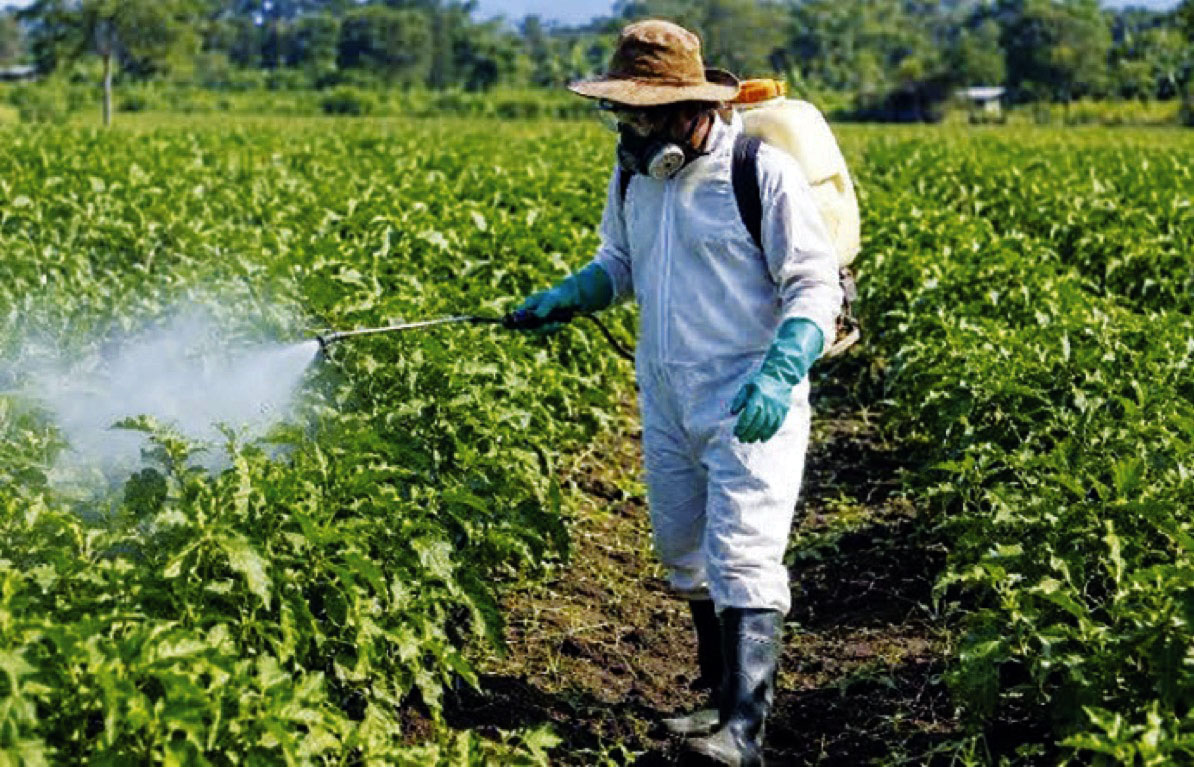
Former Vice President, Yemi Osinbajo gave a warning that shocked many families. He revealed that tests on his wife’s freshly squeezed orange juice, which caused her prolonged headaches, showed it was not fit for human consumption due to chemicals used on the fruit. The oranges, like much of the produce in our markets, had been chemically preserved.
That revelation proved that across Nigeria’s farms and markets, farmers and traders are using toxic pesticides to preserve crops and vegetables, and ripening agents to keep fruits and foodstuffs from spoiling.

Calcium carbide is used to force-ripen mangoes, bananas, plantain and oranges overnight. Sniper, a dichlorvos-based insecticide meant for indoor use, is sprayed on vegetables and poured into bags of grains. Formalin, a chemical used to preserve corpses, has turned up in fish and meat in some places. The goal is the same everywhere: preserve crops, force-ripen fruits, and extend shelf life long enough to get to market and make sales.
Tomatoes are dipped in water mixed with chemicals to keep them firm. Leafy vegetables are misted so flies stay away. Mangoes and bananas are wrapped with calcium carbide so they turn yellow in hours.
In grain stores, small bottles of sniper are emptied into 50kg bags of maize, rice and beans. One bottle can treat several bags and kill weevils for weeks. The chemicals are cheap, they work fast, and they are available in almost every agrochemical shop. Most of them are not approved for direct contact with food.
The reason people use them is not because they do not know the risks. It is because the losses without them are too high. Nigeria loses an estimated 40 per cent of fruits and vegetables after harvest. Cold rooms are few. Electricity is unreliable. Roads are bad.
Yusuf Danladi sold grains on Ademuyiwa Street, Apapa Road. He buys maize and beans directly from farmers and stores them until prices go up. He revealed that he uses sniper because anything else means losses. He pours a small amount into each bag and mixes it with his hands before tying it tight.
“A farmer who spends months growing tomatoes can watch the entire harvest rot in three days if it does not reach the buyer on time. For grains, weevils can destroy a bag in weeks. Traders who buy in bulk cannot afford to throw away stock. So they look for the fastest way to keep things looking fresh.
“Customers want grains without holes, and they will walk past a bag that looks damaged. I know government agencies warn against it, but I also know that if I do not use it, the next trader will use it. For me the choice is between losing money and using a chemical that costs less than a thousand naira to save bags worth over a hundred thousand.”
Mrs Comfort Eze farms tomatoes, pepper and other perishable vegetables. She has also had her share of trouble. Last year she sprayed her tomato farm with a strong chemical because insects were destroying the crop. Two days later, her skin was itching and she was vomiting and had to go to the clinic. She has also had produce seized in the market by officials who said it had chemical residue.
Still, she says she continues because the alternative is worse. If she does not preserve the vegetables, insects eat everything. She shared that traders who come to buy insist on vegetables that are already ripe. She said for her, it feels like there is no way out.
The chemicals do not stay on the farm. They travel with the food. Health experts warn that organophosphates like dichlorvos affect the nervous system. Long exposure can lead to headaches, dizziness, memory problems, and in children, developmental delays. Calcium carbide releases acetylene gas and can contain traces of arsenic and phosphorus.
It has been linked to mouth ulcers, stomach pain and kidney problems. Formalin is classified as a carcinogen. The danger is not from one meal. It is from eating small amounts every day, in rice, in beans, in fruit, in vegetables.
Gift Chinda, a Consultant Public Health Physician at the Rivers State University of Science and Technology, says this is now a public health issue. She explains that the biggest risk comes from daily exposure.
“Most people wash vegetables with water and assume that is enough, but many pesticide residues are absorbed into the skin of the fruit or vegetable. Wash everything thoroughly in clean water, soak in salt water or a mild vinegar solution for 10 to 15 minutes, and peel fruits where possible. For grains and beans, washing several times and sun-drying before cooking helps.”
She also urges people to buy from sources they trust and to report fruits that ripen unnaturally fast. Beyond individual action, she says there must be better enforcement.
Another environmental health practitioner also raised concerns over the widespread use of dangerous chemicals by farmers and traders to preserve food, warning that the practice poses serious health and environmental risks to both handlers and consumers.
Confidence Nelson said the situation in many markets across the country is really worrying and requires urgent attention from regulators, traders, and consumers alike.
According to Nelson, many farmers and traders apply pesticides such as sniper directly to beans, maize, and rice to prevent weevil infestation.
Some also spray vegetables in open markets to keep flies away, while others use calcium carbide to force fruits to ripen overnight.
“The problem is most of them don’t use gloves, nose masks, or any protection, so they inhale it and get it on their skin. We keep seeing cases of headaches, dizziness, vomiting, skin irritation, and breathing problems.”
Other News
He noted that the risk to consumers may be even greater due to daily exposure. “For consumers, the risk is even bigger because you’re eating small amounts of these chemicals every day. Over time, that builds up and can damage the liver, kidneys, and nervous system,” he said.
Nelson added that his office also receives frequent complaints of stomach pain and heartburn, especially from beans that were not properly washed. He further warned about the use of formalin to preserve fish and meat, describing it as “really dangerous.”
On the environmental impact, Nelson said leftover chemical mixtures are often poured on the ground or into drains, where they seep into soil and water sources.
He also decried the indiscriminate disposal of empty pesticide containers in markets and farms, which he said exposes children and animals to poisoning. Spraying in open markets, he added, affects everyone present, not just the trader.
To reduce reliance on hazardous chemicals, Nelson said environmental health officers have been promoting safer alternatives such as PICS bags, metal silos, proper drying, neem powder and wood ash for grain storage. For fruits, he said advocacy is ongoing for natural ripening and zero-energy cooling instead of calcium carbide.
However, he admitted that enforcement remains a challenge. “Enforcement is effective somewhat, but not enough. A bottle of sniper is cheap and easy to get, while a PICS bag costs more, and not everyone knows about it. Enforcement is also hard because we don’t have enough staff to check every farm and market.”
Nelson also pointed to consumer demand as a contributing factor, saying buyers often prefer fruits and grains that look perfect and free of insect damage, which pressures traders to use chemicals.
From a crop science point of view, there are approved options, but they are not being used the way they should, says Samuel Adewole, an agronomist and crop protection specialist at the Federal University of Agriculture, Abeokuta, who added that pesticides like pirimiphos-methyl and deltamethrin are registered by NAFDAC for stored grains, but come with specific dosage and a waiting period before the food is consumed.
“The problem is that farmers are using sniper and other chemicals not labelled for food, and they are not measuring correctly. For fruits, there is no approved chemical for ripening. Natural ripening is the standard. Calcium carbide is not supposed to be used at all.”
He also points out that alternatives exist but they cost money and require training. For grains, hermetic bags like PICS bags, metal silos, and proper drying to the right moisture level can keep weevils out without chemicals.
‘For fruits and vegetables, zero-energy cooling chambers and better packaging can reduce rot. For ripening, controlled use of ethylene gas is safer than calcium carbide. Even traditional methods like neem powder and wood ash work for small-scale storage. The barrier is not knowledge alone. It is access, cost, and the pressure of the market.
“That pressure comes from us too. Consumers want perfect-looking produce. We want tomatoes that are red out of season. We want mangoes in April. We want beans with no single insect hole. A trader who sells naturally ripened fruit often loses to the trader with bright, uniform fruit. A farmer who stores grain without chemicals loses to the one whose grain looks cleaner. Until buyers start asking questions and rejecting produce that looks too perfect, the practice will continue.”
Hygiene and safety are taking a back seat to profit among many farmers and traders in Nigeria.
Speaking on the growing concern, Sunday Koleosho, a developmental expert, said the rush to make quick sales has led many to use dangerous chemicals on farm produce, with consumers now bearing the health burden.
“Fruits and vegetables brought fresh in the market barely make it home before you start seeing them rot away. The desire to make quick sales or more profit has led many to engage in harmful preservation practices of their farm produce.”
He noted that the impact is already being felt in homes. According to him, his family frequently experiences discomfort after meals. “My wife and kids do complain of heartburn each time we cook beans without it being parboiled,” he said.
To cope, many households have adopted their own safety measures. Koleosho explained that parboiling beans and discarding the water is now a common practice to reduce chemical residue. “One of the ways we remove chemicals from the beans is to parboil and discard the water before final cooking. For fruits, rinsing them under running tap or with salted water helps remove chemicals and dusts that may have been stuck on them.”
Koleosho, however, faulted regulatory agencies for what he described as weak enforcement, saying this has emboldened traders and farmers to continue unsafe practices.
“It’s advisable that we pay more attention to properly cleaning fruits and vegetables before processing them for consumption since our regulatory bodies are not doing their jobs as expected. This has further emboldened traders and farmers to continue using dangerous chemicals, and this may be responsible for the rise in health cases and deaths.”
Nigeria has thousands of markets and a limited number of inspectors. Adequate enforcement cannot be achieved with such limited number of enforcers. At the same time, storage infrastructure has not grown to match production. So farmers and traders are left to improvise.
The way forward has to address all sides. Farmers need affordable storage and training on safer methods. Traders need cold chain support and better transport so they do not have to rely on chemicals to survive the journey. Consumers need information. Government needs to make safer alternatives cheaper and more available than dangerous chemicals, and to enforce standards consistently.
Food safety agencies, including NAFDAC, have repeatedly warned against the use of chemicals such as calcium carbide, sniper, and formalin for ripening and preservation, citing risks of kidney damage, cancer and other illnesses.
Health professionals advise consumers to wash produce thoroughly, peel fruits where possible, and buy from trusted sources as calls grow for stricter monitoring of food sold in Nigerian markets.